The soil in last season’s containers looks fine from the top, so the question feels like it should have a simple yes-or-no answer. It doesn’t. Whether potting soil is safe to reuse has almost nothing to do with how many months it sat in the bag or the pot, and almost everything to do with what grew in it last and how it held up structurally. Get those two checks right and you’ll stop guessing every spring.
Reuse Is a Disease Question, Not an Age Question
Old potting soil isn’t automatically bad soil. What actually disqualifies it is what happened in it last season. If the previous plant died of root rot, wilt, damping-off, or any soil-borne fungal or bacterial disease, the pathogen is still in that soil – reusing it just hands the same problem to whatever you plant next. The same goes for a container that had a heavy pest infestation, like fungus gnat larvae or root aphids, living in the root zone.
If the previous plant simply finished its season on schedule, or was pulled healthy for a fall cleanup, the soil underneath it is a completely different case. There’s no pathogen to carry forward, so the only thing left to evaluate is the soil’s physical condition – and that’s a fixable problem, not a throw-it-out problem.
When to Throw It Out
- The last plant showed root rot, wilt, or any disease that yellowed, collapsed, or mushed the roots – the pathogen survives in the soil even after the plant is gone.
- You saw a heavy pest presence in the root zone, like fungus gnat larvae, root aphids, or grubs, rather than just a few gnats flying near the surface.
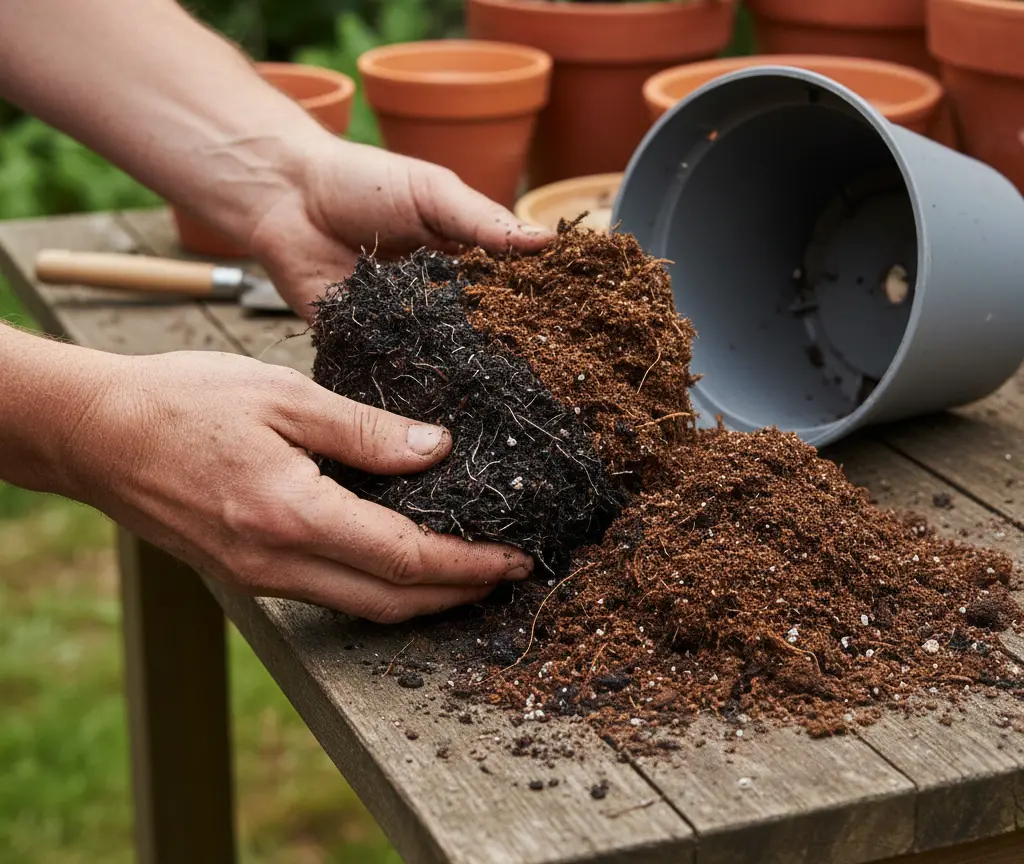
- The soil has a sour, rotten smell rather than the normal earthy smell – that’s usually anaerobic breakdown from staying waterlogged too long.
- It’s mostly fine dust or compacted clay-like clumps with almost no visible texture left – at that point there’s more to fix than reuse is worth.
Any one of those is a reason to bag it for the trash or, if it’s disease-free but just spent, work it into an in-ground garden bed instead of a container, where the wider soil volume dilutes whatever’s left in it.
How to Refresh Soil You’re Keeping
A season of watering and root growth collapses the pore space that made potting mix drain and breathe well in the first place. Refreshing it is about rebuilding that structure, not just adding nutrients back.
- Break up the old soil and pull out every root, root hair, and bit of mulch left behind – anything organic left in there will keep decomposing and robbing nitrogen from the next plant as it breaks down.
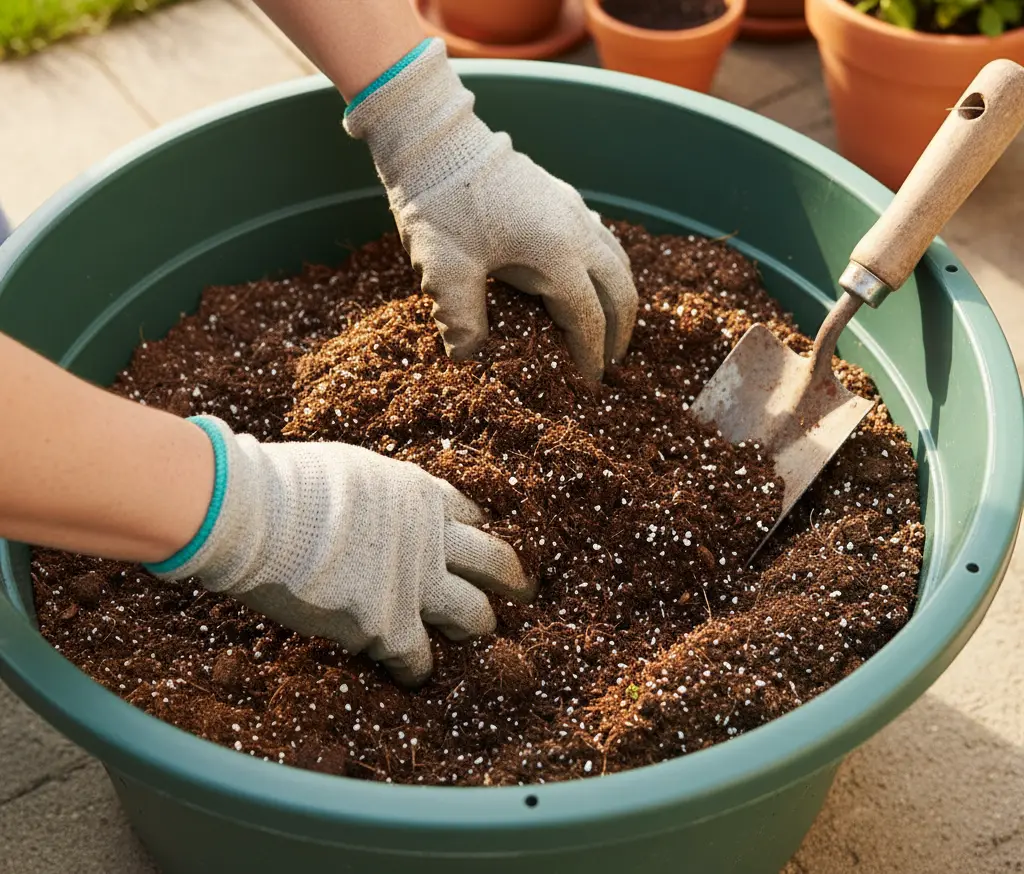
- Fluff and loosen any compacted clumps by hand so the mix isn’t dense chunks anymore. If it’s bone dry, moisten it slightly first so it breaks apart instead of crumbling to dust.
- Mix in roughly one-third fresh potting mix by volume, plus a scoop of compost or worm castings – this is what restores the pore space and nutrients the old soil lost, not just topping it off.
- Add a slow-release fertilizer if the mix doesn’t already include one, since a season of growth used up most of what was originally there.
That one-third ratio is the part most people skip – stretching old soil with only a light dusting of new mix on top still leaves the collapsed structure underneath, and the plant’s roots find that out within a few weeks.
See our picks: best potting soil for outdoor planters and best soil for planters for the fresh mix to blend in.
Do You Need to Sterilize It First?
Sterilizing is a step for soil you’re unsure about, not a routine step for every reused batch. If the last plant was healthy, skip it – the microbial life in that soil is actually beneficial, and sterilizing kills the good along with anything bad. Save it for soil you suspect carried a mild pest issue but isn’t bad enough to trash outright.
The simplest method for small batches is solarizing: spread the soil in a thin layer inside a clear plastic bag or a covered tray, and leave it in full sun for two to four weeks. The heat that builds up kills most fungal spores, weed seeds, and pest eggs without any equipment. Oven-baking a small tray at around 200°F for 30 minutes works too, but it also produces a smell most people would rather avoid indoors. Either way, sterilizing is a last resort for soil on the fence – anything showing active disease symptoms should just be thrown out instead.
One Rule Per Pot
Before dumping any container at the end of the season, ask one question: did anything in this pot get sick or badly infested? If no, keep the soil, break it up, and refresh it with fresh mix and compost. If yes, don’t try to salvage it for another container – move it to the trash or, if you want to be thorough, an in-ground bed far from anything susceptible to the same problem. That single check replaces every guess about how old the soil is or how many seasons it’s been through.
Frequently Asked Questions
Can you reuse potting soil year after year?
Yes, as long as nothing that grew in it died of a soil-borne disease. Break up the old soil, mix in about a third fresh potting mix and some compost to restore the structure it lost, and it can go through another season.
How do I refresh old potting soil?
Remove old roots and debris, break up any compacted clumps, then blend in roughly one-third fresh potting mix by volume plus compost or worm castings. Add a slow-release fertilizer if the mix doesn’t already contain one.
Do I need to sterilize potting soil before reusing it?
Only if you suspect a mild issue, not as a routine step. Healthy soil has beneficial microbial life worth keeping. For soil on the fence, solarizing it in a sealed bag in full sun for two to four weeks kills most pests and pathogens without equipment.