Measure width, depth and thickness at the widest points of the cushion or the frame, then add up to 1 inch only for open seats. If the seat sits between arms or fixed sides, order the exact opening size. If the old cushion is flattened or sagging, measure the frame, not the worn cushion.
Use a rigid tape or a straight board, write each number down with a label, and measure on a dry day. The sections below cover seat cushions, back cushions, chaises, sofas and odd shapes.
What You Need Before You Start
- Rigid or steel tape measure. A cloth tape sags across a wide seat and adds error. If you only have a soft tape, pull it tight and keep it flat.
- A straight board, yardstick or level. Lay it across the cushion’s high points so you measure the true widest spot, not the curve of a rounded edge.
- Notepad or phone. Write each number down with a label (seat width, seat depth, and so on) as you take it.
- A flat wall. Pushing a cushion against a wall gives you a straight reference edge.
Safety note: Measure on a dry day, and let wet cushions dry first. Water makes them much heavier than they look, and foam and fiberfill swell slightly when damp, so a wet reading can leave you ordering the wrong size. Lift heavy sectional cushions with a second person.
Measure Seat Cushions: Width, Depth and Thickness
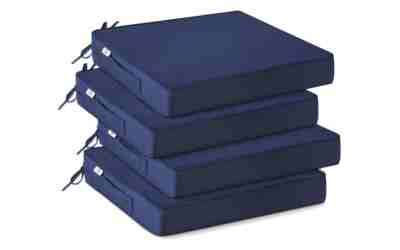
Every seat cushion has three dimensions. Take them in this order and record each one.
- Width. Measure the widest point, which is usually the front edge. Go from the outer edge on one side to the outer edge on the other, not seam to seam. Seams sit slightly inside the edge on cushions with piping or boxing, so seam-to-seam numbers come out small.
- Depth. Measure from the front edge to the back edge at the deepest point. If the cushion rests against a backrest, measure to where the cushion actually stops, not to the back of the frame.
- Thickness. Measure the thickest point on the side, with the cushion resting uncompressed. Don’t press the tape into the fabric.
If the old cushion is flattened
Foam and fiber compress over time, and a worn cushion often measures smaller than it did new. Measure the frame, not the worn cushion. Take the width at the widest part of the seat deck and the depth from the front rail to the backrest, then apply the fit rule for your furniture type below. Use the old cushion only to judge thickness and shape.
If you have no cushion at all
Measure the seat frame or opening instead. Measure width at the widest part of the seat deck and depth from the front rail to the backrest, and decide on thickness separately (typically 3 to 5 inches for seats, depending on the style). If the seat sits between arms, measure the opening between the arms, not the outside of the frame.
Measure Back Cushions and Deep-Seating Pieces
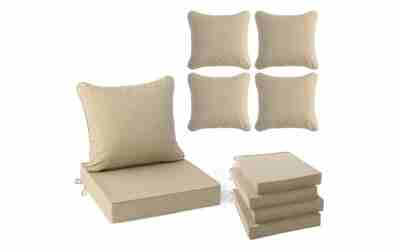
Back cushions need width and height, plus thickness. The key correction is height: if the seat cushion sits in front of or under the back cushion, subtract the seat cushion’s thickness from the backrest height. Otherwise the back cushion will rise above the top of the frame or sit crooked.
Example: the backrest measures 24 inches from the seat deck to the top rail, and your seat cushion is 4 inches thick. The back cushion height should be about 20 inches, not 24.
- Width: measure across the back at the widest point, between the arms if the frame has them.
- Height: measure from where the seat cushion’s top surface will sit to the top of the frame.
- Thickness: back cushions are often 3 to 6 inches thick, but check clearance. A thick back cushion shortens usable seat depth.
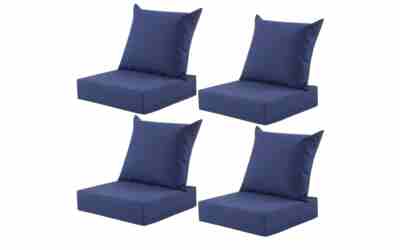
Deep-seating sofas and lounge chairs often have seat depths of 24 inches or more, and the back may be a loose pillow rather than a fitted cushion. If your seat is deeper than a standard chair, compare your numbers with the brand’s size chart and look at deep seat outdoor cushions made for those depths instead of stretching a standard size.
Measure Chaise Lounge and Sofa Cushions
Chaise cushions are the easiest to get wrong because of their length and folding sections.
- Length: many chaises run well over 6 feet, so measure along the full frame or cushion in one pass. Use a long tape or mark and measure in two steps. Don’t stretch a soft tape across the gap.
- Width: measure the widest point, usually the seat area, not the narrower foot end.
- Hinge or fold line: if the back reclines, the cushion often has a seam or a gap where the frame bends. Measure from the top of the cushion down to that seam, then from the seam to the foot. Write both numbers.
- Thickness: chaise pads are usually thinner than chair cushions, often 2 to 4 inches, though this varies by model.
When the frame articulates, order the cushion as separate sections rather than one long number. Chaise cushions are sold by overall length, so once you have your frame length, compare it with the listed sizes of chaise lounge cushions for outdoor use.
Sofas and sectionals
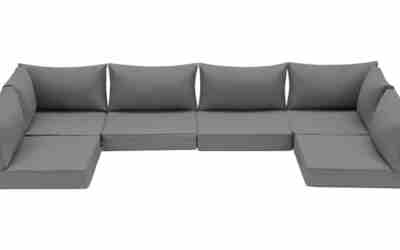
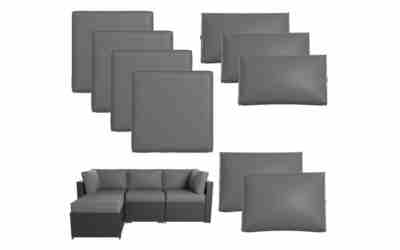
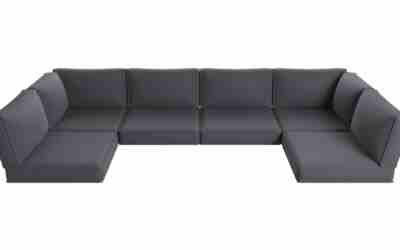
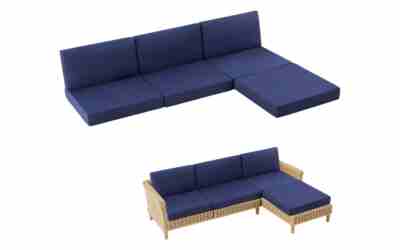
Measure each seat module on its own: width, depth, thickness. Label them left, middle, right, and corner. Sofa frames are rarely perfectly square, so don’t assume the pieces match.
Measure Curved, Tapered, T-Shaped and Corner Cushions
Not every seat is a rectangle. For odd shapes, one width and one depth aren’t enough, so take extra measurements.
- Tapered (wider in front): measure the front width and the back width separately, plus the depth along each side.
- Rounded front or curved seat: lay a straight board across the front and measure from the board to the back edge. Then measure the widest point on both sides of the curve.
- T-shaped (wraps around the arm posts): measure the full front width, the narrower back width, and the length of each cutout notch. Note how deep the notch goes.
- Corner or sectional wedge: measure both straight sides along the frame and the diagonal front edge. Check whether the inside corner is square or cut.
- Rounded corners: measure at the straight edges as if the corner were square, then note the corner radius if the maker asks for it.
A simple trick for any complex shape is to trace the seat on kraft paper or cardboard, label the front, back and any notches, and measure from the template. Some makers accept a photo of the template. If no standard size matches your tapers and notches, custom outdoor cushions let you specify them.
How Much to Add or Subtract for a Good Fit
Use one rule per case, and follow the manufacturer’s sizing instructions if they differ, since some brands already build in the allowance.
| Situation | Rule |
|---|---|
| Open seat, no side walls or arms in the way | Add up to 1 inch to the width; depth stays the same |
| Seat between fixed arms or tight sides | Order the exact opening width; add nothing |
| Old cushion has flattened | Measure the frame, not the worn cushion, then apply the open-seat or between-arms rule |
| Chaise lounge (open frame) | Add up to 1 inch to the width; keep length equal to the frame |
| Back cushion | Subtract the seat cushion thickness from the height |
| Tapered or notched seat | Use exact measurements for each section; don’t add extra |
A cushion that is a little too small looks loose and slides. One that is too big bunches at the corners and can’t be pressed into a tight frame, which is why the extra inch applies only where nothing blocks the cushion.
If only the cover is worn and the shape still fits, measure the cover and look at cushion inserts for outdoor cushions that match its size. A firmer insert or thicker batting can also take up some slack in a cover that has gone loose.
Worked Example and Printable Checklist
Say your patio chair has a seat deck 22 inches wide at the front and 20 inches deep, and you want a 4-inch cushion. The seat sits between two fixed arms.
- Frame width: 22 inches. Because it fits between arms, order the exact opening: 22 inches.
- Depth: 20 inches.
- Thickness: 4 inches.
- Order size: 22 x 20 x 4 inches (width x depth x thickness). Check how the brand lists the order, because some put depth first.
If the same chair had no arms, you could order 23 inches wide for a snug look, with depth and thickness unchanged.
Checklist
- Seat width (front, middle, back), edge to edge
- Seat depth, front edge to where the cushion stops
- Seat thickness, uncompressed
- Back width, height (minus seat thickness) and thickness
- Chaise or sofa: overall length, fold or hinge seam position, each module labeled
- Shape notes: taper, notch, rounded corners, ties or straps
- Photo of the furniture with the tape in place
Safety note: Keep cushions away from fire pits and grills, since many outdoor fabrics will burn.
Frequently Asked Questions
What thickness should outdoor seat cushions be?
Most outdoor seat cushions run 3 to 5 inches thick, with 4 inches a common choice. Deep-seating sets are often thicker, and chaise pads are often thinner. Choose based on comfort and clearance under arms, since thicker cushions raise the seat height.
Do I measure the cushion cover or the foam insert?
Measure the finished cushion with the cover on, since that is the size that has to fit the frame. If you are replacing only the insert, take the cover’s inside dimensions and ask the foam supplier what extra size they recommend, as the foam is often cut slightly larger.
Should I include ties or straps when measuring?
No. Measure the cushion body only, edge to edge, and leave out the ties, straps and piping that stick out beyond it. Note where the ties are attached, since replacement cushions need matching tie positions to hold on the frame.
How often should I re-measure my cushions?
Measure again whenever you replace cushions, because foam compresses and covers can shrink after washing. If a cushion has visibly flattened, measure the frame, not the old cushion, and use the frame’s size for the new order.
{“@context”: “https://schema.org”, “@type”: “FAQPage”, “mainEntity”: [{“@type”: “Question”, “name”: “What thickness should outdoor seat cushions be?”, “acceptedAnswer”: {“@type”: “Answer”, “text”: “Most outdoor seat cushions run 3 to 5 inches thick, with 4 inches a common choice. Deep-seating sets are often thicker, and chaise pads are often thinner. Choose based on comfort and clearance under arms, since thicker cushions raise the seat height.”}}, {“@type”: “Question”, “name”: “Do I measure the cushion cover or the foam insert?”, “acceptedAnswer”: {“@type”: “Answer”, “text”: “Measure the finished cushion with the cover on, since that is the size that has to fit the frame. If you are replacing only the insert, take the cover’s inside dimensions and ask the foam supplier what extra size they recommend, as the foam is often cut slightly larger.”}}, {“@type”: “Question”, “name”: “Should I include ties or straps when measuring?”, “acceptedAnswer”: {“@type”: “Answer”, “text”: “No. Measure the cushion body only, edge to edge, and leave out the ties, straps and piping that stick out beyond it. Note where the ties are attached, since replacement cushions need matching tie positions to hold on the frame.”}}, {“@type”: “Question”, “name”: “How often should I re-measure my cushions?”, “acceptedAnswer”: {“@type”: “Answer”, “text”: “Measure again whenever you replace cushions, because foam compresses and covers can shrink after washing. If a cushion has visibly flattened, measure the frame, not the old cushion, and use the frame’s size for the new order.”}}]}