Are outdoor solar lights good? Yes, for paths, garden beds, deck rails and string lights in a spot with about 6 or more hours of direct sun, but not as your only security or step lighting. Cheap sets often fade within a year or two, so battery, panel and IP rating matter more than the price tag or the lumen claim.
Where do outdoor solar lights work well?
Solar lights do best when the job is gentle guidance or decoration and the panel sits in direct sun. Most manufacturers call for roughly 6 to 8 hours of direct sunlight for a full charge, so check the instructions for your model.
| Use | Verdict | Why |
|---|---|---|
| Path and walkway edges | Good | Low light is enough; easy to reposition |
| Garden beds and accents | Good | Small glow, no trenching through plantings |
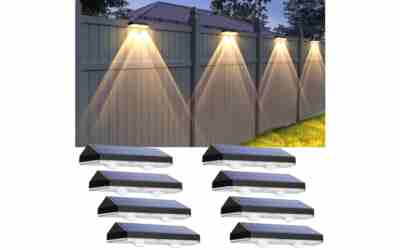
| Deck rails and post caps | Good | Exposed to sun, no wire to run |
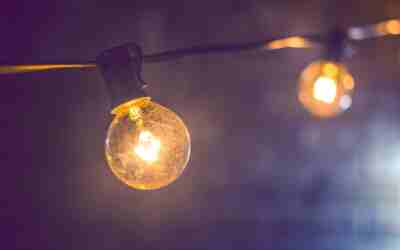
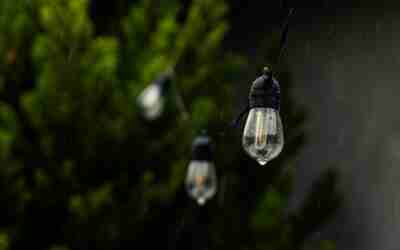
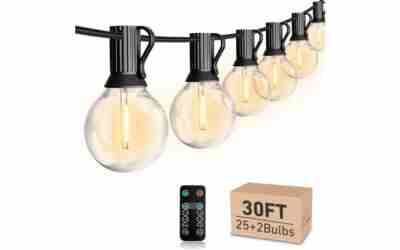
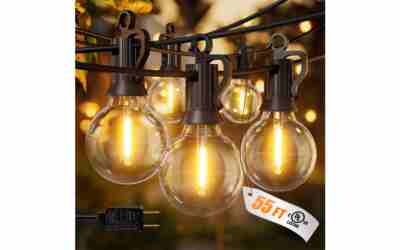
| String lights | Good with a separate panel | Panel can sit in sun while the bulbs hang in shade |
| Steps and stairs | Use with caution | Dim or fading light raises fall risk |
| Security and driveways | Weak | Brightness and run time vary night to night |
The real advantages are no wiring, no running cost and simple installation. If you want a walkway lined with them, start with our roundup of the best solar pathway lights. For a patio or pergola, look at the best solar string lights, where a panel on a cable lets you place it away from shade.
Where do solar lights fail?
They fail where the panel cannot collect enough sun, and where you need the same brightness every night.
- Shade: Panels under eaves, porch roofs or tree canopies rarely fully charge. Prune overhanging branches or move the panel to a sunnier spot.
- Winter: Shorter days, a lower sun angle and snow on the panel all cut charging. Sources disagree on winter performance because it depends on the model, your latitude and whether the panel is clear. In northern states, expect shorter run times from late fall to early spring.
- Security: Solar motion lights can work as a deterrent at a shed or side yard. For primary security lighting, wired fixtures are the safer choice because output does not depend on yesterday’s weather. If you want solar anyway, compare the best solar motion lights and check the stated brightness and run time.
- Nearby light sources: A porch light or street lamp can make the dusk sensor think it is still daytime, so the solar light never turns on.
How bright are solar lights compared with wired lights?
Solar lights are usually dimmer than wired ones at the same price. The ranges below are rough, manufacturer-listed figures and vary widely by model, so read the actual listing.
| Light type | Typical listed output |
|---|---|
| Solar path or stake light | About 5 to 50 lumens |
| Solar spotlight | About 100 to 400 lumens |
| Solar motion or flood light | Several hundred to 2,000+ lumens, often on a short motion burst |
| Low-voltage path or spot fixture | About 50 to 400 lumens |
| Wired LED floodlight | About 700 to 3,000 lumens |
Two traps: listings may quote peak or "equivalent" brightness rather than steady output, and high-lumen modes drain the battery fast. Look for lumens at each mode plus the run time at that mode. If you need floodlight-level output, see the best solar flood lights, and treat the stated lumens as a best case.
How long do solar lights last, and when do you replace them?
The battery usually fails first. One vendor blog puts typical solar light life at 2 to 6 years, with rechargeable batteries lasting about 1 to 3 years and cheap units declining within 1 to 2. Those are estimates, not independent test results, and your climate and light quality will change them.
- LED: Often rated for 10+ years of use by manufacturers, so it rarely dies first.
- Battery: Loses capacity with each charge cycle and with heat. This is the usual cause of short run times.
- Panel: Can last many years, but cheap plastic covers cloud or yellow in UV, which cuts charging. Claims of 20 to 25 years come from sellers, so take them cautiously.
Replacement rule: if a clean light in full sun still runs only a couple of hours after several sunny days, replace the battery. If the battery is sealed in and cannot be swapped, replace the light.
When swapping, match the chemistry, voltage and size printed on the old cell (often a 1.2 V NiMH AA). Never put in a standard alkaline or mix battery types. Recycle dead rechargeables at a battery drop-off or household hazardous waste site; check your local rules.
What specs separate good solar lights from cheap ones?
Price alone does not predict quality, but missing specs do. Use this checklist before you buy:
- Panel size and type: A larger panel relative to the light charges faster. Monocrystalline panels are generally more efficient than the thin amorphous kind. A panel on a cable is better if the fixture sits in shade.
- Battery chemistry and capacity: Look for the type (NiMH, lithium-ion or LiFePO4) and the mAh rating. Compare capacity only within the same chemistry. If your winters are below freezing, check the low-temperature charging spec, since lithium cells need protection circuitry for that.
- Lumens and run time: Both numbers, at each mode.
- IP rating: IP44 handles splashes only. IP65 is a sensible minimum for fully exposed spots, and IP67 suits low areas that can flood.
- Replaceable battery: A screw-in or clip-in battery door extends life.
- Materials and warranty: UV-stable covers, metal or thick plastic housings, and a stated warranty period.
Decision rule: if a listing does not state lumens, battery capacity and IP rating, treat it as a budget light and expect to replace it sooner.
When should you choose low-voltage or wired lighting instead?
Choose low-voltage or wired lighting for steps, security, shady yards, northern winters, and any spot where you want the same brightness every night, a timer or dimming. Choose solar for sunny, small, flexible jobs where trenching is not worth it, such as renter-friendly paths or a garden accent. Our guide to solar vs low-voltage landscape lighting goes deeper on this.
Worked example: running cost
Eight low-voltage LED fixtures at 3 watts each use 24 W. Run 6 hours a night and that is 0.144 kWh per night, or about 52.6 kWh a year. At an assumed $0.17 per kWh (check your bill), that is roughly $9 a year. So electricity cost is rarely the reason to pick solar.
Cost per year, illustrative only
Use your own prices. If a $40 solar set lasts 2 years, that is $20 a year. If a $120 set lasts 5 years, that is $24 a year, with better brightness and replaceable batteries. Low-voltage adds the transformer, cable and install time, but fixtures can last for many years.
Low-voltage (typically 12 V) systems are more DIY-friendly, but the transformer plugs into a GFCI-protected outdoor outlet. Any line-voltage work needs a licensed electrician and must follow local code.
Why did my solar lights stop working or get dim?
Work through these in order:
- Make sure the switch is on and any plastic film on the panel is removed.
- Wipe the panel with a damp soft cloth. Dust, pollen and bird droppings cut charging.
- Check sun exposure. If a tree or roof now shades the panel, move it or trim back the branches.
- Look for nearby lights that keep the dusk sensor from switching on.
- In winter, brush snow off the panel.
- Replace the rechargeable battery with the same type and size.
- If the panel cover is yellowed or cracked, or the housing leaks, replace the light.
Do not rely on a dim solar light as the only light on steps or in a place where a fall or break-in is a real risk.
Our Top Picks
Ready to shop? These are the top-rated options from our hands-on roundup, Best Solar Motion Lights of 2026.

LUTEC 3000LM Solar LED Security Light with Motion Sensor
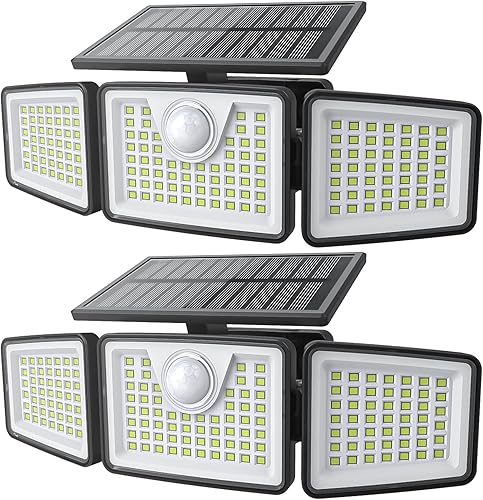
Daphino 2500LM Solar Motion Sensor Outdoor Lights 2-Pack

XMCOSY+ Solar Pathway Lights, 6 Pack Metal Motion Sensor
As an Amazon Associate we earn from qualifying purchases. Product prices and availability are accurate as of the date/time indicated.
Frequently Asked Questions
Do solar lights work on cloudy days?
Yes, but they charge less. Panels still collect some light under clouds, so expect shorter or dimmer output after several overcast days. Results depend on the panel size, battery capacity and how much sky the panel sees, so larger panels cope better.
Are expensive solar lights worth it?
Often, if the extra money buys a larger panel, a better replaceable battery, a higher IP rating and a warranty. A higher price alone is not proof. Check that the listing states lumens, battery capacity and IP rating before paying more.
Can I leave solar lights outside in winter?
Most are designed to stay out, but check the manual for temperature limits. Freezing weather and snow can reduce charging and battery performance. Brush snow off panels, and store lights indoors if the maker advises it.
Can I use solar lights with a wired system?
Yes, many homeowners use solar for sunny accent spots and wired or low-voltage lighting for steps, entries and security. This keeps critical areas reliable while avoiding trenching for decorative lights. Follow local code for any line-voltage connection.
{“@context”: “https://schema.org”, “@type”: “FAQPage”, “mainEntity”: [{“@type”: “Question”, “name”: “Do solar lights work on cloudy days?”, “acceptedAnswer”: {“@type”: “Answer”, “text”: “Yes, but they charge less. Panels still collect some light under clouds, so expect shorter or dimmer output after several overcast days. Results depend on the panel size, battery capacity and how much sky the panel sees, so larger panels cope better.”}}, {“@type”: “Question”, “name”: “Are expensive solar lights worth it?”, “acceptedAnswer”: {“@type”: “Answer”, “text”: “Often, if the extra money buys a larger panel, a better replaceable battery, a higher IP rating and a warranty. A higher price alone is not proof. Check that the listing states lumens, battery capacity and IP rating before paying more.”}}, {“@type”: “Question”, “name”: “Can I leave solar lights outside in winter?”, “acceptedAnswer”: {“@type”: “Answer”, “text”: “Most are designed to stay out, but check the manual for temperature limits. Freezing weather and snow can reduce charging and battery performance. Brush snow off panels, and store lights indoors if the maker advises it.”}}, {“@type”: “Question”, “name”: “Can I use solar lights with a wired system?”, “acceptedAnswer”: {“@type”: “Answer”, “text”: “Yes, many homeowners use solar for sunny accent spots and wired or low-voltage lighting for steps, entries and security. This keeps critical areas reliable while avoiding trenching for decorative lights. Follow local code for any line-voltage connection.”}}]}