Yes, plant grass seed in the fall if you have cool-season grass such as Kentucky bluegrass, tall fescue or perennial ryegrass. Aim to seed at least 45 days before your first frost, while soil is still 50-65°F. Warm-season lawns like Bermuda and zoysia should wait until late spring. Already mid-October? You may still have a window.
Does the answer change for cool-season and warm-season grass?
Yes. Fall is the best seeding season for cool-season grasses, and the wrong season for warm-season grasses. Cool-season seed gets warm soil to germinate in, cooler air that does not stress seedlings, less weed competition, and roughly nine months of root growth before summer heat.
| Grass type | Examples | Best seeding time |
|---|---|---|
| Cool-season | Kentucky bluegrass, tall fescue, fine fescue, perennial ryegrass | Late summer to early fall |
| Warm-season | Bermuda, zoysia, centipede, St. Augustine | Late spring to early summer |
Not sure what you have? Cool-season grass stays green through winter in the North and struggles in summer heat. Warm-season grass turns tan after the first hard frosts. In the transition zone (roughly Kansas City to Virginia), tall fescue is common and follows the fall rule. If you have Bermuda or zoysia, skip seeding now and see the overseeding section below.
When to plant grass seed in the fall: soil temperature and frost date
Do not rely on a calendar date. Use two checks instead. The first is a frost-date count. Seed at least about 45 days before your average first fall frost, so seedlings can mature and be mowed a couple of times. That works out to roughly late September in Minnesota and early November in Oklahoma. A commonly cited national window is mid-August to mid-October, but your local frost date matters more.
The second check is soil temperature. Cool-season seed germinates best when soil is about 50-65°F. Push a soil thermometer 2 inches deep in the morning for three days in a row. Under 50°F, germination slows a lot. Above about 70°F, seed can sprout but dries out fast.
Worked example
- Your local average first frost is November 5. Find yours from your county extension office or the NOAA frost-date tables.
- Count back 45 days. That gives you about September 21.
- Check soil: if it reads 55-65°F, go. If it is still 75°F, wait a week or two.
Frost dates are averages. Elevation and microclimate can shift them by a week or more.
How do I plant grass seed in the fall, step by step?
- Mow low. Cut the existing lawn to about 2 inches and bag the clippings. For bare patches, clear debris and weeds.
- Dethatch only if needed. If the thatch layer is thicker than about 1/2 inch, rake or dethatch it. Thinner thatch is fine.
- Loosen the soil. Core-aerate a whole lawn, or scratch the top 1/4 to 1/2 inch of bare spots with a hard rake. Seed needs direct contact with soil, not thatch.
- Spread seed. Use a broadcast spreader and follow the bag rate. Typical rates per 1,000 sq ft are below, but the label wins.
- Rake it in lightly. Seed should end up no deeper than 1/4 inch. Deeper burial hurts germination.
- Apply starter fertilizer the same day, following the bag rate.
- Cover bare patches. A thin layer of straw or 1/4 inch of compost holds moisture. Do not smother the seed.
- Water right away and keep it going (see the next section).
| Seed | New lawn (lb/1,000 sq ft) | Overseeding (lb/1,000 sq ft) |
|---|---|---|
| Kentucky bluegrass | about 2-3 | about 1-2 |
| Tall fescue | about 6-8 | about 4-6 |
| Perennial ryegrass | about 6-9 | about 3-5 |
These are typical ranges. Blends and coated seed vary, so read the bag. Measure the area first: a 40 ft by 25 ft lawn is 1,000 sq ft.
How often should I water new seed, and when can I first mow?
Watering is where most fall seedings fail. The top inch of soil must stay damp, never dry out and never puddle.
- Until germination: mulched areas, once daily in the morning. Unmulched areas, 2-3 light waterings a day.
- After seedlings emerge: every other day, then every 3-4 days, then weekly as roots deepen.
- Germination time: about 5 days to 3 weeks depending on species. Ryegrass is fastest, Kentucky bluegrass slowest.
In cool fall weather, soil dries slower, so cut back if it stays wet. Stop if water runs off or pools, and check local watering restrictions. A timer on a hose-end sprinkler makes the early schedule much easier.
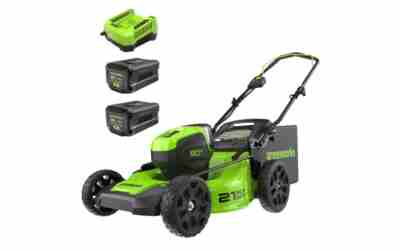
Start mowing when grass is about 3 inches tall, which may not happen until spring for a late seeding. Set the deck high, remove no more than one-third of the blade, and use a sharp blade. Wait until the lawn is dry, because wet clippings and soft soil can tear seedlings. If dew and fall rain are common where you live, a mower that handles wet grass helps you keep on schedule. Keep foot traffic light for a couple of months, and expect a new lawn to need a full growing season before heavy use.
Is it too late to plant grass seed in October or November?
It depends on where you are and the weather. Use this decision rule: if you are inside the 45-day window and soil is still 50°F or warmer, seed now. If you are past it, you have three options.
| Situation | Best move |
|---|---|
| Less than 45 days to frost, soil still above 50°F | Seed now, accept thinner results, and baby the watering |
| Soil consistently under about 40°F | Dormant seeding: seed sits over winter and sprouts in spring. Many guides suggest a heavier rate, so check the bag |
| Ground frozen or you miss it entirely | Wait for spring, roughly mid-March to mid-May for cool-season seed |
Light frost will not kill seedlings that have already sprouted, and seed that has not sprouted will just wait. The real risk is young seedlings that have not rooted before a hard freeze or heavy traffic. Spring seeding works but faces crabgrass and summer heat, so plan to water through the first summer.
Leaf drop trap: a layer of wet leaves blocks light and smothers seedlings. Blow or rake leaves off gently every few days, with a light touch, instead of letting them sit until spring.
What weed killer is safe around new grass seed?
Most pre-emergent herbicides and crabgrass preventers stop grass seed from sprouting along with the weeds. Do not apply them at seeding. Fall is also a poor time for crabgrass control anyway, since crabgrass dies with frost.
- Weed-and-feed products: check the label for the waiting period before seeding or after seeding. It is often several weeks, and it varies by product.
- Seeding-safe options: some products, such as those with siduron or mesotrione, are labeled for use at seeding on certain grasses. Confirm your grass type on the label.
- Broadleaf killers: many labels say to wait until new grass has been mowed a few times.
Wear gloves, follow the label on every fertilizer and herbicide, and keep children and pets off treated areas until the label says it is safe.
What if I have Bermuda or zoysia and want green grass this winter?
Do not seed Bermuda or zoysia in fall. They need warm soil, roughly 65°F and up, and a late-spring or early-summer start. Seeded in fall, they will not establish before cold weather.
If you want winter color, overseed with perennial or annual ryegrass in early to mid fall, once daytime temperatures are dropping and soil is falling through the 60s°F. Rates are usually higher than for cool-season lawns, so follow the bag. The ryegrass dies back in late spring as the warm-season grass wakes up. For the spring return, see our picks of mowers for Bermuda grass.
Frequently Asked Questions
Will grass seed germinate if it gets frost?
Seed that has not sprouted will wait out a frost and germinate when soil warms. Young seedlings usually tolerate light frost. A hard freeze can kill tender new seedlings that have not rooted yet, which is why the 45-day rule exists.
What is the best month to plant grass seed in the fall?
For most northern lawns it is late August through September. In the transition zone and upper South, September to early October. Use your first-frost date minus 45 days and soil temperatures of 50-65°F instead of a fixed month.
Should I aerate before overseeding in fall?
Aeration is a good idea if the soil is compacted, since it improves seed-to-soil contact and water absorption. Dethatching is only needed if thatch is thicker than about 1/2 inch. On a healthy lawn, mowing low and raking may be enough.
Can I put down crabgrass preventer when I seed?
Generally no. Most crabgrass preventers also block grass seed from sprouting. Check the label for the waiting period, or choose a product labeled safe for new seedings on your grass type.
{“@context”: “https://schema.org”, “@type”: “FAQPage”, “mainEntity”: [{“@type”: “Question”, “name”: “Will grass seed germinate if it gets frost?”, “acceptedAnswer”: {“@type”: “Answer”, “text”: “Seed that has not sprouted will wait out a frost and germinate when soil warms. Young seedlings usually tolerate light frost. A hard freeze can kill tender new seedlings that have not rooted yet, which is why the 45-day rule exists.”}}, {“@type”: “Question”, “name”: “What is the best month to plant grass seed in the fall?”, “acceptedAnswer”: {“@type”: “Answer”, “text”: “For most northern lawns it is late August through September. In the transition zone and upper South, September to early October. Use your first-frost date minus 45 days and soil temperatures of 50-65°F instead of a fixed month.”}}, {“@type”: “Question”, “name”: “Should I aerate before overseeding in fall?”, “acceptedAnswer”: {“@type”: “Answer”, “text”: “Aeration is a good idea if the soil is compacted, since it improves seed-to-soil contact and water absorption. Dethatching is only needed if thatch is thicker than about 1/2 inch. On a healthy lawn, mowing low and raking may be enough.”}}, {“@type”: “Question”, “name”: “Can I put down crabgrass preventer when I seed?”, “acceptedAnswer”: {“@type”: “Answer”, “text”: “Generally no. Most crabgrass preventers also block grass seed from sprouting. Check the label for the waiting period, or choose a product labeled safe for new seedings on your grass type.”}}]}