Only if the product is rated for damp or wet locations. Most indoor lights are listed for dry locations only, so rain, fog, sprinklers and condensation can cause shock or fire. Whether you can use indoor lights outside depends on the label on that specific product, where it will hang, and how it is plugged in.
Can you use indoor lights outside? A simple decision rule
Read the label before you decide. The marking on the product matters more than whether it looks sturdy.
- Label says “Suitable for Wet Locations”: it can go anywhere outdoors, including an open deck or garden, as long as you follow the instructions.
- Label says “Suitable for Damp Locations”: it can go outside only under a roof, such as a covered porch or patio ceiling.
- Label says “Dry Locations” only, has a green UL tag, or has no location rating at all: keep it indoors.
There is one gray area: dry, covered, short-term use. Think of a few hours on a covered porch with no rain in the forecast, plugged into a GFCI outlet and unplugged afterward. That is our rule of thumb, not a manufacturer approval, and it still carries more risk than outdoor-rated gear. Wind-driven rain, morning dew and sprinklers can all reach a porch that looks protected.
The reason is simple. Indoor sockets, plugs and cord jackets are not sealed. Water or condensation can bridge live parts, which can trip a breaker, start a fire or energize metal parts you touch. Sun and cold also age indoor plastic faster, so insulation can crack.
How to read Dry, Damp and Wet ratings, UL tags and IP codes
Three kinds of markings tell you if a product can handle the outdoors. This table puts them side by side.
| Marking | What it means | Outdoor use? |
|---|---|---|
| Dry location | Indoor spaces that are not exposed to moisture | No |
| Damp location | Partly protected areas, such as a covered porch or soffit | Under a roof only |
| Wet location | Places where water can drip, splash or flow onto the product | Yes, including open decks and landscape use |
| Green UL tag (holiday light sets) | Indoor use only | No |
| Red UL tag (holiday light sets) | Rated for indoor and outdoor use | Yes |
| IP44 | Blocks objects over 1 mm and splashing water from any direction | Covered areas |
| IP65 | Dust-tight and protected from water jets | Exposed areas (check the maker’s guidance) |
Where to find them: look on the small tag near the plug, on a sticker inside or behind a fixture, on the box, and in the instruction sheet. A UL or ETL mark alone shows the product passed safety testing. It does not mean the product is outdoor-safe. The wording “Suitable for Wet Locations” or “Damp Locations” is what counts.
Many indoor products have no IP rating at all because they were never made for moisture. Treat a missing rating as “not rated.” Tag colors and wording can vary by brand and age, so go by the printed text if it conflicts with the color.
Covered porch, open deck or garden: what changes
Where the light sits decides which rating you need.
- Covered porch or patio (damp): a roof helps, but humidity, condensation and sideways rain still reach the fixture. Use damp-rated or wet-rated products. An unrated indoor product is a gamble here.
- Open deck, pergola, gazebo, fence or tree (wet): rain falls straight on the product. Only wet-rated or red-tag products belong here.
- Lawn, garden beds and paths (wet): sprinklers and ground moisture add exposure. Keep plugs and connectors off the ground.
- Near a pool, spa or fountain: distance rules and wiring rules apply. Do not improvise here, and call a licensed electrician.
Cold and sun matter too. Many cord jackets get stiff in freezing weather and can crack if you bend them. UV from the sun makes cheap plastic brittle over a season. Check the product’s stated operating temperature range, which varies by model.
For hardwired fixtures, such as swapping a ceiling light on a porch, local code and the adopted edition of the National Electrical Code (NEC) vary. Have a licensed electrician do or review the work.
Indoor bulbs, extension cords and string lights outdoors
Indoor bulbs in outdoor fixtures
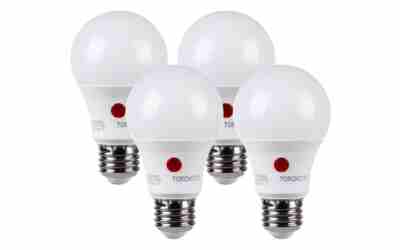
Often yes, because the fixture does the weather protection, not the bulb. Check three things first:
- Max wattage: printed on the fixture’s socket or label. Never exceed it. LED bulbs make this easy because their actual draw is low.
- Enclosed fixtures: if a glass globe surrounds the bulb, heat builds up. Use a bulb marked suitable for enclosed fixtures, since many LED bulbs are not.
- Exposure: if the bulb is open to rain, use one marked for wet locations. Some LED bulbs also list a minimum operating temperature, so check the package.
Indoor extension cords
Do not run an indoor cord outside, even briefly, for anything that stays out. The jacket is thinner and not made for moisture, sun or cold. Choose a cord labeled for outdoor use (often with a “W” in the type marking), and match its amp rating and wire gauge to the load and the run length. The connection between the cord and the light’s plug is the weak point. Keep it off the ground and under a cover.
Indoor string lights
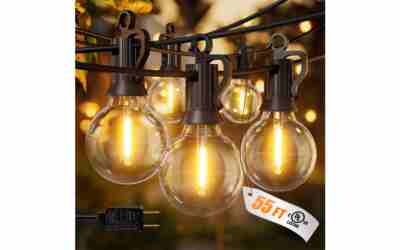
The biggest hazards are the plug-in connectors and the tiny bulb sockets, which are open to water. Don’t daisy-chain more sets than the label allows. A standard 15-amp household circuit supports about 1,800 watts at most, and about 1,440 watts for continuous loads. LED strings use only a small fraction of that, but the per-strand connection limit on the label still applies.
Power outdoor lighting from a GFCI-protected outlet. Most recent NEC editions require GFCI protection for outdoor receptacles, but check your local rules. An outlet with a weatherproof “in-use” cover protects the plug while it is connected.
Checklist before you plug anything in outside
- Find the label and confirm it says damp or wet location, or shows a red UL tag. If it says dry only, stop here.
- Match the rating to the spot: damp for covered, wet for exposed.
- Look for cracked insulation, exposed wire, loose sockets and missing bulbs. Throw away anything damaged.
- Check the maximum number of connected strands and the fixture’s maximum wattage.
- Use an outdoor-rated extension cord if you need one, with the right gauge for the length.
- Plug into a GFCI outlet. Press the test button to confirm it trips and resets.
- Lift connections off the ground and put them under a weatherproof cover.
- Unplug and bring lights in before storms, sprinklers or freezing rain. Unplug anything that gets wet and let it dry fully before checking it, or replace it.
Fixes that do not make indoor lights safe outside
Some common workarounds look protective but are not.
- Electrical tape on the plug connection: tape peels in heat and cold and can trap water inside.
- Plastic bags or food containers over connections: condensation forms inside, and the plastic can trap heat.
- Silicone or caulk on sockets: it does not turn an unrated product into a listed one and can make repairs harder.
- A “wet” LED bulb in an unrated string socket: the socket and wiring are still the weak points.
If you must run a temporary setup, an in-use outlet cover and a GFCI outlet reduce the risk, but they do not make the product rated.
What to buy instead, and when swapping is worth it
Replace the lights if they will stay out for more than a day or two, hang in an open spot, or sit through rain, snow or freezing nights. For a one-evening party under a roof, careful temporary use of dry-only lights is a judgment call. Outdoor-rated lights have no such limits.
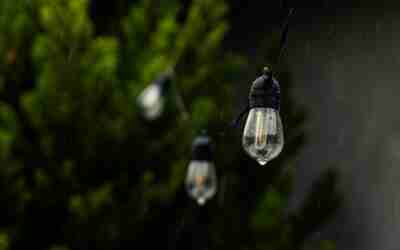
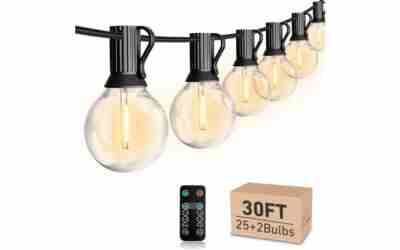
- Plug-in string lights: pick a wet-rated set with a red UL tag or equivalent. Our addlon G40 outdoor string lights review shows what to look at in a plug-in set.
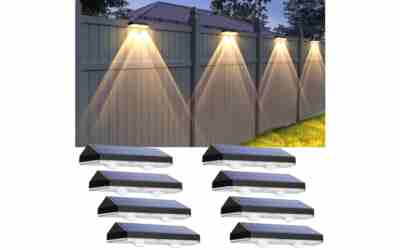
- Solar: no outlet, cord or extension to manage, which removes much of the shock risk. They need sun exposure. See our best solar landscape lights roundup.
- Low-voltage landscape lights: a transformer steps power down for paths and beds. The transformer still needs an outdoor-rated, GFCI-protected outlet. Compare options in our best LED landscape lights guide.
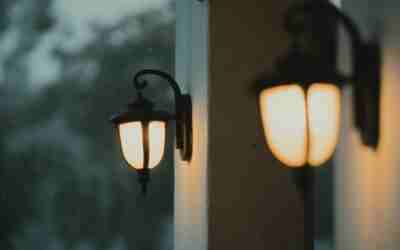
- Porch fixtures: a wet-rated wall light lets you keep using the bulbs you already own. Our Mirrea outdoor porch light review is one example of what to check.
The reverse is usually fine. Outdoor-rated lights generally work indoors, but check the manufacturer’s instructions for the specific model.
Our Top Picks
Ready to shop? These are the top-rated options from our hands-on roundup, Best Outdoor String Lights of 2026.

GPATIO 100FT LED Waterproof Dimmable Outdoor String Lights

Svater 105FT S14 Commercial Grade Outdoor String Lights

Brightever 100FT Outdoor String Lights, Dimmable, Waterproof
As an Amazon Associate we earn from qualifying purchases. Product prices and availability are accurate as of the date/time indicated.
Frequently Asked Questions
Can you use indoor Christmas lights outside?
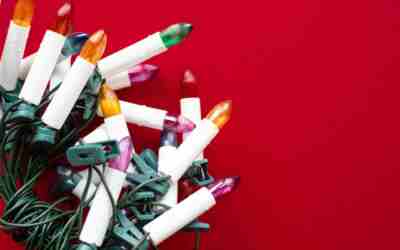
Only if the tag allows it. A green UL tag means indoor use only, and a red UL tag means indoor and outdoor. Wording and colors can vary, so read the printed text. If the set is indoor-only, keep it inside, away from rain and snow.
Can battery-powered indoor LED lights be used outside?
Lower voltage reduces shock risk, but moisture still corrodes battery compartments and contacts, and cold drains batteries faster. Use them outdoors only if the package states outdoor or weather resistance, ideally with an IP rating such as IP44 or higher.
Does an LED bulb make an indoor fixture safe outside?
No. The fixture’s housing, socket and wiring are what keep water out. An LED bulb runs cooler, but an indoor fixture without a damp or wet listing can still let in moisture and short out. Put the bulb in a rated fixture instead.
Can I use outdoor lights indoors?
Usually yes. Outdoor-rated lights are built to handle more moisture and weather than indoor ones. Still check the manufacturer’s instructions for the model, particularly for heat limits, enclosed spaces and any fixture-specific wattage rules.
{“@context”: “https://schema.org”, “@type”: “FAQPage”, “mainEntity”: [{“@type”: “Question”, “name”: “Can you use indoor Christmas lights outside?”, “acceptedAnswer”: {“@type”: “Answer”, “text”: “Only if the tag allows it. A green UL tag means indoor use only, and a red UL tag means indoor and outdoor. Wording and colors can vary, so read the printed text. If the set is indoor-only, keep it inside, away from rain and snow.”}}, {“@type”: “Question”, “name”: “Can battery-powered indoor LED lights be used outside?”, “acceptedAnswer”: {“@type”: “Answer”, “text”: “Lower voltage reduces shock risk, but moisture still corrodes battery compartments and contacts, and cold drains batteries faster. Use them outdoors only if the package states outdoor or weather resistance, ideally with an IP rating such as IP44 or higher.”}}, {“@type”: “Question”, “name”: “Does an LED bulb make an indoor fixture safe outside?”, “acceptedAnswer”: {“@type”: “Answer”, “text”: “No. The fixture’s housing, socket and wiring are what keep water out. An LED bulb runs cooler, but an indoor fixture without a damp or wet listing can still let in moisture and short out. Put the bulb in a rated fixture instead.”}}, {“@type”: “Question”, “name”: “Can I use outdoor lights indoors?”, “acceptedAnswer”: {“@type”: “Answer”, “text”: “Usually yes. Outdoor-rated lights are built to handle more moisture and weather than indoor ones. Still check the manufacturer’s instructions for the model, particularly for heat limits, enclosed spaces and any fixture-specific wattage rules.”}}]}