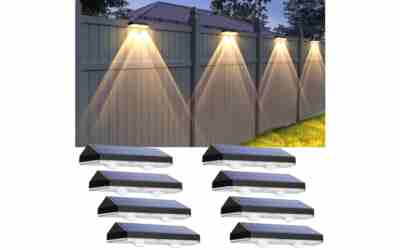
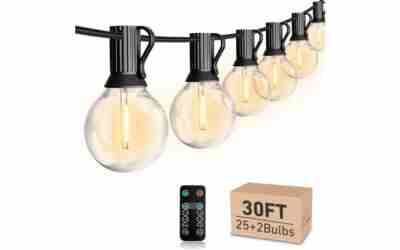
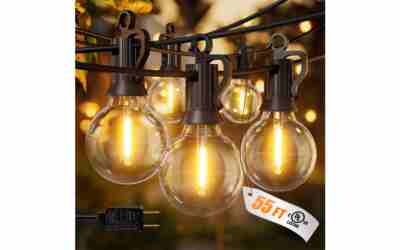
Yes, you can leave outside lights on overnight if the fixtures are wet-rated and the bulbs are LED, but only entrances, steps and paths really need it. A 9 W LED costs about 50 cents a month at an example rate of $0.17/kWh, while a 60 W incandescent runs about $3. Motion sensors or dusk-to-dawn timers usually beat lighting everything all night.
Is it safe to leave outdoor lights on all night?
Yes, as long as the fixture and bulb are rated for where they sit and you stay under the wattage printed on the fixture. LEDs run cool, so the fire risk is low. Heat is the real concern with halogen and old incandescent bulbs.
- Wet vs. damp rating: A fixture exposed to rain or spray needs a “wet location” listing (UL or ETL). A “damp location” listing is usually fine under a covered porch ceiling. The label tells you which one you have.
- Max wattage: Never exceed the socket’s label. LED bulbs draw far less than the limit, which makes this easy.
- Enclosed globes: Glass domes trap heat. Use bulbs marked suitable for enclosed fixtures, because some LED bulbs fail early in them. Check the bulb package.
- Halogen floods: They get very hot. Keep them clear of mulch, leaves, siding, cobwebs and hanging plants.
- Plug-in lights and timers: Outdoor receptacles on homes are required by the National Electrical Code to have GFCI protection. If yours doesn’t, use a portable outdoor GFCI and an outdoor-rated timer.
Indoor-only lights and cords are not built for moisture. Our guide on using indoor lights outside covers the safety rules.
Holiday and string lights
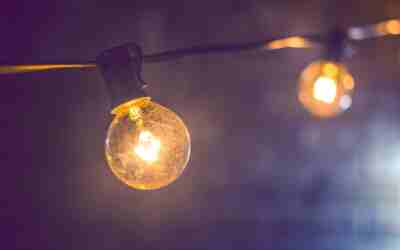
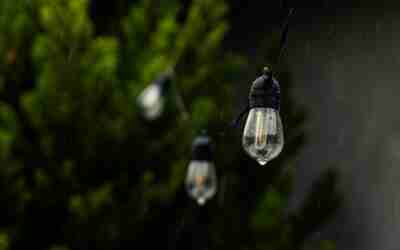
Use only sets labeled for outdoor use, and throw out any with cracked insulation or bare wire. Follow the package limit for how many strands you can connect end to end. The National Fire Protection Association advises turning decorative lights off when you go to bed or leave home, and a timer makes that automatic. If you run permanent strands on a patio, see our patio string light picks for outdoor-rated options.
How much does it cost to leave a porch light on all night?
Less than most people expect with LEDs. Use this formula: watts ÷ 1,000 × hours × your rate per kWh = cost. The table uses 10 hours a night, 30 nights, and an example rate of $0.17/kWh. Your rate will differ by state and utility, so check your bill or the EIA’s state averages.
| Light | kWh per night | Per month | Per year |
|---|---|---|---|
| 9 W LED (60 W equivalent) | 0.09 | about $0.46 | about $5.60 |
| 20 W LED flood | 0.20 | about $1.02 | about $12.40 |
| 60 W incandescent | 0.60 | about $3.06 | about $37 |
| 150 W halogen flood | 1.50 | about $7.65 | about $93 |
| 500 W halogen work light | 5.00 | about $25.50 | about $310 |
Worked example: two 9 W LED porch bulbs for 12 hours is 18 W × 12 = 216 Wh, or 0.216 kWh. At $0.17 that is about 3.7 cents a night, or roughly $1.10 a month.
For 12 hours instead of 10, multiply the table by 1.2. If your rate is double the example, double the cost. Actual wattage varies by model, so read the bulb package.
The bulb also wears out. An LED rated for 15,000 to 25,000 hours lasts roughly 4 to 7 years at 10 hours a night. Rated life varies by manufacturer.
Does leaving a light on deter burglars?
Partly. The evidence is mixed, so treat a light as one layer, not a guarantee. Police departments such as Miami-Dade have said a lit entrance removes the darkness burglars prefer. A Neighborhood Watch trainer has pointed out the opposite risk: a light left on around the clock can signal that nobody is home to switch it off. A criminologist has also advised rural homeowners that a light can help an intruder see what they’re doing.
Skip any statistic about a specific percentage of burglars avoiding lit homes unless it links to a primary study. It circulates widely and its origin is unclear.
What holds up in practice:
- Light the doors, garage and ground-floor entry points, where someone would work.
- Place lights so neighbors and passing traffic can see the yard. Light that makes people visible matters more than raw brightness.
- Avoid glare. A bright bare bulb shining outward blinds viewers and creates dark patches where someone could stand unseen. Shield it and aim it down.
- Change the pattern. A light that comes on suddenly draws attention more than one that is always on.
Suburban, rural and apartment homes
| Situation | Best approach |
|---|---|
| Suburban street with neighbors | Warm entry light on a dusk-to-dawn sensor, plus motion floods on side yards |
| Rural lot, no neighbors nearby | Motion-activated lights only, so lit means something is moving |
| Apartment or shared walkway | Follow lease and building rules, and use a low-glare entry light |
Are motion-sensor lights or a timer better than leaving lights on?
For most yards, a mix wins. Use a steady low light where people need to see, and motion sensors everywhere else. A motion floodlight pulling 20 W for about 50 minutes a night uses roughly 0.017 kWh, which is a fraction of a cent.
Decision rule:
- If people walk the area every night (front door, steps, garage), use a steady light on a photocell or timer.
- If nobody should be there after dark (side yard, back fence, driveway edge), use motion.
- If you’re rural or want an alert effect, use motion everywhere.
- If you come home late or have guests, add a timer or smart schedule that shifts with sunset.
How to automate each type
- Photocell (dusk to dawn): A light sensor switches the fixture on in the dark and off in daylight. Cheap and reliable, but it burns all night.
- Timer: Set on at sunset and off around 11 p.m. or midnight. Astronomical timers adjust for the season, which fixed dial timers do not.
- Smart bulbs or switches: Allow schedules, dimming and phone control. They need Wi-Fi coverage at the fixture. Our smart landscape light roundup covers app-controlled options.
- Motion sensor: Set the timeout to 1 to 5 minutes and sensitivity to medium. High sensitivity triggers on cars, branches and cats. Compare options in our motion-sensor outdoor light guide.
Where motion loses: pets, wind and passing headlights cause false triggers, and some units have a slight delay. Where all-night lighting loses: cost, glare and light spill.
What does all-night lighting do to wildlife, neighbors and sleep?
Constant outdoor light has costs beyond the bill. Bright, bluish light draws insects, which pull in bats and spiders, and can disorient birds and other wildlife. It also spills into bedrooms, and blue-rich light at night can interfere with sleep. Some communities and campgrounds restrict overnight lighting, so check local ordinances and HOA rules.
The International Dark-Sky Association’s guidance is simple: light only what you need, when you need it, with shielded fixtures aimed down and a warm color.
- Color temperature: Choose 2700K to 3000K (warm white). Avoid 5000K “daylight” bulbs for overnight use.
- Shielding: Use full-cutoff fixtures so the bulb isn’t visible from the street or the neighbor’s window.
- Brightness: More lumens is not better. Over-bright lights shrink your pupils and make shadows look darker.
- Hours: Timers or sensors cut the hours of spill the most.
What brightness, bulb and fixture should you use?
Match light to the job and keep it modest. These are typical ranges, not code, so adjust for your site.
| Area | Typical output | Notes |
|---|---|---|
| Front or back door | 400 to 800 lumens | Warm white, shielded, wet- or damp-rated |
| Steps and paths | 50 to 200 lumens per fixture | Low and downward, spaced to avoid dark gaps |
| Driveway or side-yard security | 700 to 1,500 lumens | Motion-activated, aimed down |
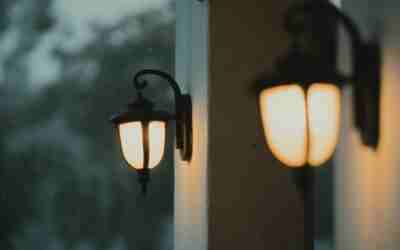
A 60 W-equivalent LED is about 800 lumens, so a 9 W bulb already covers a standard entry. For fixtures, a sealed outdoor porch light like the one in our mirrea matte black porch light review is the kind of wall light to look at, but confirm the wet or damp rating on any model.
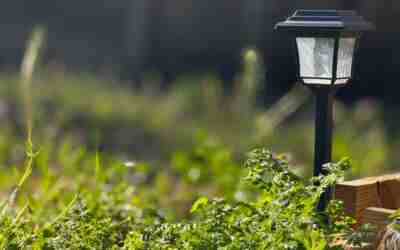
For pathways, low-voltage fixtures are easier to run on a timer. See LED landscape lights for wired options, or solar pathway lights when there’s no outlet nearby. Solar run time depends on sun, season and battery, so check the model’s stated hours.
Quick checklist
- Fixture label says wet or damp for its spot.
- Bulb wattage under the fixture limit and rated for enclosed use if needed.
- Warm 2700K to 3000K, aimed down, no glare toward neighbors.
- Photocell, timer or motion control in place.
- GFCI protection on any plug-in light or timer.
Our Top Picks
Ready to shop? These are the top-rated options from our hands-on roundup, Best Dusk To Dawn Outdoor Lights of 2026.

GE LED+ A19 Dusk to Dawn LED Light Bulbs (2-Pack)

LUTEC 80W 9000LM Dusk to Dawn 4-Head LED Flood Light

TORCHSTAR A19 9W Dusk to Dawn LED Light Bulb 4-Pack
As an Amazon Associate we earn from qualifying purchases. Product prices and availability are accurate as of the date/time indicated.
Frequently Asked Questions
Is it OK to leave a porch light on 24/7?
It’s safe with a wet- or damp-rated fixture and an LED bulb, but it wastes energy in daylight and shortens bulb life. A photocell or timer avoids that. A 15,000-hour LED lasts about four years at 10 hours a night.
Do outdoor lights attract bugs?
Yes, especially bright, bluish bulbs. Warm 2700K to 3000K LEDs and shielded fixtures draw fewer insects than cool white or unshielded ones. Fewer hours of use also helps, so motion sensors or timers reduce the problem.
Can you leave outdoor Christmas lights on overnight?
Only if they’re rated for outdoor use and undamaged. Fire safety groups such as the NFPA advise turning decorations off when you sleep or leave home. A timer handles this automatically and keeps strands within the package limits.
Will solar lights stay on all night?
It depends on the model, battery size, season and how much sun the panel gets. Many run several hours after dusk, and some dim or use motion mode to stretch it. Check the manufacturer’s stated run time, and expect less in winter.
{“@context”: “https://schema.org”, “@type”: “FAQPage”, “mainEntity”: [{“@type”: “Question”, “name”: “Is it OK to leave a porch light on 24/7?”, “acceptedAnswer”: {“@type”: “Answer”, “text”: “It’s safe with a wet- or damp-rated fixture and an LED bulb, but it wastes energy in daylight and shortens bulb life. A photocell or timer avoids that. A 15,000-hour LED lasts about four years at 10 hours a night.”}}, {“@type”: “Question”, “name”: “Do outdoor lights attract bugs?”, “acceptedAnswer”: {“@type”: “Answer”, “text”: “Yes, especially bright, bluish bulbs. Warm 2700K to 3000K LEDs and shielded fixtures draw fewer insects than cool white or unshielded ones. Fewer hours of use also helps, so motion sensors or timers reduce the problem.”}}, {“@type”: “Question”, “name”: “Can you leave outdoor Christmas lights on overnight?”, “acceptedAnswer”: {“@type”: “Answer”, “text”: “Only if they’re rated for outdoor use and undamaged. Fire safety groups such as the NFPA advise turning decorations off when you sleep or leave home. A timer handles this automatically and keeps strands within the package limits.”}}, {“@type”: “Question”, “name”: “Will solar lights stay on all night?”, “acceptedAnswer”: {“@type”: “Answer”, “text”: “It depends on the model, battery size, season and how much sun the panel gets. Many run several hours after dusk, and some dim or use motion mode to stretch it. Check the manufacturer’s stated run time, and expect less in winter.”}}]}