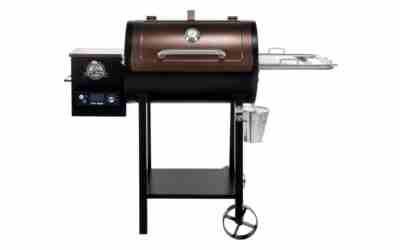
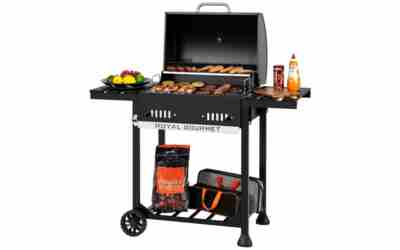
To smoke ribs in a smoker, hold 225–250°F and plan on about 5–6 hours for spare ribs or 4–5 hours for baby backs. They are done when a probe slides in with little resistance, usually around 195–203°F. Pork is safe at 145°F, but ribs need the higher range to turn tender. Times vary by rack and smoker.
Which ribs should you buy, and how many fit?
Buy what fits your smoker and your schedule. Baby backs cook faster and are leaner. Spare ribs have more fat and chew, which gives richer flavor but takes longer.
| Cut | Typical rack weight | Character | Choose it if |
|---|---|---|---|
| Baby back | 1.5–2.5 lb | Lean, curved, quicker | You want a shorter cook or a milder bite |
| Spare ribs | 2.5–4 lb (untrimmed, can run higher) | Fattier, flatter, more flavor | You have 6+ hours and want classic rib flavor |
| St. Louis cut | 2.5–3.5 lb | Spare ribs trimmed square | You want even cooking and easy slicing |
Weights vary by packer, so treat them as ballpark figures. Plan on roughly 3/4 to 1 pound of bone-in ribs per adult.
How many racks fit depends on your grate size and model. A rib rack that stands the slabs on edge often doubles capacity. Leave a little space between racks so smoke and heat can move around them.
How do you prep ribs: membrane, trim and rub?
Yes, remove the membrane. It is a thin, tough skin on the bone side that stays leathery and blocks rub and smoke. Prep takes about 15 minutes.
- Pat the ribs dry with paper towels so the rub sticks.
- Remove the membrane. Slide a butter knife tip under it at one end of a middle bone, lift, grip with a paper towel and pull it off in one sheet.
- Trim. Cut off loose flaps and any big pockets of hard fat. For spare ribs, you can remove the rib tips and sternum to make a St. Louis cut, or ask your butcher to do it.
- Add a binder. A thin smear of yellow mustard or oil helps the rub grip. The mustard taste cooks off.
- Season all sides. Use a store-bought or homemade pork rub and cover the meat evenly. Check the label: many rubs are salty, so don’t add extra salt on top.
- Let it sit 30 minutes at room temperature while the smoker heats, or up to overnight in the fridge. Don’t leave raw pork out longer than 2 hours.
What temperature, wood and fuel should you use?
Run the smoker between 225°F and 250°F. At 225°F you get a bit more smoke time but a longer cook. At 250°F ribs finish sooner and the bark sets well. Both work, so pick one and hold it steady. Expect swings of 15–25°F on many smokers, and cook by feel and temperature rather than the clock.
Hickory, apple, cherry, pecan and maple are all popular with pork. Apple and cherry are mild and sweet. Hickory and pecan are stronger. Mesquite is harsh, so blend it with a milder wood or skip it. Use a few chunks or a small amount of pellets, not a heavy load. Thick white smoke is the cause of most bitter ribs. You want thin, pale blue smoke.
Fuel depends on your smoker type:
- Pellet: set the temp and add flavor pellets. See our picks for the best wood pellets for smoking ribs.
- Charcoal: use lump or briquettes plus 2–4 wood chunks. Vent control is the learning curve, and our charcoal smoker picks for beginners cover easier options.
- Electric: set the dial and add chips in the tray. Chip load and burn time vary by model, so check your manual.
- Offset: manage a small, clean fire and add split wood in small amounts.
Still deciding what to buy? Our guide on what kind of smoker to get explains the tradeoffs.
What is the step-by-step cook plan for smoked ribs?
- Preheat the smoker to 225–250°F and let the smoke turn thin and blue.
- Place the ribs meat side up, bone side down, away from direct flame. If your smoker has a water pan, fill it. Some models benefit from it, others don’t, so follow your manual.
- Smoke uncovered for the first 2–3 hours without opening the lid often. You want the bark to turn deep mahogany and set, so it doesn’t rub off when touched.
- Wrap or not (see the next section). If you wrap, add a little butter, honey or apple juice and seal tightly.
- Return to the smoker and check tenderness with a probe about an hour before the earliest finish time.
- Sauce lightly in the last 15–30 minutes. Sugary sauce burns, so don’t put it on early.
- Rest 10–15 minutes on a cutting board, then slice between the bones.
Use these timelines as starting points, not promises. Rack thickness, smoker hot spots, weather and how often you open the lid all change the result.
| Method | Baby back | Spare / St. Louis |
|---|---|---|
| Unwrapped, 225–250°F | about 4–5 hr | about 5–6 hr |
| 3-2-1 (3 smoke, 2 wrapped, 1 unwrapped) | Too long, often falls apart | about 6 hr |
| 2-2-1 or 3-1-1 | about 5 hr | Works for thinner racks |
Should you wrap ribs, and is 3-2-1 too long?
Wrapping is optional. It speeds the cook, pushes through the stall, and gives softer, moister meat. The cost is a softer bark and, if you wrap too long, mushy ribs.
The 3-2-1 method is 3 hours smoking, 2 hours wrapped, 1 hour unwrapped. It suits fatty spare ribs well. On baby backs it usually overcooks, which is why 2-2-1 or 3-1-1 are better starting points for them.
Foil or butcher paper? Foil seals tightly and steams the meat, so it makes the softest, fastest result but softens the bark most. Pink butcher paper breathes a little, so the bark holds up better while the ribs still tenderize. Use paper if you want some chew and a firmer crust, and foil if you want fall-off-the-bone.
Choose unwrapped if you like a firm bite and a crisp bark, and you have the time. Choose wrapped if you are short on time, your smoker runs hot and dry, or you want very tender meat.
Be careful when you open a wrap. Hot steam can burn you, so open it away from your face and wear heat-resistant gloves.
How do you know smoked ribs are done?
Use temperature as a guide and feel as the final test. USDA lists 145°F with a 3-minute rest as the safe minimum for pork. Ribs are loaded with connective tissue, though, which needs roughly 195–203°F to melt. That is why sources quote different numbers: 145°F is for safety and 195–205°F is for tenderness. Ribs pulled at 145°F are safe but tough.
- Probe test: push an instant-read thermometer or toothpick into the thickest meat between bones, avoiding the bone. It should slide in with little resistance, like going into soft butter.
- Bend test: lift the rack with tongs from one end. It should bend about 45–90 degrees and the surface should crack. If it breaks in two, it is overdone.
- Bone pullback: the meat should have shrunk back from the bone ends by roughly 1/4 inch or more.
Baby backs often feel done toward the low end of the range. Spare ribs often need the higher end. Probe several spots, since thin ends finish before thick ones.
Why are my ribs mushy, dry or bitter, and what are the safety rules?
- Mushy: too long wrapped or too hot. Shorten the wrap to 1 hour, or skip it, and check earlier.
- Dry or tough: pulled too early, or the smoker ran too hot. Cook until the probe slides in, and keep the temp steady.
- Bitter or acrid: too much wood or thick white smoke. Use less wood and keep vents open so the fire burns clean.
- Stalled temperature: a plateau at around 150–170°F is normal as moisture evaporates. Wait it out or wrap.
Food safety: thaw frozen ribs in the fridge, not on the counter. Keep raw pork away from ready-to-eat food and wash hands, boards and knives after handling it. Refrigerate leftovers within 2 hours, or 1 hour if it is above 90°F outside. USDA advises eating refrigerated leftovers within 3–4 days and reheating to 165°F.
Fire and carbon monoxide: smoke only outdoors, never in a garage, under an overhang, or in an enclosed porch. Charcoal and wood produce carbon monoxide, which is deadly. Keep the smoker a safe distance from walls, fences and deck rails. Your manual gives the minimum clearance, which varies by model. Dispose of ash in a metal container only once it is fully cold, and never leave a lit smoker unattended.
Newer to smoking? Our best smokers for beginners roundup and the Masterbuilt 30-inch digital electric smoker review are good places to start if rib night is your first smoke.
Our Top Picks
Ready to shop? These are the top-rated options from our hands-on roundup, Best Wood To Smoke Pork of 2026.
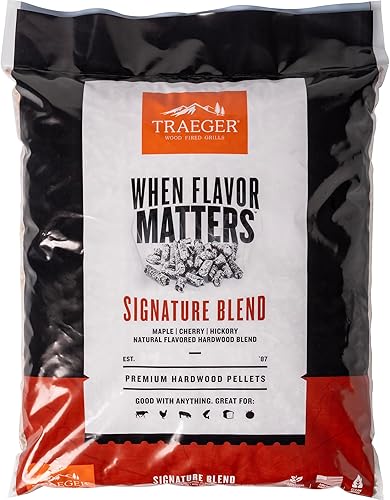
Traeger Signature Blend Wood Pellets 18 lb

B&B Charcoal Post Oak Wood Chunks 549 cu in

Fire & Flavor Oak Wood Chunks for Smoking Grilling
As an Amazon Associate we earn from qualifying purchases. Product prices and availability are accurate as of the date/time indicated.
Frequently Asked Questions
Do I need a water pan to smoke ribs?
Not always. A water pan can steady temperature and add humidity in some smokers, while pellet and many electric models do fine without one. Follow your smoker’s manual. Wrapping or spritzing ribs handles dryness better than a pan does.
How much ribs per person should I smoke?
Plan on about 3/4 to 1 pound of bone-in ribs per adult, which is roughly 3–4 baby back ribs or 2–3 spare ribs. Add more for big eaters or if ribs are the only main dish. Raw rack weights vary.
Can I smoke ribs a day ahead?
Yes. Cool them and get them in the fridge within 2 hours. To serve, wrap with a splash of apple juice and reheat at about 250°F until they reach 165°F. Sauce them at the end so the glaze stays fresh.
Can I smoke ribs from frozen?
Thaw them first. Frozen ribs spend too long in the temperature danger zone and cook unevenly. Thaw in the refrigerator for 1–2 days, depending on thickness, then pat dry before applying the rub.
{“@context”: “https://schema.org”, “@type”: “FAQPage”, “mainEntity”: [{“@type”: “Question”, “name”: “Do I need a water pan to smoke ribs?”, “acceptedAnswer”: {“@type”: “Answer”, “text”: “Not always. A water pan can steady temperature and add humidity in some smokers, while pellet and many electric models do fine without one. Follow your smoker’s manual. Wrapping or spritzing ribs handles dryness better than a pan does.”}}, {“@type”: “Question”, “name”: “How much ribs per person should I smoke?”, “acceptedAnswer”: {“@type”: “Answer”, “text”: “Plan on about 3/4 to 1 pound of bone-in ribs per adult, which is roughly 3–4 baby back ribs or 2–3 spare ribs. Add more for big eaters or if ribs are the only main dish. Raw rack weights vary.”}}, {“@type”: “Question”, “name”: “Can I smoke ribs a day ahead?”, “acceptedAnswer”: {“@type”: “Answer”, “text”: “Yes. Cool them and get them in the fridge within 2 hours. To serve, wrap with a splash of apple juice and reheat at about 250°F until they reach 165°F. Sauce them at the end so the glaze stays fresh.”}}, {“@type”: “Question”, “name”: “Can I smoke ribs from frozen?”, “acceptedAnswer”: {“@type”: “Answer”, “text”: “Thaw them first. Frozen ribs spend too long in the temperature danger zone and cook unevenly. Thaw in the refrigerator for 1–2 days, depending on thickness, then pat dry before applying the rub.”}}]}