
A good raised garden bed size is 3 to 4 feet wide, 4 to 8 feet long and 12 to 18 inches tall.
Raised garden bed size at a glance
Use these ranges as a starting point, then adjust for your space, your reach and your crops. A bed 3-4 ft wide lets you reach the middle from either side without stepping on the soil, and 12-18 in of depth suits most vegetables.
| Dimension | Best range | Why |
|---|---|---|
| Width, reachable from both sides | 3-4 ft | Rule of thumb: most adults can reach about 2 ft in from each side |
| Width, one side only (against a wall or fence) | 1.5-2 ft | You can only reach about one arm’s length |
| Length | 4-8 ft | Easy to manage; longer beds need more bracing and lumber |
| Height (soil depth) | 12-18 in | Gives roots room above poor or hard subsoil |
| Paths between beds | 2-3 ft | Room to kneel, carry a bucket or push a wheelbarrow |
The 4×8 ft bed is a convention, not a rule. It is popular because it fits standard lumber lengths and suits most adults, but your yard and your reach should decide the final size.
How wide can a raised bed be?
Four feet is the practical maximum when you can reach the bed from both sides. Past that, you have to lean or step into the soil, and stepping compacts it and defeats the point of a raised bed.
- 3 ft wide: comfortable for shorter gardeners and for kids who help.
- 4 ft wide: the most planting space while keeping the center reachable.
- 1.5-2 ft wide: use this when one long side sits against a fence, wall or house, since you can only work from the open side.
Test it before you build. Stand where the bed will go, reach across with a hand trowel, and see whether you can comfortably touch the far center line. If you can’t, go narrower. Reach varies from person to person, so your own test beats any chart.
How long should a raised bed be?
Plan on 4 to 8 feet. A 4-foot bed is easy to build and move around. An 8-foot bed gives more planting room without long walks around the end.
Soil pushes outward on the sides, so longer beds need more bracing. As a rule of thumb, add a cross brace at the midpoint of beds over 8 feet. Beds beyond 12 feet also use noticeably more lumber and force a long detour when you want to cross to the other side. If you want a longer run, leave a gap or stepping path every 8 feet or so.
Unusual spaces call for unusual sizes. A 3×6 ft bed, a 2×8 ft bed along a fence or a 4×4 ft square all work well. Pick the size that fits your yard rather than forcing a 4×8 ft bed into it.
Wood choice matters for food beds. Untreated, rot-resistant wood or another material made for vegetable beds is the usual choice; follow the manual or label for any treated lumber or kit. Our guide to the best material to build a raised bed garden compares the options.
How deep should a raised garden bed be?
Twelve inches of soil is enough for most vegetables. Go to 18 inches if you want deep-rooted crops or if the bed sits on hard ground, such as a patio, gravel or compacted clay. These depths are rules of thumb; roots can go deeper if the native soil underneath is loose.
| Crop | Soil depth to plan for |
|---|---|
| Lettuce, radishes, spinach, most herbs | 6-12 in |
| Bush beans, peppers, cucumbers, kale | 12 in |
| Tomatoes, carrots, potatoes, squash | 12-18 in |
If the bed has no bottom and sits on loosened native soil, roots will reach below the frame, so a frame shorter than 12 in can still work. If the bed sits on pavement or a deck, treat the frame height as your full soil depth. For a closer look at height and how it affects back strain, see our guide to the best height for a raised garden bed.
Soil volume by bed size
Soil is usually the biggest cost, so size the bed with the volume in mind. Volume in cubic feet is length x width x soil depth, all in feet. Divide by 27 for cubic yards. The figures below are estimates calculated with that method and rounded.
| Bed size | Planting area | Soil at 12 in | Soil at 18 in |
|---|---|---|---|
| 2 x 8 ft | 16 sq ft | 16 cu ft | 24 cu ft |
| 4 x 4 ft | 16 sq ft | 16 cu ft | 24 cu ft |
| 3 x 6 ft | 18 sq ft | 18 cu ft | 27 cu ft |
| 4 x 8 ft | 32 sq ft | 32 cu ft (about 1.2 cu yd) | 48 cu ft (about 1.8 cu yd) |
| 4 x 12 ft | 48 sq ft | 48 cu ft (about 1.8 cu yd) | 72 cu ft (about 2.7 cu yd) |
Example: a 4×8 ft bed filled to 12 inches needs 4 x 8 x 1 = 32 cubic feet. Order a little extra, since soil settles after the first watering. To stretch your budget, you can fill the bottom of a deep bed with other material; our guide to the best way to fill raised garden beds explains how.
Raised garden bed size for accessibility and kids
Standard beds are hard to use from a wheelchair or with a bad back, so change both width and height.
- Width: stay within the 3-4 ft range if the bed can be reached from both sides, and use 1.5-2 ft if it can be reached from one side only. A 3 ft width also works well for kids.
- Height for wheelchair access: no taller than 34 in, per Seattle community gardening guidance. Many gardeners prefer 24-30 in so they can slide knees or armrests close to the bed.
- Standing or seated gardeners with back trouble: 24-36 in tall reduces bending. Taller beds need a solid frame, since soil pushes outward harder as the bed gets taller.
- Paths: allow 3 ft or more for a wheelchair to pass, and extra room where it needs to turn. Check local or ADA guidance if the garden is shared or public.
Path spacing and matching bed size to your yard
Leave 2 to 3 feet between beds. Two feet is the minimum for walking and kneeling. Use 3 feet if you will push a wheelbarrow, and wider if you want to run a mower between beds.
Worked example (estimate): you have a 12 x 20 ft sunny area. Two 4×8 ft beds side by side with a 3-ft path between them need 4 + 3 + 4 = 11 ft across and 8 ft along. That leaves room for a 3-ft path at each end (3 + 8 + 3 = 14 of your 20 ft) and gives 2 x 32 = 64 sq ft of planting space.
Starting point: if you have the room and want a full vegetable garden, begin with 4 ft wide and 8 ft long. Choose 4×4 ft for a first bed, 1.5-2 ft wide against a fence, and 24-30 in tall if bending is a problem.
Our Top Picks
Ready to shop? These are the top-rated options from our hands-on roundup, Best Deep Raised Garden Beds of 2026.

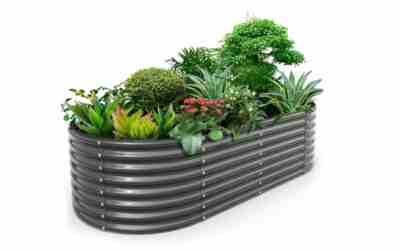
Anleolife 8x4x2ft Oval Deep Root Galvanized Raised Garden Bed, 478 Gallon Extra Tall Metal Planter in Quartz Grey

Reachible 8x2x2FT Galvanized Raised Garden Bed, 24-Inch Deep Metal Planter Box with 32 Cu. Ft Capacity and Internal Support Rods

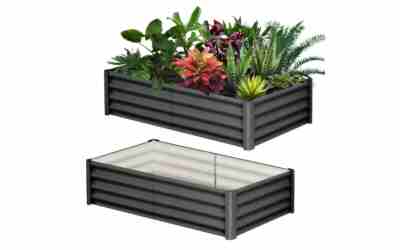
STMHOM 2-Pack Galvanized Raised Garden Beds, 6x3x1 FT Metal Planters with Safety Edges and Open Base for Vegetables and Flowers
As an Amazon Associate we earn from qualifying purchases. Product prices and availability are accurate as of the date/time indicated.
Frequently Asked Questions
Is a 4×8 raised bed too big for a beginner?
Not usually, but a 4×4 ft bed is easier to start with. It is 16 sq ft, needs about 16 cubic feet of soil at 12 inches deep, and is simple to weed and water. You can add a second bed next season.
Is a 2×8 bed better than a 4×4?
They give the same 16 sq ft and the same soil volume. A 2×8 ft bed fits along a fence and can be worked from one side, while a 4×4 ft bed needs access from at least two sides. Choose based on where it will sit.
Can I put a raised bed on grass without removing the sod?
Many gardeners do. They lay flattened cardboard or several layers of plain newspaper over the grass, set the frame on top and fill it with soil. The covering blocks light so the grass underneath breaks down. Trim the grass around the edges so it does not creep in.
Can I build a raised bed on a slope?
Yes. Level the frame by digging into the uphill side or by stepping the bed into the slope, and run the long side across the slope rather than down it. The downhill wall holds more soil, so brace it well and follow the manual if you are using a kit.
Can I stack two raised beds to make one taller bed?
Often, yes, if the kit or frame is designed for it. Fasten the layers together so they cannot shift, and expect more soil pressure on the walls than a single layer. Check the manufacturer’s instructions for stacking limits.
{“@context”: “https://schema.org”, “@type”: “FAQPage”, “mainEntity”: [{“@type”: “Question”, “name”: “Is a 4×8 raised bed too big for a beginner?”, “acceptedAnswer”: {“@type”: “Answer”, “text”: “Not usually, but a 4×4 ft bed is easier to start with. It is 16 sq ft, needs about 16 cubic feet of soil at 12 inches deep, and is simple to weed and water. You can add a second bed next season.”}}, {“@type”: “Question”, “name”: “Is a 2×8 bed better than a 4×4?”, “acceptedAnswer”: {“@type”: “Answer”, “text”: “They give the same 16 sq ft and the same soil volume. A 2×8 ft bed fits along a fence and can be worked from one side, while a 4×4 ft bed needs access from at least two sides. Choose based on where it will sit.”}}, {“@type”: “Question”, “name”: “Can I put a raised bed on grass without removing the sod?”, “acceptedAnswer”: {“@type”: “Answer”, “text”: “Many gardeners do. They lay flattened cardboard or several layers of plain newspaper over the grass, set the frame on top and fill it with soil. The covering blocks light so the grass underneath breaks down. Trim the grass around the edges so it does not creep in.”}}, {“@type”: “Question”, “name”: “Can I build a raised bed on a slope?”, “acceptedAnswer”: {“@type”: “Answer”, “text”: “Yes. Level the frame by digging into the uphill side or by stepping the bed into the slope, and run the long side across the slope rather than down it. The downhill wall holds more soil, so brace it well and follow the manual if you are using a kit.”}}, {“@type”: “Question”, “name”: “Can I stack two raised beds to make one taller bed?”, “acceptedAnswer”: {“@type”: “Answer”, “text”: “Often, yes, if the kit or frame is designed for it. Fasten the layers together so they cannot shift, and expect more soil pressure on the walls than a single layer. Check the manufacturer’s instructions for stacking limits.”}}]}