
Outdoor LED light lifespan is typically 25,000 to 50,000 rated hours, or about 9 to 17 years at 8 hours a night.
What the rated hours on outdoor LED lights really mean
Most outdoor LED products are rated between 25,000 and 50,000 hours. Some landscape and commercial fixtures list 70,000 hours or more, depending on the model.
That figure is a rating, not a guarantee. It usually means L70: the point where light output has faded to 70% of new. The LED has not failed at that point. It is just dimmer.
The rating also covers the LED chips only. The driver, transformer, wiring, connectors and seals have their own lifespans, and they often give out first. A fixture is only as durable as its weakest part.
Three checks help you judge a claim:
- L70 with test conditions. A rating that states L70 and the hours per day it assumes is more useful than a bare “up to 50,000 hours.”
- LM-80 and TM-21 data. These are the standard tests and projection method behind L70 numbers. Commercial-grade makers often publish them. Many consumer products do not.
- Warranty length. It shows how much the maker trusts the whole fixture, not just the chip. A 1-year warranty on a 50,000-hour claim tells you something.
How to convert rated hours into years
Multiply the hours the light runs each night by 365, then divide the rated hours by that number. The table does the math for 25,000-hour and 50,000-hour ratings.
| Daily use | Hours per year | Years at 25,000 hours | Years at 50,000 hours |
|---|---|---|---|
| 3 hours | 1,095 | 22.8 | 45.7 |
| 6 hours | 2,190 | 11.4 | 22.8 |
| 8 hours | 2,920 | 8.6 | 17.1 |
| 12 hours | 4,380 | 5.7 | 11.4 |
| 24 hours | 8,760 | 2.9 | 5.7 |
Dusk to dawn is not 12 hours all year. It shifts with season and latitude, so use the 12-hour row as a midpoint and adjust for your area.
Worked example
A path light is rated 30,000 hours to L70 and runs on a dusk-to-dawn photocell that averages 10 hours a night.
- 10 hours × 365 nights = 3,650 hours per year.
- 30,000 ÷ 3,650 = 8.2 years until it reaches 70% brightness.
Put the same light on a 4-hour timer and it uses 1,460 hours a year, so the same rating stretches to about 20.5 years. Cutting hours is the easiest way to stretch the calendar life of a light. These figures are years to L70, not years of warranty.
What makes outdoor LED lights fail early
Heat, water and electrical stress cause most early failures. Each one has a practical fix.
- Heat. LED life drops as the chip runs hotter. Enclosed fixtures, dark housings in full sun, and lights buried in mulch or leaves trap heat. Keep vents clear and use bulbs marked for enclosed fixtures.
- Moisture. The IP rating tells you how well a fixture is sealed. IP44 handles splashing. IP65 handles water jets. IP67 handles temporary immersion. Use IP65 or higher where rain hits directly, and IP67 for ground-level lights that sit in puddles. Gaskets harden and lenses crack over time, so seals age faster than the LEDs.
- Power surges. Lightning and utility surges damage drivers and transformers first. Plug lights into GFCI-protected outlets and consider a surge protector on the circuit.
- Cheap drivers. The driver converts household power for the LEDs, and it is a common weak point in low-cost fixtures. A flickering or dead light with a good bulb often has a failing driver.
- Overloaded low-voltage runs. Lights at the end of a long run get less voltage and dim. Never exceed the transformer’s wattage rating.
- Salt air and freeze-thaw. Salt corrodes connectors and finishes. Repeated freezing cracks seals. Look for finishes the maker rates for coastal use, since this varies by model.
- Poor installation. Unsealed connectors and cords left in standing water are common causes. For string lights, our guide to putting up outdoor patio lights covers support, slack and plug placement.
Integrated LED vs replaceable bulbs vs halogen
The type of fixture decides whether a failure is a five-minute fix or a full replacement.
- Integrated LED fixtures have the LED board and driver sealed inside. They are slim and well sealed, but when the driver or board dies, you replace the whole fixture. A few commercial models have a replaceable driver module, so check the manual.
- Replaceable-bulb fixtures keep the housing and swap the bulb. They are easier to repair, but the bulb needs the right base, a wet or damp rating, and an enclosed-fixture rating if the lens is closed.
Decision rule: pick replaceable bulbs if you want repairability, and integrated fixtures if you want a sealed, low-profile light and accept replacing the unit.
| Light source | Rated hours | Years at 8 hours a night |
|---|---|---|
| Halogen | 2,000 to 3,000 | 0.7 to 1.0 |
| LED | 25,000 to 50,000 | 8.6 to 17.1 |
A halogen landscape bulb used 8 hours a night is a yearly chore. An LED in the same spot can outlast the fixture around it.
How long do solar LED lights last?
The LED in a solar light can last for many years, but the rechargeable battery usually wears out much sooner. Each night is one charge and discharge cycle, so capacity slowly drops and the light runs shorter or dimmer. How fast depends on the battery type and the quality of the unit.
Other limits are the solar panel and the case. A panel that clouds, yellows or sits in shade charges less. A cracked case lets water reach the electronics. Winter’s short days also cut charging, which can look like failure when it is not.
Before you buy or repair a solar light, check whether the battery is replaceable and what type it uses. Replace it only with the type the manual calls for. If the battery is sealed inside the unit, the whole light is disposable once the battery fades. To see how one solar set is built and specified, read our Intelamp solar outdoor lights review.
Repair or replace outdoor LED lights
Turn off power at the breaker before touching any outdoor fixture. Use wet-rated fixtures and cords, plug into GFCI outlets, and hire a licensed electrician for 120V wiring. Follow local code.
| Symptom | Likely cause | What to do |
|---|---|---|
| One light out in a low-voltage run | Bad bulb or loose connector | Reseat or replace the connector. Swap the bulb if replaceable. |
| Whole run dark or flickering | Tripped GFCI, timer, photocell or transformer | Reset the GFCI, check the timer or photocell, then the transformer. |
| Lights dim toward the end of the run | Voltage drop or overloaded transformer | Shorten the run or reduce the total wattage. |
| Water or fog inside the lens | Failed seal | Dry it and reseal if the gasket is serviceable. Replace if the housing is cracked. |
| Flicker on a dimmer | Dimmer not rated for LEDs, or failing driver | Use an LED-rated dimmer. Replace the fixture if flicker continues. |
| Slowly dimmer after many years | Nearing L70 | Replace when the light is too dim for the job. |
Rule of thumb: repair when the fault is a connector, timer, photocell, bulb or seal. Replace when a sealed driver or LED board has failed, or when the housing is corroded or cracked. If you are replacing a whole landscape system, our roundup of LED landscape lights compares current options.
Our Top Picks
Ready to shop? These are the top-rated options from our hands-on roundup, Best Step Lights Outdoor of 2026.

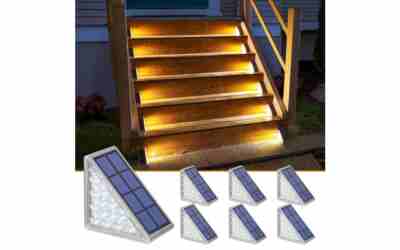
VOLISUN Solar Stair Lights 6-Pack, Outdoor Waterproof LED

AUDLES Solar Step Lights, IP67 Waterproof, 6 Pack
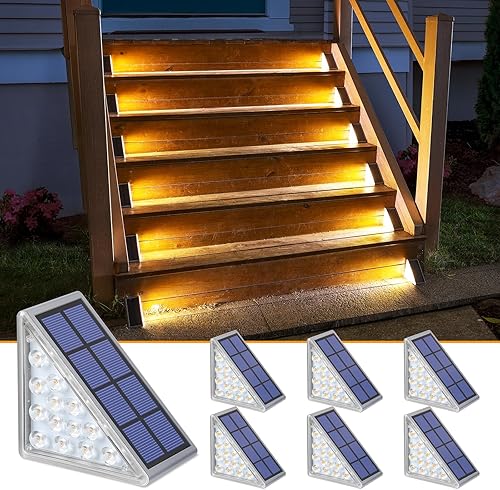
NIORSUN 6-Pack Solar LED Step Lights Warm White IP67
As an Amazon Associate we earn from qualifying purchases. Product prices and availability are accurate as of the date/time indicated.
Frequently Asked Questions
Can I leave outdoor LED lights on all night every night?
Yes, LEDs are built for it. The cost shows up in the calendar: at 12 hours a night, a 25,000-hour light reaches L70 in about 5.7 years. A timer that skips the late hours stretches that.
Do outdoor LED lights burn out like regular bulbs?
Rarely in the old way. LED chips usually dim slowly toward L70 instead of cutting out. A sudden total failure more often points to the driver, a connector, a tripped GFCI or a failed seal.
Can I put an LED bulb in an enclosed outdoor fixture?
Only if the bulb’s packaging says it is rated for enclosed fixtures. Trapped heat shortens LED life. Also check that the bulb has a wet or damp rating and stays within the fixture’s maximum wattage.
Does dimming make outdoor LED lights last longer?
Running at lower output generally means less heat, which helps LED life. The gain varies by model, and the dimmer must be rated for LEDs. A mismatched dimmer causes flicker and can stress the driver.
{“@context”: “https://schema.org”, “@type”: “FAQPage”, “mainEntity”: [{“@type”: “Question”, “name”: “Can I leave outdoor LED lights on all night every night?”, “acceptedAnswer”: {“@type”: “Answer”, “text”: “Yes, LEDs are built for it. The cost shows up in the calendar: at 12 hours a night, a 25,000-hour light reaches L70 in about 5.7 years. A timer that skips the late hours stretches that.”}}, {“@type”: “Question”, “name”: “Do outdoor LED lights burn out like regular bulbs?”, “acceptedAnswer”: {“@type”: “Answer”, “text”: “Rarely in the old way. LED chips usually dim slowly toward L70 instead of cutting out. A sudden total failure more often points to the driver, a connector, a tripped GFCI or a failed seal.”}}, {“@type”: “Question”, “name”: “Can I put an LED bulb in an enclosed outdoor fixture?”, “acceptedAnswer”: {“@type”: “Answer”, “text”: “Only if the bulb’s packaging says it is rated for enclosed fixtures. Trapped heat shortens LED life. Also check that the bulb has a wet or damp rating and stays within the fixture’s maximum wattage.”}}, {“@type”: “Question”, “name”: “Does dimming make outdoor LED lights last longer?”, “acceptedAnswer”: {“@type”: “Answer”, “text”: “Running at lower output generally means less heat, which helps LED life. The gain varies by model, and the dimmer must be rated for LEDs. A mismatched dimmer causes flicker and can stress the driver.”}}]}