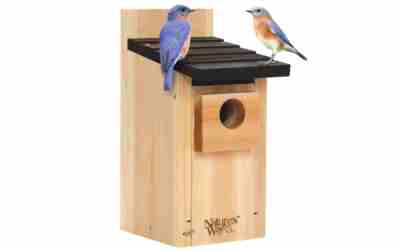
To choose a bird feeder, start with the birds you want to attract, then match the feeder type to their food: tube feeders for small seed eaters, hoppers and platforms for mixed seed, cage feeders for suet, and nectar feeders for hummingbirds. After that, check how easy it is to clean, how it handles squirrels, and where it will hang.
Start With the Birds and the Food
Food drives everything. A feeder is just a delivery system, so decide what you plan to serve first. If you aren’t sure which birds visit your yard, start with black-oil sunflower seed. It is high in fat, has a thin shell, and is eaten by cardinals, chickadees, titmice, finches, nuthatches, and many others.
| Food | Typical visitors | Best feeder type |
|---|---|---|
| Black-oil sunflower | Cardinals, chickadees, finches, jays | Hopper, tube, platform |
| Nyjer (thistle) | Goldfinches, house finches, pine siskins | Mesh sock or tube with tiny ports |
| Suet | Woodpeckers, nuthatches, chickadees | Cage feeder |
| Sugar nectar | Hummingbirds, orioles | Nectar feeder |
| Cracked corn, millet | Doves, sparrows, juncos | Platform or ground tray |
| Oranges, grape jelly | Orioles | Oriole feeder or simple tray |
Avoid cheap mixes heavy in red milo, wheat, and filler grains. Many birds kick these onto the ground, where they rot and attract rodents.
Pick the Feeder Type
Tube feeders
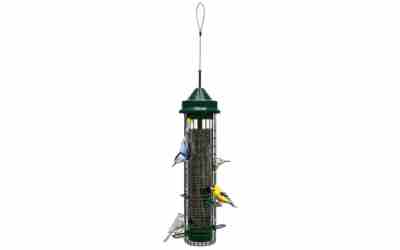
A tube feeder is a clear cylinder with feeding ports and perches. It suits sunflower seed or nyjer and keeps seed fairly dry. Ports with small perches favor small birds like chickadees and finches, while larger birds struggle to hang on. If you want finches specifically, see our picks for the best bird feeder for finches.
Hopper feeders
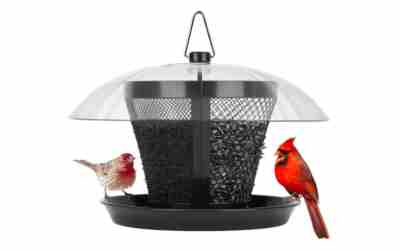
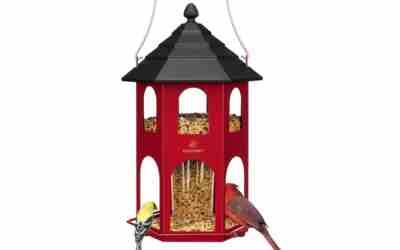
A hopper (house-style) feeder holds a lot of seed and shelters it under a roof. It draws the widest range of birds, including cardinals and grosbeaks, and works well if you don’t want to refill daily. Look for a drainage gap or mesh floor so wet seed doesn’t sit and spoil.
Platform and tray feeders
Open trays attract the most species, including doves, sparrows, and juncos. The tradeoff is exposure: rain, droppings, and squirrels reach the seed easily. Choose a model with a mesh bottom for drainage, and put out only what birds eat in a day or two.
Suet feeders
Wire cages hold suet cakes and appeal to woodpeckers, nuthatches, and chickadees. In hot weather, standard suet can turn soft or rancid. Look for no-melt or rendered suet cakes if summer temperatures climb into the 80s and 90s.
Nectar feeders
Hummingbird feeders hold a sugar solution of 1 part plain white sugar to 4 parts water. Skip red dye and never use honey or artificial sweeteners. Choose a model with a wide-mouth opening or one that comes apart into a few pieces, because nectar feeders need frequent cleaning.
Features That Matter More Than Looks
Two feeders that look alike can be very different to use. Check these before buying:
- Easy cleaning: Fewer seams, a removable base, and wide openings make scrubbing faster. A feeder you hate cleaning will not get cleaned. Our guide on how to clean a bird feeder shows the routine to plan around.
- Material: Metal and thick recycled plastic hold up well. Thin plastic tubes can crack in the cold or yellow in strong sun. Untreated wood absorbs moisture and is harder to disinfect.
- Metal ports and perches: Metal around the feeding ports resists squirrel chewing. Plastic ports are usually the first thing to get gnawed.
- Capacity: A 1 to 2 pound feeder is plenty for a few birds. Larger hoppers holding 5 pounds or more save refills but can let seed sit too long if traffic is low.
- Drainage and roof coverage: Wet seed grows mold. Drain holes and a roof help keep it dry.
- Hanging hardware: A sturdy hook or loop and a secure lid matter in wind and when a squirrel lands on it.
Specific features vary by model, so read the product details for dimensions, materials, and dishwasher-safe claims rather than assuming.
Match the Feeder to Your Space
Your yard, balcony, or window decides how you can mount a feeder, and that narrows the choices fast.
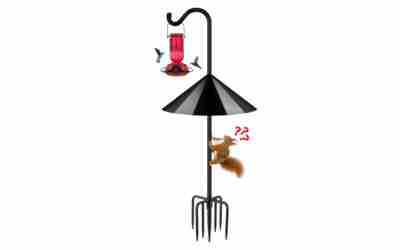
- Open yard: A pole system lets you hang several feeders in one spot and add a baffle. A good bird feeder pole is often the most flexible setup.
- Small patio or balcony: Choose compact feeders with seed trays or catch pans to reduce mess. Check your lease or HOA rules first, since some restrict feeders or require that nothing fall onto neighboring units.
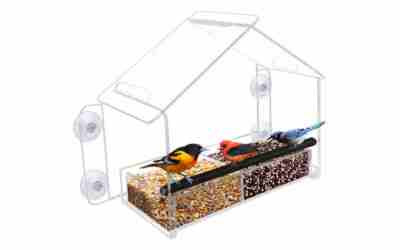
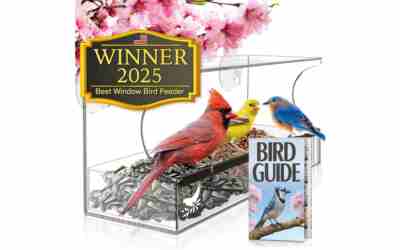
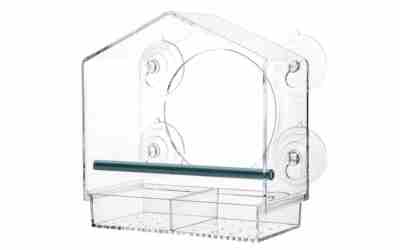
- Window viewing: Suction-cup window feeders put birds at eye level and are easy to fill. See how to attach a bird feeder to a window so it stays secure.
Window feeders also reduce collision risk because birds leaving the feeder cannot build up much speed before reaching the glass. Keep feeders either within about 3 feet of the glass or more than 30 feet away, as bird conservation groups such as Cornell Lab recommend.
Plan for Squirrels and Other Visitors
Squirrels can empty a feeder in an afternoon, so decide early whether to prevent them or tolerate them. There are three main approaches:
- Distance: Squirrels can jump roughly 4 feet up and 8 to 10 feet sideways. Mount feeders at least 5 feet off the ground and about 10 feet from fences, branches, and rooftops.
- Baffles: A dome or cylinder baffle on a pole stops climbers. The baffle should sit below the feeder, and the pole should be smooth.
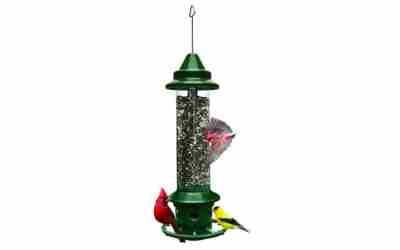
- Weight-activated or cage designs: These close or block access when a heavy animal lands. Performance varies by model, so check reviews and specifications. We list options in our roundup of the best squirrel-proof bird feeder models.
If raccoons or bears are an issue in your area, bring feeders in at night. Raccoons are strong climbers and can open many latches. Our tips on how to keep raccoons away from bird feeders cover this in detail. In bear country, local wildlife agencies often advise removing feeders from spring through fall, so check local guidance.
Placement and Setup Basics
Even the right feeder underperforms in a bad spot. Aim for a location that gives birds quick cover but keeps cats and hawks from ambushing them.
- Place feeders about 10 feet from shrubs or trees so birds can dart to cover but predators have less hiding room.
- Choose a spot with some shade, especially for nectar and suet, to slow spoilage.
- Put feeders where you can see them and refill easily in bad weather.
- Start with one feeder and add more once birds find it. Adding different foods in separate feeders reduces crowding.
- Be patient. It can take days or even a couple of weeks for birds to discover a new feeder.
Keep the ground below tidy. Spilled hulls and seed attract rodents, so sweep or rake regularly, or use a seed catcher tray.
Common Mistakes to Avoid
- Buying by looks: Decorative feeders are often hard to clean and shed paint or finish.
- Skipping maintenance: Dirty feeders can spread disease among birds. A common routine is to scrub with a solution of 1 part bleach to 9 parts water, soak for about 10 minutes, rinse well, and dry completely. Seed feeders generally need this every couple of weeks, and nectar feeders more often in warm weather.
- Overfilling: Fill only what birds will eat in a few days, especially in damp or hot weather.
- Using the wrong seed: Cheap filler mixes waste money and make a mess.
- Ignoring window safety: Place feeders very close to or far from glass, and add decals or screens if birds still strike.
Pick the birds, pick the food, then choose the simplest feeder that is easy to clean and fits your space. That approach works better than buying a feeder first and hoping the right birds show up.
Frequently Asked Questions
What is the best all-around bird feeder for beginners?
A hopper or tube feeder filled with black-oil sunflower seed is the easiest starting point. Sunflower seed appeals to the widest range of birds, and both styles keep seed fairly dry. Choose one that comes apart easily for cleaning.
How high should I hang a bird feeder?
Hang most seed feeders about 5 feet off the ground, and keep them roughly 10 feet from fences, branches, and rooftops that squirrels could jump from. Keep them near cover but not directly against it. Hummingbird feeders can hang at similar heights.
How many bird feeders do I need?
One is enough to start. Add a second feeder with a different food, such as suet or nyjer, once birds are visiting regularly. Separate feeders spread birds out, reduce squabbling, and attract more species.
Why aren’t birds coming to my new feeder?
Birds often take days or weeks to find a new feeder. Make sure it has fresh seed, is placed near cover, and is visible from above. Try black-oil sunflower seed, and check that predators or heavy foot traffic aren’t scaring birds away.