
Yes, buy an electric lawn mower if your lawn is half an acre or less; above that, you need a spare battery or should stay with gas. The deciding numbers are mowing minutes, battery watt-hours and slope, covered below.
How Much Lawn One Battery Charge Covers
Manufacturers commonly rate battery mowers at 30 to 90 minutes per charge, usually in light grass. To turn that into a yard size, work out how many minutes your lawn takes.
A 21-inch mower overlapped by about 3 inches cuts an 18-inch (1.5 ft) strip. At a typical walking pace of 2.5 mph (13,200 ft per hour), that covers about 19,800 sq ft per hour, or 330 sq ft per minute. Divide your lawn’s square footage by 330 for mowing minutes. Then multiply by 1.25 so thick grass does not leave you stranded mid-lawn.
| Lawn size | Mowing time | Rated runtime to look for |
|---|---|---|
| 5,000 sq ft | 15 min | 19 min |
| 10,000 sq ft | 30 min | 38 min |
| 15,000 sq ft | 45 min | 56 min |
| 21,780 sq ft (1/2 acre) | 66 min | 83 min |
| 32,670 sq ft (3/4 acre) | 99 min | 124 min |
If the last column is longer than the mower’s rated runtime, you need a spare battery or a different mower. Half an acre only works on one battery if it is rated near the top of the 30 to 90 minute range. Treat 2.5 mph as a typical value and adjust for your own pace.
Electric vs Gas: Upkeep, Noise and Runtime
Each type wins on something different, so compare them on the factors you will feel every week.
| Factor | Battery | Corded | Gas |
|---|---|---|---|
| Runtime | 30 to 90 min per charge, per manufacturer claims | Unlimited while plugged in | 1 to 5 hours per tank, refill in minutes |
| Starting | Button or bail lever | Button or bail lever | Pull cord or electric start |
| Routine upkeep | Blade sharpening, deck cleaning | Blade sharpening, cord inspection | Oil, spark plug, air filter, fuel, blade |
| Noise and exhaust | Motor hum, no exhaust | Motor hum, no exhaust | Engine noise and exhaust |
| Reach | Whole lawn within runtime | Limited by cord length | Whole lawn |
Electric mowers generally cost more to buy than gas push mowers, mostly because of the battery. Running costs are lower, but do not count on that to pay the difference. One vendor estimate puts a half-acre mow at about $1.50 in gas versus $0.10 in electricity. Even if that holds, 30 mows a year saves about $42. The bigger savings are skipped oil changes, spark plugs and fuel storage, which you can price at your local shop rates.
Battery mowers have no exhaust at the point of use. Their total emissions depend on how your local grid makes electricity.
Are Electric Mowers Powerful Enough for Thick Grass and Hills?
For ordinary suburban turf, yes. Thick, tall or damp grass is where batteries drain fastest, so expect the real runtime to fall below the rated figure. Wet grass also clumps under the deck, which hurts both cut quality and runtime. Our guide on whether electric lawn mowers are powerful enough covers the torque question in more detail.
Most electric walk-behind mowers cut a 19 to 22 inch swath, so a wider deck does not exist in this class. A narrow deck means more passes, which is already built into the 330 sq ft per minute figure above.
On slopes, a push mower makes you do the work and a self-propelled drive helps, but the drive motor pulls from the same battery. Hilly lawns therefore need extra runtime margin. Mow across or up and down a slope as your manual directs, and skip steep banks entirely if the manual warns against them.
Battery Voltage, Amp-Hours and Spare Batteries
Voltage alone says little about runtime. Multiply volts by amp-hours to get watt-hours, the real size of the tank.
- 40V at 5.0 Ah = 200 Wh
- 80V at 4.0 Ah = 320 Wh
Compare mowers by watt-hours and by the maker’s stated runtime together. Some brands advertise maximum voltage rather than nominal voltage, so the same pack can carry a different number on a different box.
Check the tools you already own. If your trimmer or blower uses a 40V or 56V pack, a bare-tool mower on the same platform costs less and gives you a ready spare. Packs are generally not interchangeable across brands.
Replacement packs typically cost $100 to $300 or more and may need replacing every few years, so check the warranty length on the battery itself. If your table row from above exceeds the rated runtime, add a second pack rather than buying a bigger mower.
Battery and Corded Mower Safety
Remove the battery or unplug the cord before clearing a clog or touching the blade. Wear eye protection and closed-toe shoes.
For corded models, use a GFCI-protected outdoor outlet and an outdoor-rated extension cord, and keep the cord behind you and clear of the blade. Never use a corded mower on wet grass or in rain.
Charge lithium-ion packs indoors on a hard surface away from flammables, and stop using any pack that is swollen, cracked or hot to the touch. Store packs out of freezing cold and direct heat. Our guide to winterizing a battery lawn mower covers off-season storage steps.
Who Should Stay With Gas
Stay with gas if your lawn needs more than one battery plus a spare, if the grass is regularly overgrown, or if you will not mow near an outlet or charger. One 80V brand guide recommends gas above about an acre, which matches the math above: an acre takes about 132 minutes before any cushion.
At that size, a push mower of either type becomes a long chore. Our riding mower decision rule explains where a ride-on makes more sense.
Choose electric if your lawn is half an acre or less, you dislike pull cords and fuel storage, and neighbors or noise rules matter to you.
Self-Propelled Electric: What to Check Before Choosing
Self-propelled drive is worth it for slopes or long lawns. It does cost battery, so size your runtime from the table above with that in mind. For models that combine drive with push-button starting, see our self-propelled electric start mower picks.
Two criteria matter most: the battery’s watt-hours against your mowing minutes, and whether the platform matches tools you already own. Confirm whether the mower includes the battery and charger, since some are sold as bare tools.
Our Top Picks
Ready to shop? These are the top-rated options from our related roundup, Best Electric Battery Lawn Mowers of 2026.
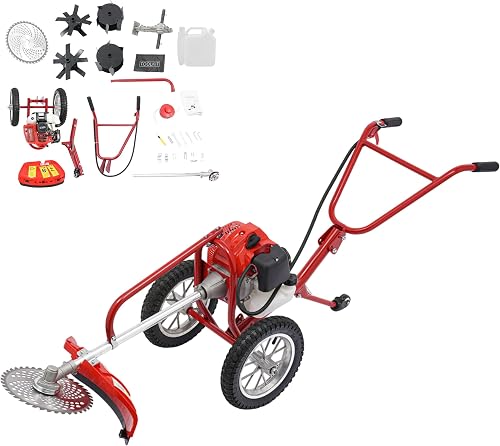
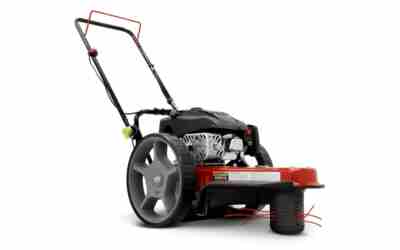
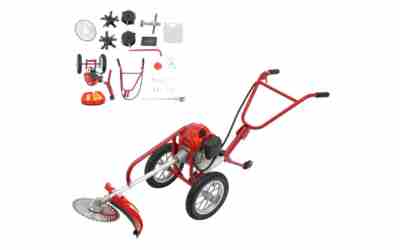
OMMUNICT 52CC Walk Behind Brush Cutter

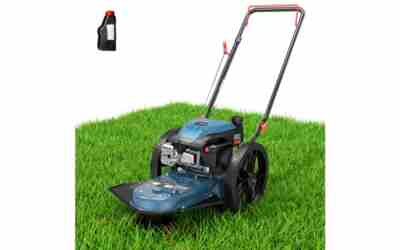
Earthquake 47325 Walk-Behind String Mower

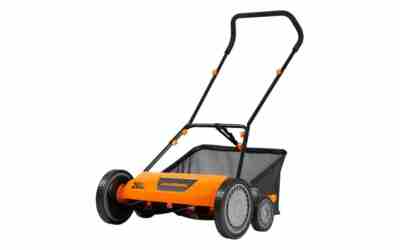
LawnMaster LMRM2001 20" 5-Blade Push Reel Mower
As an Amazon Associate we earn from qualifying purchases. Product prices and availability are accurate as of the date/time indicated.
Frequently Asked Questions
Can I use my power tool batteries in an electric mower?
Only if the mower is from the same maker and platform, and the listing names that battery as compatible. Voltage alone does not make packs interchangeable across brands. A bare-tool mower on your existing platform is the cheapest route.
Can an electric mower handle the first cut of spring when grass is tall?
Yes, if you cut in two passes. Raise the deck for the first pass, then lower it and cut again. Tall grass drains the battery faster than light grass, so do not plan on the full rated runtime that day.
Do electric mowers mulch and bag like gas mowers?
Most walk-behind electric models offer mulching, bagging and side discharge, same as gas. Confirm that the bag is included with your specific model, since some are sold separately. Bagging also adds load, which shortens runtime.
Is an electric mower quiet enough for early morning mowing?
It is much quieter than a gas engine, but it does not exempt you from local noise ordinances. Many towns restrict mowing hours regardless of mower type, so check your city or HOA rules before scheduling early starts.
{“@context”: “https://schema.org”, “@type”: “FAQPage”, “mainEntity”: [{“@type”: “Question”, “name”: “Can I use my power tool batteries in an electric mower?”, “acceptedAnswer”: {“@type”: “Answer”, “text”: “Only if the mower is from the same maker and platform, and the listing names that battery as compatible. Voltage alone does not make packs interchangeable across brands. A bare-tool mower on your existing platform is the cheapest route.”}}, {“@type”: “Question”, “name”: “Can an electric mower handle the first cut of spring when grass is tall?”, “acceptedAnswer”: {“@type”: “Answer”, “text”: “Yes, if you cut in two passes. Raise the deck for the first pass, then lower it and cut again. Tall grass drains the battery faster than light grass, so do not plan on the full rated runtime that day.”}}, {“@type”: “Question”, “name”: “Do electric mowers mulch and bag like gas mowers?”, “acceptedAnswer”: {“@type”: “Answer”, “text”: “Most walk-behind electric models offer mulching, bagging and side discharge, same as gas. Confirm that the bag is included with your specific model, since some are sold separately. Bagging also adds load, which shortens runtime.”}}, {“@type”: “Question”, “name”: “Is an electric mower quiet enough for early morning mowing?”, “acceptedAnswer”: {“@type”: “Answer”, “text”: “It is much quieter than a gas engine, but it does not exempt you from local noise ordinances. Many towns restrict mowing hours regardless of mower type, so check your city or HOA rules before scheduling early starts.”}}]}