
A lawn mower leaking oil is usually overfilled, has a loose or worn drain plug, or has a failed gasket or seal. Where the oil appears tells you which one, and most of these are simple to fix at home.
Find the Leak Source Before You Fix Anything
Old oil spread across the deck makes every spot look like the leak. Clean the engine first so new oil stands out.
- Stop mowing and let the engine cool completely. The muffler and block stay hot long after shutoff.
- Pull the spark plug wire and tuck it away from the plug.
- Wipe the engine, deck underside and drain plug area with a rag and degreaser. Dry it.
- Slide a sheet of cardboard under the mower.
- Reconnect the plug wire, run the engine for about 2 minutes, then shut it off and let it cool again.
- Look for fresh, wet oil. Trace it upward, because oil runs down and back along the engine before it drips.
Check the oil level on the dipstick before you run it. If the level is already low, add oil per the manual before the test run.
Where the Oil Shows Up Points to the Cause
| Where you see oil | Likely cause | Who fixes it |
|---|---|---|
| Drip from the lowest point of the engine | Loose drain plug or worn sealing washer | DIY |
| Oil around the dipstick or fill tube | Overfill, loose cap, or cracked tube or grommet | DIY |
| Wet seam on top of the engine | Valve cover gasket | DIY |
| Wet seam between the engine block and the base | Crankcase or sump gasket | DIY if comfortable pulling the engine, otherwise shop |
| Oil around the blade or flywheel end of the crankshaft | Crankshaft seal | Shop |
| Oil inside the air filter housing | Overfill, clogged breather or a wrong tip | DIY |
| Oil or smoke at the muffler | Overfill, wrong tip, or internal wear | DIY for overfill or tip, shop for wear |
| Oil running from a crack in the metal | Cracked case or sump | Replace the engine or mower |
Heat cycles harden gasket material and vibration finishes the job, so seam leaks are more common on older, high-hour engines.
Overfilling and Tipping the Mower the Wrong Way
Both cause leaks, and both are on you rather than the machine. Too much oil raises crankcase pressure and pushes oil out through the breather tube, seals and vents.
Check the level correctly
Park on level ground with the engine off and cool. Wipe the dipstick, insert it as the manual directs (some screw in, some rest on the tube), then read it. The oil should sit at the full mark, not above it. If it is high, drain a little through the drain plug or extract it from the dipstick tube. Oil capacity and the correct dipstick method depend on the engine, so use your manual.
Tip it the right way
Tip with the air filter and carburetor side facing up, with the fuel tank as empty as practical. Tipping the other way lets oil flow into the air filter, carburetor and cylinder. That leads to a smoky first start and oil at the muffler.
After a wrong tip, remove the air filter. Replace a foam or paper element that is soaked with oil, since it will not dry out. Let the engine run until the smoke clears. If it then stalls, see why a lawn mower starts then dies.
Which Fixes You Can Do and Which Need a Shop
DIY fixes
- Drain plug: replace the sealing washer, wipe the threads clean, and tighten to the torque in your manual. Overtightening can strip the threads.
- Valve cover gasket: remove the cover, scrape off all old gasket material, and install a new gasket. Tighten the screws evenly. Overtightening crushes the gasket or warps the cover, which brings the leak back.
- Clogged breather: clear the vent hole with a thin wire and replace the gasket under the breather cover.
- Cracked fill tube or grommet: a cheap part you swap in minutes.
Shop jobs
- Crankshaft seals, which require removing the blade, flywheel or engine base.
- Blue or white exhaust smoke with the oil level falling between mows. That points to worn piston rings or a head gasket.
- Any crack in the case or sump.
Gasket sealant is not a substitute for a gasket on a gasketed joint unless your manual specifically calls for it. A thick bead can squeeze into oil passages.
Is It Safe to Keep Using a Lawn Mower Leaking Oil?
No. Stop mowing as soon as you find the leak. A steady loss can drop the level low enough to seize the engine. Oil dripping on a hot muffler also smokes and can ignite.
Soak up spilled oil with cat litter or an absorbent pad, scrub the spot, and take oily rags and drained oil to a recycling center or an auto parts store that accepts used oil. Don’t pour it down a drain or onto the ground.
Repair or Replace the Mower
Fix it when the cause is a plug, washer, grommet, breather or gasket. These are low-cost parts on a mower that otherwise runs well.
Think hard about replacing when the case is cracked, the engine smokes and burns oil, or a shop quote for a seal or internal repair gets close to the cost of a new mower. Get the quote in writing and compare it against the mower’s age and condition.
If you do replace it, our guide on how to choose a lawn mower by yard size and terrain is the place to start.
Shopping for a used mower? Look under it and around the drain plug, crankshaft and gasket seams for fresh stains, then check the dipstick for clean, correctly filled oil. Fresh oil wiped around a seam can hide a leak, so run it a few minutes and look again.
Our Top Picks
Ready to shop? These are the top-rated options from our related roundup, Best Engine Oil For Lawn Mowers of 2026.

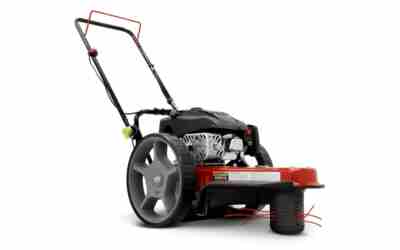
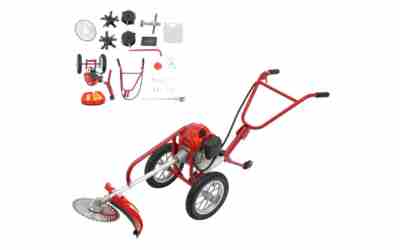
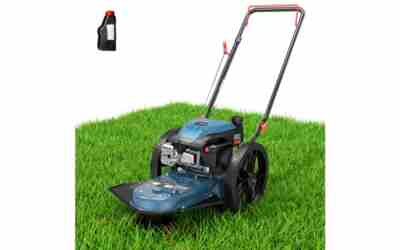
Earthquake 47325 Walk-Behind String Mower

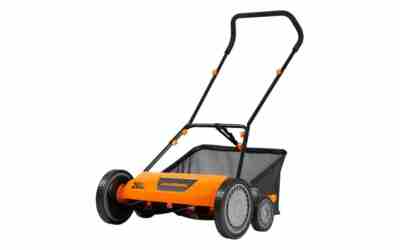
LawnMaster LMRM2001 20" 5-Blade Push Reel Mower

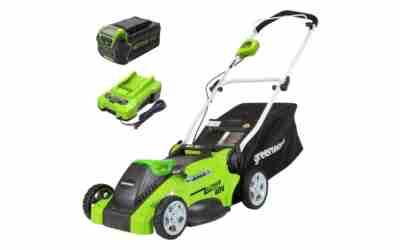
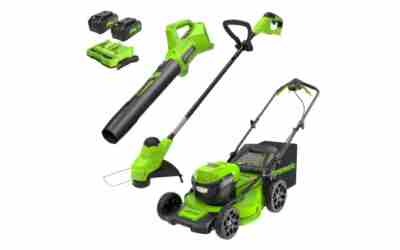
Greenworks 40V 21" Self-Propelled Mower & Trimmer
As an Amazon Associate we earn from qualifying purchases. Product prices and availability are accurate as of the date/time indicated.
Frequently Asked Questions
Why is my lawn mower leaking oil after an oil change?
The usual causes are a drain plug that is loose or cross-threaded, a missing or crushed sealing washer, or too much oil added. Spilled oil burning off the engine can also look like a leak. Wipe everything clean and recheck after a short run.
Can I use a stop-leak additive instead of fixing the gasket?
No. Additives do not reliably repair a failed gasket or seal, and they can change how the oil flows. Replace the leaking part instead, and use the oil type your manual specifies.
Why is oil coming out of my air filter after I tipped the mower?
Tipping the air filter side down let oil run into the filter housing. Remove the filter, replace it if oil-soaked, wipe the housing, and then check the oil level on level ground. Expect some smoke on the next start.
Can a leaking mower still be used for one more mow?
No. Even a slow leak can leave the crankcase low partway through, and a seized engine is not repairable in most cases. Fix the leak first, then restore the oil to the full mark.
{“@context”: “https://schema.org”, “@type”: “FAQPage”, “mainEntity”: [{“@type”: “Question”, “name”: “Why is my lawn mower leaking oil after an oil change?”, “acceptedAnswer”: {“@type”: “Answer”, “text”: “The usual causes are a drain plug that is loose or cross-threaded, a missing or crushed sealing washer, or too much oil added. Spilled oil burning off the engine can also look like a leak. Wipe everything clean and recheck after a short run.”}}, {“@type”: “Question”, “name”: “Can I use a stop-leak additive instead of fixing the gasket?”, “acceptedAnswer”: {“@type”: “Answer”, “text”: “No. Additives do not reliably repair a failed gasket or seal, and they can change how the oil flows. Replace the leaking part instead, and use the oil type your manual specifies.”}}, {“@type”: “Question”, “name”: “Why is oil coming out of my air filter after I tipped the mower?”, “acceptedAnswer”: {“@type”: “Answer”, “text”: “Tipping the air filter side down let oil run into the filter housing. Remove the filter, replace it if oil-soaked, wipe the housing, and then check the oil level on level ground. Expect some smoke on the next start.”}}, {“@type”: “Question”, “name”: “Can a leaking mower still be used for one more mow?”, “acceptedAnswer”: {“@type”: “Answer”, “text”: “No. Even a slow leak can leave the crankcase low partway through, and a seized engine is not repairable in most cases. Fix the leak first, then restore the oil to the full mark.”}}]}