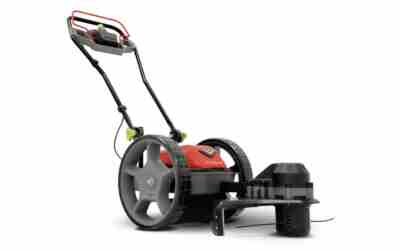
You should get a robot lawn mower if your lawn is small to mid-size, mostly open and gently sloped. Skip it if your yard is steep, split into many tight sections or full of obstacles. Coverage and slope limits vary by model, so check the spec sheet against your yard before you buy.
Should you get a robot lawn mower? Use this yes/no rule
Answer yes to most of these five questions and a robot is likely a good fit. Answer no to two or more and a regular mower will frustrate you less.
- Is the lawn mostly open? One main area, or a few areas joined by a wide path, works best.
- Are your slopes within the model’s listed limit? Compare your steepest slope to the manufacturer’s maximum (see the next section).
- Can you live with a trim pass? Edges along walls, fences, beds and trees still need a string trimmer.
- Is the grass at normal height? Robots are built for frequent light cuts, not overgrown grass.
- Can you secure it? A fenced yard, PIN lock and alarm or GPS tracking lower theft risk.
A robot does not remove lawn work. It replaces the weekly push-and-walk. You still handle edging, clearing debris and basic upkeep.
Which yards suit a robot mower, and which don’t?
Robots do best on simple lawns. They struggle where the layout forces them to squeeze through gaps, climb steep ground or cross loose surfaces.
Works well
- Open, rectangular or gently curved lawns with few obstacles.
- Lawns that are already cut regularly, since the robot only trims a little each pass and mulches the clippings back into the turf.
- Yards with a wide, firm path (grass, pavers or packed soil) between separate lawn areas.
Works poorly
- Steep slopes. Wheels slip, especially on wet grass.
- Narrow passages. Manufacturers specify a minimum passage width, and it varies by model. Measure your tightest gap against the manual.
- Many trees, beds and play equipment. Each one needs boundary handling and more hand trimming.
- Gravel, mulch or soft, rutted soil where wheels can dig in.
- Tall or overgrown grass. Cut it down with a regular mower first.
Check your slope with this math
Slope percent equals rise divided by run, times 100. A 4 ft drop over 20 ft of ground is a 20% slope (about 11 degrees). Measure your steepest section with a tape and a level, then compare it to the maximum slope on the model’s spec sheet. Limits differ widely between models, and wet grass lowers real-world traction, so leave a margin.
Coverage is also a model rating. Manufacturers state a maximum lawn size under ideal conditions. Odd shapes and lots of obstacles cut into that, so pick a model rated comfortably above your lawn area.
How does a robot mower work day to day?
You set a schedule in an app or on the mower. It leaves its charging dock, mows in small passes, returns to charge and repeats. Most owners leave it running several days a week instead of doing one big cut.
Boundary wire or wire-free?
- Boundary wire: You stake or bury a low-voltage wire around the lawn and around obstacles you want it to avoid. It is reliable but takes setup time, and the wire can be cut by a shovel or aerator.
- Wire-free (satellite/RTK or camera-based): Setup is faster, but satellite systems need a clear view of the sky. Tall trees and houses can degrade the signal. Camera-based systems can struggle in low light or heavy shadow. How well each works depends on the model and your yard, so read the manufacturer’s stated limits.
What upkeep remains
- Trim the edges with a string trimmer.
- Clear sticks, toys and fallen fruit before runs.
- Clean grass off the deck and wheels, and keep the charging contacts clean.
- Replace blades on the schedule in the manual. Blades are small and inexpensive on most models.
- Replace the lithium-ion battery eventually. Life varies by model and use, and it is a real long-term cost.
Noise is a plus. Independent testing by the consumer group CHOICE measured about 60 to 70 dB at close range for the robots it tested, which is conversation level. Gas push mowers are commonly cited near 90 dB at the operator’s ear. See our best robotic lawn mowers roundup for models worth comparing.
Robot vs push vs self-propelled mower: side by side
| Factor | Robot mower | Push mower | Self-propelled mower |
|---|---|---|---|
| Your time | Setup, then trimming and upkeep | Most hands-on | Less effort, still walking every cut |
| Upfront cost | Highest (varies widely by model) | Lowest | Middle |
| Slopes | Limited by model; check spec | You control it | Handles slopes better with drive assist |
| Overgrown grass | Poor | Fair to good | Good |
| Edges | Needs trimming | Closer to edges | Closer to edges |
| Theft risk | Real; needs PIN or alarm | Low | Low |
- Choose a robot if your lawn is simple, you mow weekly and you want the time back.
- Choose a push mower if your lawn is small, budget matters most or you like the exercise.
- Choose a self-propelled mower if your lawn is larger, hilly or sometimes gets behind.
Is a robot mower worth the money? Run this break-even math
Use your own numbers. The figures below are example assumptions for illustration, not quotes or market prices.
- Robot yearly cost = (purchase price plus install kit) ÷ years you’ll keep it, plus battery cost ÷ battery life, plus blades, plus electricity.
- Current yearly cost = mower price ÷ years owned, plus fuel and maintenance (or lawn service fees).
- Hours saved = hours you spend mowing now, minus the hours you’d still spend trimming and maintaining.
Worked example (assumptions)
- Robot with install kit: $1,600, kept 7 years = about $229 a year.
- One replacement battery at $120 over 7 years = about $17 a year.
- Blades $30 a year and electricity $10 a year.
- Robot total: about $286 a year.
- Self-propelled mower at $400 over 10 years plus $60 a year fuel and upkeep = about $100 a year.
- Mowing time now: 28 cuts × 1.25 hours = 35 hours. With a robot you still trim about 14 times × 15 minutes = 3.5 hours. Time saved: 31.5 hours.
The extra $186 a year buys 31.5 hours, about $5.90 per hour saved. If you pay a service $45 per cut for 28 cuts ($1,260 a year), the robot’s yearly cost is far lower and it pays back its $1,600 in about 1.3 years of service fees. Replace each number with your own quotes and the manufacturer’s stated battery and blade intervals. If your result is close, the decision comes down to whether you value the time.
Are robot mowers safe, and can they be stolen?
Robot mowers are designed with blade-stop sensors. In CHOICE’s testing, every model stopped its blades quickly when someone approached or touched it and when it was lifted. Behavior still varies by model, so check the safety features in the manual.
- Kids and pets: Keep them off the lawn while it runs, and never let anyone play on or near it, even when it is switched off. Pick up toys and hoses first.
- Wildlife: Small animals such as toads, turtles and snakes can be hurt. Avoid running it at dusk and night if your yard has them, or use a schedule that skips those hours.
- Blades: Switch the mower off before cleaning or touching the blades, and wear cut-resistant gloves.
- Electrical: Keep the dock and power supply dry and plugged into a properly protected outdoor outlet (GFCI where your local code requires). Follow local code for any wiring work.
- Theft: Use the PIN, alarm and GPS tracking if the model has them, and a fenced or gated yard.
- Rain: Many models pause or return to the dock in rain, but behavior varies. Wet, soft ground can lead to ruts, so skip mowing then.
- HOA: Check your HOA rules on fences, wires and equipment before buying.
For cold climates, store the mower indoors and follow the battery-storage steps in the manual. Our guide on how to winterize a battery lawn mower covers the general battery-care steps.
What should you buy if a robot doesn’t fit?
If your yard is steep, cluttered, overgrown or you want to spend less, a regular mower is the better choice.
- Self-propelled with electric start: Best for bigger or hilly lawns. See our best self-propelled electric lawn mowers.
- Manual push: Best for small, flat lawns and the lowest cost. See our best push lawn mowers.
- Not sure which type? Our guide on how to choose a lawn mower by yard size and terrain walks through the decision.
Common mistake to avoid: buying a robot for a yard you haven’t measured. Measure lawn area, tightest gap and steepest slope first, and compare them to the spec sheet. If any one fails, pick another mower.
Frequently Asked Questions
Do I need a boundary wire for a robot mower?
Not always. Many models use a buried or staked boundary wire, while newer wire-free models use satellite positioning or cameras. Wire-free setup is faster, but tall trees, houses and shade can hurt performance. Check the manufacturer’s stated limits for your yard.
Can a robot mower handle tall grass or a large lawn?
Usually not tall grass. Robots are made for frequent light trimming, so mow overgrown grass down first with a regular mower. Large lawns depend on the model’s rated coverage and your yard’s layout, so choose a model rated well above your lawn size.
How long do robot mower batteries and blades last?
It varies by model and use. CHOICE notes that lithium-ion batteries usually need replacing after a few years, and the battery is a major part of the price. Blades are small wear parts. Follow the replacement intervals in the manufacturer’s manual.
Are robot mowers safe around kids and pets?
They have blade-stop sensors that react when the mower is lifted or touched, but keep children, pets and toys off the lawn while it runs and when it is off. Turn it off before cleaning or touching the blades.
{“@context”: “https://schema.org”, “@type”: “FAQPage”, “mainEntity”: [{“@type”: “Question”, “name”: “Do I need a boundary wire for a robot mower?”, “acceptedAnswer”: {“@type”: “Answer”, “text”: “Not always. Many models use a buried or staked boundary wire, while newer wire-free models use satellite positioning or cameras. Wire-free setup is faster, but tall trees, houses and shade can hurt performance. Check the manufacturer’s stated limits for your yard.”}}, {“@type”: “Question”, “name”: “Can a robot mower handle tall grass or a large lawn?”, “acceptedAnswer”: {“@type”: “Answer”, “text”: “Usually not tall grass. Robots are made for frequent light trimming, so mow overgrown grass down first with a regular mower. Large lawns depend on the model’s rated coverage and your yard’s layout, so choose a model rated well above your lawn size.”}}, {“@type”: “Question”, “name”: “How long do robot mower batteries and blades last?”, “acceptedAnswer”: {“@type”: “Answer”, “text”: “It varies by model and use. CHOICE notes that lithium-ion batteries usually need replacing after a few years, and the battery is a major part of the price. Blades are small wear parts. Follow the replacement intervals in the manufacturer’s manual.”}}, {“@type”: “Question”, “name”: “Are robot mowers safe around kids and pets?”, “acceptedAnswer”: {“@type”: “Answer”, “text”: “They have blade-stop sensors that react when the mower is lifted or touched, but keep children, pets and toys off the lawn while it runs and when it is off. Turn it off before cleaning or touching the blades.”}}]}