If you’re asking what size smoker for brisket, aim for a main cooking grate at least 20 inches long with about 475 square inches of usable area. That holds one 12 to 16 pound packer. Go 700 square inches or more for a crowd or two briskets. Below, guest count converts to raw weight, then to grate size.
What size smoker for brisket: the grate-length rule
A whole packer brisket (point and flat still attached) typically weighs about 10 to 18 pounds. It runs roughly 16 to 18 inches long and 10 to 14 inches wide, and it is 2 to 5 inches thick, with the point being the thickest part. These figures vary by packer and by how the butcher trimmed it, so measure the one you buy.
The rule: the main grate needs at least 20 inches in its longest straight run. That leaves about 1 inch of air gap at each end of an 18-inch brisket. Use the area targets below as a starting point.
- One packer, 10 to 16 lb: about 475 sq in of main grate is the common minimum in review roundups, and it is a tight fit.
- Comfortable room: 700 to 900 sq in leaves space for airflow, a drip pan and a probe.
- Two packers: 700 sq in or more, and the layout matters more than the total.
Footprint math: a 17 by 12 inch packer covers about 204 sq in. Two of them need roughly 400 sq in of flat grate. Add 1 inch of gap around each and you need about 500 sq in of usable rectangular space, and more on round grates, where corners go to waste.
How much brisket per person: raw and cooked weight
Plan on about 1/2 pound of cooked brisket per adult. Use 1/3 pound if there are plenty of sides, and 3/4 pound for big eaters or if you want leftovers. Brisket loses weight in trimming, fat rendering and moisture loss. Total loss commonly runs somewhere around 40 to 55 percent, depending on the trim, the fat content and the cook. Treat any single yield figure as a planning estimate.
Using a 50 percent loss as a middle estimate, you buy about 1 pound of raw brisket per person at 1/2 pound cooked.
| Guests | Cooked meat needed | Raw brisket to buy (about 50% loss) | Smoker target |
|---|---|---|---|
| 6 | 3 lb | 6 lb flat, or a small 10 lb packer with leftovers | Any smoker with a 16 in+ grate |
| 10 | 5 lb | 10 lb packer | 20 in+ grate, about 475 sq in |
| 15 | 7.5 lb | 14 to 16 lb packer | 20 in+ grate, 700 sq in is more comfortable |
| 20 | 10 lb | Two 10 lb packers | 700 to 900 sq in |
| 30 | 15 lb | Two 15 lb packers | 900 sq in+, or stagger two smokers |
Worked example, 12 hungry guests: 12 x 0.5 lb = 6 lb cooked. At 45 percent loss, 6 / 0.55 = about 10.9 lb raw. At 55 percent loss, 6 / 0.45 = about 13.3 lb raw. Buy an 11 to 13 pound packer. At about 17 by 11 inches, it needs roughly 190 sq in, which fits a 475 sq in main grate with room to spare.
Two medium packers usually cook more evenly than one huge one, and they are easier to lift and slice.
How to measure usable grate space before you buy
The biggest sizing trap is the advertised total. Many listings add warming racks, upper shelves and firebox chambers to the number. One example from a manufacturer listing: the Royal Gourmet CC1830S shows 823 sq in total, but only 475 sq in is main grate, with 151 sq in on the warming rack and 197 sq in in the offset chamber. Only the main grate holds a packer flat.
- Measure the main grate length and width at cooking level, not at the lid.
- Subtract anything in the way: water bowls, heat shields, handles, drip pans and slide-out trays.
- Confirm at least 6 inches of vertical room above the grate or to the next rack, since the point can be 4 to 5 inches thick.
- On an offset, keep the brisket several inches from the firebox opening, where heat is highest. Check the manual for the recommended spacing.
- Compare to the brisket: grate length should be the brisket’s length plus 2 inches.
Water bowls count too. One roundup reports a 14 to 16 pound packer fits the 711 sq in Masterbuilt 30-inch digital electric smoker only after the water bowl is removed. Check your model’s manual for what can come out.
Which smoker type fits a brisket best?
The same square inches behave differently depending on shape and rack layout. Specs vary by model, so check the listed main grate dimensions.
| Type | Brisket fit | Watch for |
|---|---|---|
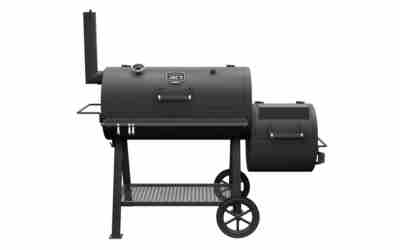
| Offset | Long rectangular chamber; mid and large sizes take a full packer easily | Hot spot near the firebox; frequent fire tending |
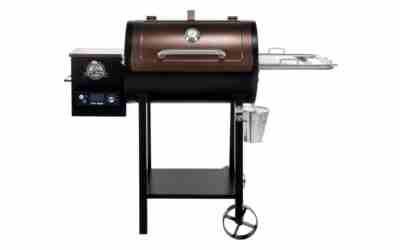
| Pellet | Wide listings run from about 400 to 900+ sq in; mid-size and up usually hold one packer | Hopper run time at low temps; check the usable rack size |
| Cabinet or electric | Several racks, but each rack may be narrow | Rack width; water bowl and drip pan placement |
| Vertical bullet (WSM style) | Round racks. A forum report says an 18.5 in model holds a 14 to 15 lb packer between the handles; a 22.5 in model took a 22 lb brisket (anecdotal) | 14 and 16 in sizes won’t take a full packer unless it’s cut |
| Kamado | An 18 in grate is only about 254 sq in; a 24 in grate is about 452 sq in | Round grate wastes corners; a long packer usually needs cutting or folding |
Choose an offset if you want the most grate for the money and don’t mind tending a fire; see our offset smokers under $1,000 roundup. Choose a pellet smoker if you want set-and-hold temperatures; compare options in our pellet smoker grills guide. Choose a kamado if you value fuel efficiency and versatility and will cut your brisket. Use lump charcoal sized for the firebox.
Can you cut a brisket to fit a smaller smoker or kamado?
Yes. Cutting is the standard fix when the brisket is longer than your grate diameter minus 2 inches. Pick one of these:
- Split point and flat. Cut along the fat seam between the two muscles. Cook both pieces. The flat is leaner and finishes sooner, and the point can cook longer or become burnt ends.
- Halve the flat crosswise. This works for a 16 inch bullet smoker or an 18 inch kamado. Expect uneven thickness between the halves.
- Tuck the thin tail. Fold the thin end under to shorten the length. The folded layer cooks slower, so probe it separately.
Cut faces dry out faster than an intact brisket, so keep the fat cap on and consider wrapping once the bark sets. Cook by feel and probe tenderness, not by clock, since each piece finishes at its own pace. A 14 inch mini bullet is a poor match for brisket; one forum user got only a 7 pound flat, cut in half, to fit.
If you keep fighting your smoker’s size, a vertical charcoal smoker in a larger diameter is easier than cutting every time. For help choosing between types, read what kind of smoker to get.
Fuel, airflow and cook time change the size you need
Packers often take 8 to 14 hours at about 225 to 275°F to break down collagen, and hot-and-fast cooks at higher temperatures run shorter. Exact times vary by thickness and smoker.
- Fuel capacity: check the manufacturer’s stated run time. If it can’t carry 10 or more hours at 225°F, plan to refuel.
- Airflow: leave about 1 inch around each brisket. Crowding a small chamber with two briskets can block airflow and add hours.
- Drip pans: a pan under the meat helps with grease, but make sure it does not block vents.
- Buy one size up: if you cook for 10 now but host 20 a few times a year, size for 20. A bigger smoker can run a small load, but a small one can’t hold a big one.
First-time buyers can start with our best smoker for beginners picks and apply the grate rule above.
Smoker safety for long brisket cooks
- Keep it outdoors. Never run a charcoal, pellet or wood smoker in a garage, shed, porch or other enclosed space. Carbon monoxide can kill, even with the door open.
- Keep clearance. Place the smoker on a level, non-combustible surface, away from walls, decks, eaves and tree branches. A distance of 10 feet is commonly advised, but follow your manual and local code.
- Prevent grease fires. Clean drip pans and grease trays. Keep a fire extinguisher rated for grease nearby, and never use water on a grease fire.
- Handle heat and weight. Use heat-safe gloves and a rimmed pan to move a 12 to 16 pound brisket, since it is slippery and heavy.
- Check temperature at the meat. Probe the thickest part of the flat. USDA lists 145°F with a 3-minute rest as the safe minimum for whole beef cuts. Brisket is usually pulled near 195 to 205°F because that is when it turns tender.
- Watch the danger zone. Bacteria multiply between 40 and 140°F. Hold cooked brisket at 140°F or above, and refrigerate leftovers within 2 hours (1 hour if it’s above 90°F outside).
- Dispose of ash safely. Put cooled ash in a metal container, not in a trash can or on a deck.
Our Top Picks
Ready to shop? These are the top-rated options from our hands-on roundup, Best Backyard Offset Smokers of 2026.
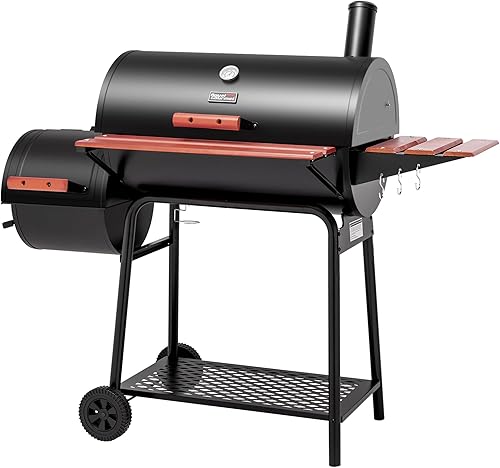
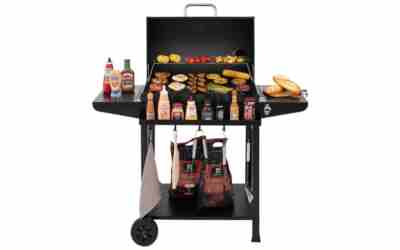
Royal Gourmet CC1830W 30-Inch Charcoal Grill with Offset Smoker, 811 Sq. In. Cooking Area, Black

Royal Gourmet CC1830S Charcoal Grill with Offset Smoker, 823 Sq. In. Cooking Area for Outdoor BBQ and Camping

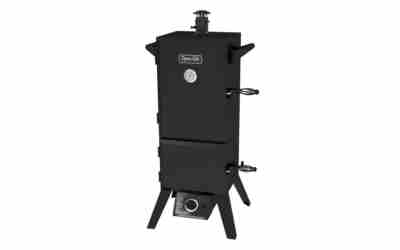
Dyna-Glo DGO1176BDC-D Vertical Offset Charcoal Smoker 1176 sq in
As an Amazon Associate we earn from qualifying purchases. Product prices and availability are accurate as of the date/time indicated.
Frequently Asked Questions
Can you fit a full packer brisket in an 18-inch WSM?
Often yes. Forum users report an 18.5-inch Weber Smokey Mountain can hold a packer of about 14 to 15 pounds, placed between the handles. Fit depends on the brisket’s length and thickness, so measure yours first and cut it if it touches the walls.
What size smoker do I need to cook two briskets at once?
Look for 700 to 900 square inches of usable main grate with a rectangular layout at least 20 inches long. Two 12 pound packers need about 400 square inches of footprint, plus gaps for airflow. Round or stacked racks may need cutting.
Do I need to cut a brisket in half to smoke it?
Only if it won’t fit your grate with about 1 inch of clearance at each end. Offsets and larger pellet smokers usually take a whole packer. Small bullets and 18-inch kamados often need the point and flat separated or the flat halved.
Is a pellet smoker or an offset better for brisket?
Both work. Pellet smokers hold temperature automatically and suit beginners, while offsets often give more grate length for the money but need fire tending. Choose by usable main grate size and how much time you want to spend managing the fire.
{“@context”: “https://schema.org”, “@type”: “FAQPage”, “mainEntity”: [{“@type”: “Question”, “name”: “Can you fit a full packer brisket in an 18-inch WSM?”, “acceptedAnswer”: {“@type”: “Answer”, “text”: “Often yes. Forum users report an 18.5-inch Weber Smokey Mountain can hold a packer of about 14 to 15 pounds, placed between the handles. Fit depends on the brisket’s length and thickness, so measure yours first and cut it if it touches the walls.”}}, {“@type”: “Question”, “name”: “What size smoker do I need to cook two briskets at once?”, “acceptedAnswer”: {“@type”: “Answer”, “text”: “Look for 700 to 900 square inches of usable main grate with a rectangular layout at least 20 inches long. Two 12 pound packers need about 400 square inches of footprint, plus gaps for airflow. Round or stacked racks may need cutting.”}}, {“@type”: “Question”, “name”: “Do I need to cut a brisket in half to smoke it?”, “acceptedAnswer”: {“@type”: “Answer”, “text”: “Only if it won’t fit your grate with about 1 inch of clearance at each end. Offsets and larger pellet smokers usually take a whole packer. Small bullets and 18-inch kamados often need the point and flat separated or the flat halved.”}}, {“@type”: “Question”, “name”: “Is a pellet smoker or an offset better for brisket?”, “acceptedAnswer”: {“@type”: “Answer”, “text”: “Both work. Pellet smokers hold temperature automatically and suit beginners, while offsets often give more grate length for the money but need fire tending. Choose by usable main grate size and how much time you want to spend managing the fire.”}}]}