
Spray dandelions in spring on a calm, dry day between 50 and 85°F, while they are actively growing and before they go to seed. Fall (September to early November) works better, but a well-timed spring pass still helps. Below are the weather limits, product choices, safety steps, and puffball rules.
When to spray dandelions in spring: the short rule
Spray when three things line up: dandelions are green and actively growing, the forecast is calm and dry, and daytime air temperature sits between 50 and 85°F (Purdue Extension). Aim for the rosette or early bud stage, before the flowers open fully and long before they turn to white puffballs.
The calendar date depends on where you live. These ranges are rough and shift with each year’s weather:
| Region | Typical spring window |
|---|---|
| Northern US and Upper Midwest | Late April through May |
| Mid-Atlantic, Ohio Valley, Central Plains | Mid-April through mid-May |
| Southern US | March through April, before heat above 85°F |
Practical cue: start watching once the lawn has greened up and you have mowed a couple of times, and the dandelions have fresh leaves and buds. Many gardeners also use local plant signs, such as lilac or forsythia bloom, as a rough reminder. That is a informal cue, not an extension rule, so confirm with the temperature and forecast.
Use the weather, not the date. If nights are still frosty and the lawn has barely greened up, the weeds are not growing enough to pull the herbicide down into the roots. Nebraska Extension notes that very early spring applications often give little or inconsistent control.
Is it better to spray dandelions in spring or fall?
Fall is better. Purdue recommends mid-September to early November for broadleaf herbicides, and Colorado State gives early September to early November. In fall, dandelions send energy down to their roots for winter, and they carry the herbicide down with it. That is why one fall pass often kills the whole plant, taproot included.
Spring is the second-best time. Purdue lists late spring or early summer after flowering as the runner-up window. A spring spray still works, but plants are pushing energy up into leaves and flowers, so you may need a follow-up pass.
Decision rule: if your lawn is thick with dandelions right now, spray in spring when conditions allow, then plan a second treatment in fall. If you only have a few, spot-treat in spring and save the main effort for September.
What temperature and weather do you need to spray?
Label directions always override general advice, but extension guidance gives a clear pattern:
| Air temperature | What to do |
|---|---|
| Below 50°F | Wait. Weeds are not growing enough to take up the product. |
| 50 to about 70°F | Spray, preferably an ester formulation, which Nebraska Extension favors below about 70°F. |
| 70 to 85°F | Best range. Amine or ester products both work. |
| 85 to 90°F | Use caution. Spray early in the morning if the label allows. |
| Above 90°F | Do not spray. Colorado State warns of vapor drift to nearby plants. |
Ester products work better in cool weather but vaporize more in heat, so they are the ones to avoid on warm days near gardens and shrubs. Bottles often do not say plainly whether a product is ester or amine, so do not assume. Read the label’s temperature limits, and if you cannot tell, treat the product as the more drift-prone type on warm days.
Wind, rain and soil moisture
- Wind: choose a calm day. Drift can burn tomatoes, roses, trees and shrubs. Many labels set a maximum wind speed, so check yours.
- Rain: Colorado State says to skip application if rain is expected within 12 hours. Illinois Extension says 24 hours. Use the longer time if you are unsure, and follow your label.
- Soil moisture: weeds in drought-stressed, dry soil take up less product. If it has been dry, water the lawn a day or two ahead.
- Sprinklers: turn off your timer for the rain-free period. If you are not sure how much water your zones put down, our guide to how spray and rotor sprinklers differ can help you plan watering around treatment.
Some lawn-care sites quote a soil temperature of 55 to 65°F. Extension sources do not give a soil figure, so treat air temperature and active weed growth as your guide.
Which dandelion killer should you use?
You need a post-emergent broadleaf herbicide, one that kills weeds that are already up. Products come as ready-to-spray bottles for spot treatment, hose-end sprayers for whole lawns, and weed-and-feed granules. Common active ingredients include 2,4-D, MCPP, dicamba and triclopyr, often blended.
- Spot treatment: best for fewer than a couple dozen weeds. It uses less chemical and limits exposure to the rest of the yard.
- Whole-lawn spray: better for heavy infestations. Use a coarse spray and keep it low to the ground.
- Granular weed-and-feed: usually applied to damp leaves so the granules stick. The label will say. Spray is generally easier to control near beds, and weed-and-feed also adds fertilizer you may not want in spring.
Pre-emergent herbicides will not fix this. They stop seeds from sprouting and do nothing to dandelions already growing. Products made for crabgrass are also not reliable dandelion preventers, so do not count on them.
Avoid on lawns with: St. Augustine, centipede, or newly seeded grass unless the label specifically lists them. Some products can injure these lawns, and safety depends on the exact product.
Before you buy or spray, find the maximum air temperature and wind limits on the label. Do not rely on the front of the bottle, since ester versus amine is often not stated clearly there.
How to spray dandelions, step by step
The product label is the legal requirement. If anything below conflicts with it, follow the label.
- Check the forecast. Look for 50 to 85°F, light wind, and no rain for at least 12 to 24 hours.
- Hold off mowing for 2 days before. Colorado State recommends this so there is enough leaf surface to absorb the product. The exception is a lawn full of puffballs, covered below.
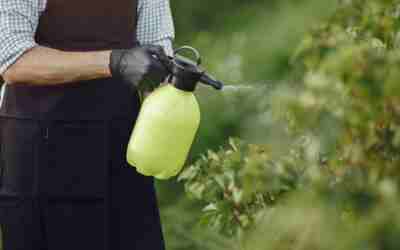
- Dress for it. Wear gloves, long pants, closed shoes and eye protection. Read the label’s personal protective equipment section.
- Protect sensitive areas. Cover or move sensitive plants. Keep spray off vegetable gardens, flowers, shrubs and tree roots.
- Never spray near wells, ponds or storm drains. Leave a generous buffer and follow any setback distances on the label.
- Spray the leaves until wet, not to the point of runoff. Do not overapply. More product does not kill faster and can harm grass.
- Keep kids and pets off until the spray is dry, or longer if the label says so.
- Wait 2 more days before mowing, then leave clippings on the lawn only if the label allows it.
Rinse the sprayer well afterward, away from drains and water sources, and store product out of reach of children and pets.
What if dandelions already have puffballs?
Spraying still works on a plant that has gone to seed, but it does not stop seeds that are already mature. A puffball can drop or blow away seed at the slightest disturbance, so spraying or mowing it can spread seed.
- A few puffballs: pick or snip them off, bag them in a trash bag, then spray the plant.
- Many puffballs: do not mow first, since that scatters seed. Spray, then wait for the plants to wilt and for the label’s mowing interval (often about 2 days) to pass. Wilted plants can still drop seed, so mow gently with a bagger, at normal height and a slow pace, and discard the clippings in the trash. Do not compost them. This is the one case where the 2-days-before-mowing step gives way to seed control.
- Yellow flowers only: this is the better moment. Spray now, before seeds form.
How long until they die?
You should see twisting and curling within hours to a few days. Most plants die within 1 to 2 weeks. Large, deep-rooted dandelions may survive. If they regrow, a second application after the label’s minimum interval (often 2 to 4 weeks) is usually needed.
When can you seed?
Wait time varies by product. Some labels say as little as a few weeks, others longer, and some products cannot be used when seeding at all. Read the reseeding section on the label before you buy. If you plan to overseed in spring, choose a product labeled safe for new grass, or plan to seed in fall after treatment.
How do you keep dandelions from coming back?
Herbicide clears the weeds, but thick grass keeps them from returning. Dandelion seed needs light and open soil to sprout.
- Mow high. For cool-season grasses such as Kentucky bluegrass, fescue and ryegrass, a height of about 3 to 4 inches shades the soil. Warm-season grasses vary, so check the recommended height for your type.
- Fertilize on schedule. A dense lawn crowds out weeds. Follow a soil test or the local extension schedule rather than guessing.
- Overseed in fall. Thin patches are where new dandelions start.
- Water deeply but not often. Shallow daily watering favors weeds over turf.
Common mistake: spraying right before mowing day because the weeds look tall. Cutting off the leaves removes the surface that absorbs the product and cuts the kill rate. Skip the mower for the 2 days before and after, except when puffballs are present.
If dandelions keep coming back in the same spot, look at compaction, bare soil or shade. Fix the thin grass and spraying becomes a once-a-year job.
Related reading: When to Pull Pork Shoulder Off the Smoker (195-205°F) · When to Put Up Hummingbird Feeders: 2 Weeks Before Arrival
Frequently Asked Questions
Will rain wash off dandelion killer?
It can if rain falls before the product dries and is absorbed. Colorado State suggests avoiding application if rain is expected within 12 hours, and Illinois Extension says 24 hours. Your product label may list a shorter or longer time, so follow that.
How long should I wait to seed after spraying dandelions?
It depends on the product. Many broadleaf herbicides require a wait of a few weeks, and some should not be used on new lawns at all. Look for the reseeding interval on the label. Fall overseeding after a September treatment is usually easiest.
Is it too late to spray once dandelions are blooming?
No. Spraying while dandelions are blooming still works, and yellow flowers are a better time than white puffballs because seeds have not formed yet. Spray as soon as conditions allow: calm, dry, and 50 to 85°F. Control may be less complete than in fall, so plan a follow-up pass if they regrow.
Will dandelion killer harm my grass?
Selective broadleaf herbicides are made to kill weeds, not turf, when used as directed. Some can injure certain grasses, such as St. Augustine or centipede, and new seedlings. Check that your grass type is listed on the label.
{“@context”: “https://schema.org”, “@type”: “FAQPage”, “mainEntity”: [{“@type”: “Question”, “name”: “Will rain wash off dandelion killer?”, “acceptedAnswer”: {“@type”: “Answer”, “text”: “It can if rain falls before the product dries and is absorbed. Colorado State suggests avoiding application if rain is expected within 12 hours, and Illinois Extension says 24 hours. Your product label may list a shorter or longer time, so follow that.”}}, {“@type”: “Question”, “name”: “How long should I wait to seed after spraying dandelions?”, “acceptedAnswer”: {“@type”: “Answer”, “text”: “It depends on the product. Many broadleaf herbicides require a wait of a few weeks, and some should not be used on new lawns at all. Look for the reseeding interval on the label. Fall overseeding after a September treatment is usually easiest.”}}, {“@type”: “Question”, “name”: “Is it too late to spray once dandelions are blooming?”, “acceptedAnswer”: {“@type”: “Answer”, “text”: “No. Spraying while dandelions are blooming still works, and yellow flowers are a better time than white puffballs because seeds have not formed yet. Spray as soon as conditions allow: calm, dry, and 50 to 85°F. Control may be less complete than in fall, so plan a follow-up pass if they regrow.”}}, {“@type”: “Question”, “name”: “Will dandelion killer harm my grass?”, “acceptedAnswer”: {“@type”: “Answer”, “text”: “Selective broadleaf herbicides are made to kill weeds, not turf, when used as directed. Some can injure certain grasses, such as St. Augustine or centipede, and new seedlings. Check that your grass type is listed on the label.”}}]}