Yes, manual lawn mowers are good if your lawn is small, flat and mowed about once a week, roughly 1/4 acre or less. They cut fine-bladed grass cleanly, run silently and need no fuel or cord. They are a poor fit for tall, weedy, coarse or bumpy lawns, where a powered mower does the job faster.
How a reel mower cuts, and why it matters
A manual (reel) mower has spinning blades that pinch each grass blade against a fixed bar, like scissors. A rotary mower, gas or electric, spins one blade flat and hits the grass at speed.
The scissor cut is cleaner, and many lawn pros say it leaves less ragged tips, which can help fine grass look better and recover faster. The catch is that the blades only cut well when grass is short enough to feed into the reel. Tall, matted or stemmy growth gets pushed over instead of cut.
Reel mowers also can’t mulch or bag the way many rotary mowers can. Clippings are thrown forward or left as short, fine pieces, which is fine on a lawn mowed often.
Are manual lawn mowers any good for your yard?
Use this decision rule: a reel mower works if all four of these are true.
- Small lawn. A common guideline is about 1/4 acre (roughly 10,000 sq ft) or less. Many models are rated for that or smaller. Your stamina, grass and patience move this line up or down.
- Fairly flat and smooth. Bumps, ruts and steep slopes stop the reels or make you slip.
- Fine-bladed grass. Kentucky bluegrass, ryegrass and fescue suit reels best.
- You mow weekly. Grass stays under about 3 to 4 inches, where many reel mowers start to struggle.
If even one is false, expect frustration. A neglected corner of tall weeds will beat a reel mower no matter how hard you push.
Cutting height and width
Typical cutting heights run from about 1 to 3 inches, and some models go lower. Check the spec for your model. Common widths are 14 to 20 inches. Narrower widths suit tiny yards and tight spots, while wider ones (18 inches and up) cut fewer passes on a bigger lawn but are harder to push.
Which grass types work with a reel mower?
Reel mowers do best on cool-season grasses with fine blades: bluegrass, ryegrass and fescue. These stay fairly upright and feed cleanly into the reel.
Coarse, dense or creeping grasses such as zoysia, Bermuda and St. Augustine are harder. They form thick turf and tough stems that can stall a push-powered reel. Some owners cut Bermuda with a reel successfully, but it usually takes a heavier, well-tuned mower and very frequent mowing. If you have warm-season turf, see our guide to the best lawn mowers for Bermuda grass before buying.
How much effort and time does it take?
A reel mower has no engine, so you supply all the push power. On flat, short grass it rolls easily and is lighter work than many people expect. In thick or taller grass the effort climbs fast.
Here is a rough time estimate. Method: 2.5 mph walking pace, 70% of the cutting width actually used after overlap and turns, a 16-inch reel versus a 21-inch self-propelled gas mower. Real times vary with your layout and fitness.
| Lawn size | 16-inch reel (estimate) | 21-inch gas mower (estimate) |
|---|---|---|
| 1,000 sq ft | about 6 to 7 minutes | about 4 minutes |
| 5,000 sq ft | about 33 minutes | about 21 minutes |
| 10,000 sq ft | about 65 minutes | about 41 minutes |
So a 5,000 sq ft lawn costs you roughly 10 to 15 extra minutes per mow, but no fuel run and no pull cord. At 10,000 sq ft, an hour-plus of pushing every week is where many people give up.
The real cost is frequency. Skip a week in spring and the grass may be too tall. Raise the cutting height, mow, then lower it a notch and mow again in a day or two.
Manual vs electric vs gas mowers
| Manual reel | Battery electric | Gas | |
|---|---|---|---|
| Noise | Quietest; mostly a whirr | Quieter than gas | Loudest |
| Fuel or power | None | Battery charging | Gas and oil |
| Tall or weedy grass | Poor | Good to fair, varies by model | Best |
| Cut quality on fine grass | Very clean | Good | Good |
| Mulch or bag | No | Usually yes | Usually yes |
| Upkeep | Brushing, adjustment, sharpening | Blade, battery care | Oil, filter, spark plug, fuel care |
| Effort | All push power | Light, or self-propelled | Light, or self-propelled |
Choose a reel if your lawn is small, flat and fine-grassed and you value quiet and simplicity. Choose electric if you want less effort and the ability to handle an occasional overgrown week; a self-propelled electric mower takes most of the push out. Choose gas if you have a large yard, thick grass or frequent rough mowing.
Cost depends on the model and shop. Reel mowers range from budget to pricey, and a good one is not always cheaper than an entry-level rotary. The savings come later from no fuel and no engine repairs.
Reel mower maintenance and sharpening
Reel mowers are simple, but they are not maintenance-free.
- After each use: brush or rinse off clippings and let it dry. Wet clippings gum up the reels.
- Check blade contact: the reel should just touch the bed knife. Slide a sheet of newspaper between them and turn the reel. A clean snip means it is set right.
- Adjust the gap: if the paper tears or folds, adjust the bed knife per the manual. Too tight drags and wears blades, and too loose leaves uncut grass.
- Sharpen when needed: if grass tips look chewed or the mower pushes hard, the blades are dull. Backlapping kits use grinding compound and let you hone the blades at home. Some owners pay a shop instead. Frequency depends on use, grit in your soil and mowing height, so follow your manual.
- Oil moving parts lightly as the manufacturer directs.
Safety: reel blades are sharp even without an engine. Wear gloves and closed-toe shoes, and never clear a jam while the reels can turn. Pick up sticks, stones and toys before mowing, since a twig can jam the blades. Keep kids and pets away, and avoid wet grass and steep slopes where you could slip.
Who should avoid a manual mower, and what to buy
Skip a reel mower if you have any of these:
- A yard over about 1/4 acre that you can’t commit time to.
- Bermuda, zoysia or St. Augustine turf, or lots of weeds and seed heads.
- Lots of sticks from trees, bumpy ground or steep slopes.
- Joint, back or heart concerns that make sustained pushing a problem.
- A habit of mowing every two or three weeks.
If you fit the profile, shop on width, height range and wheel size. Larger wheels roll better over small bumps, and a wide height range gives you room for spring growth. Our best manual lawn mowers roundup covers models for small yards. If you are still deciding between types, how to choose a lawn mower by yard size and terrain walks through the full decision.
Our Top Picks
Ready to shop? These are the top-rated options from our hands-on roundup, Best Reel Lawn Mowers of 2026.

EGO POWER+ 21" Select Cut Self-Propelled Lawn Mower Bundle with 7.5Ah and 5.0Ah Batteries (LM2135SP)

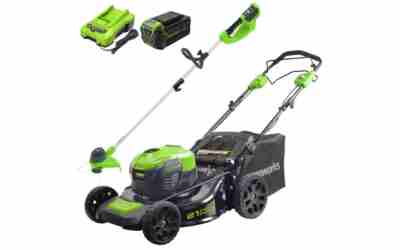
Greenworks 80V 21" Self-Propelled Cordless Lawn Mower with 4.0Ah Battery and Rapid Charger

EGO Power+ Z6 ZT5216L 52-Inch Zero Turn Electric Riding Mower with Six 10.0Ah Batteries and 27 HP Equivalent Power
As an Amazon Associate we earn from qualifying purchases. Product prices and availability are accurate as of the date/time indicated.
Frequently Asked Questions
Can a manual reel mower cut tall or overgrown grass?
Usually not well. Many reel mowers struggle once grass passes about 3 to 4 inches. Raise the height to the top setting, mow, then lower it and mow again a day or two later. For heavy overgrowth, a rotary mower or string trimmer works better.
Are reel mowers better for your lawn than rotary mowers?
On fine-bladed grass that is mowed often, the scissor-style cut is cleaner and can look better. On tall, coarse or uneven lawns, a sharp rotary mower does the job more reliably. Mowing height and frequency matter more than mower type.
Can I use a manual mower on a slope?
Only gentle slopes, and with care. Reel mowers have no drive help, so pushing uphill is tiring and wet grass makes footing slippery. Mow across or up and down per the manual, and avoid steep ground entirely.
Is a reel mower cheaper to own than gas or electric?
Often, over time. You skip fuel, oil and engine repairs, and spend on blade sharpening or a backlapping kit. Purchase prices vary widely by model, so a premium reel can cost as much as an entry-level powered mower.
{“@context”: “https://schema.org”, “@type”: “FAQPage”, “mainEntity”: [{“@type”: “Question”, “name”: “Can a manual reel mower cut tall or overgrown grass?”, “acceptedAnswer”: {“@type”: “Answer”, “text”: “Usually not well. Many reel mowers struggle once grass passes about 3 to 4 inches. Raise the height to the top setting, mow, then lower it and mow again a day or two later. For heavy overgrowth, a rotary mower or string trimmer works better.”}}, {“@type”: “Question”, “name”: “Are reel mowers better for your lawn than rotary mowers?”, “acceptedAnswer”: {“@type”: “Answer”, “text”: “On fine-bladed grass that is mowed often, the scissor-style cut is cleaner and can look better. On tall, coarse or uneven lawns, a sharp rotary mower does the job more reliably. Mowing height and frequency matter more than mower type.”}}, {“@type”: “Question”, “name”: “Can I use a manual mower on a slope?”, “acceptedAnswer”: {“@type”: “Answer”, “text”: “Only gentle slopes, and with care. Reel mowers have no drive help, so pushing uphill is tiring and wet grass makes footing slippery. Mow across or up and down per the manual, and avoid steep ground entirely.”}}, {“@type”: “Question”, “name”: “Is a reel mower cheaper to own than gas or electric?”, “acceptedAnswer”: {“@type”: “Answer”, “text”: “Often, over time. You skip fuel, oil and engine repairs, and spend on blade sharpening or a backlapping kit. Purchase prices vary widely by model, so a premium reel can cost as much as an entry-level powered mower.”}}]}