
Yes, electric lawn mowers are powerful enough for lawns up to about 1/2 acre, and a brushless battery model can cut like a mid-size gas push mower when the grass is kept up.
When electric lawn mowers are powerful enough (and when they aren’t)
Match the mower to your yard before you compare specs. This table is a rule of thumb, and results vary by model, grass type and terrain.
| Your yard | Electric enough? | What to do |
|---|---|---|
| Under 1/4 acre, mowed weekly | Yes | One battery mower is usually plenty. |
| 1/4 to 1/2 acre | Yes, with a plan | Plan on two batteries or a spare, and mow when the grass is dry. |
| Over 1/2 acre | Usually not | Gas or a riding mower is the usual pick. Battery riding mowers exist but cost more. |
| Tall, thick or neglected grass | Only with a strong brushless model | Raise the deck and cut in two passes. |
| Steep slopes | Depends on the model | Follow the slope limit in the manual. |
The 1/2 acre cutoff comes from battery energy and mowing time, which the battery section below works out step by step. Past that size, you spend more time swapping or recharging packs than mowing.
How electric mower power compares with gas
Gas engines are rated in cubic centimeters and torque, while battery mowers are sold by voltage and amp-hours. The two sets of numbers do not convert cleanly. Some manufacturers say their premium brushless mowers match a gas engine of a given size, but “gas equivalent” and torque claims are not standardized, so they are not a fair test across brands. Judge a mower by its motor type, deck size and how it cuts in your grass.
Two things matter more than any headline number:
- Brushless motor. It wastes less energy as heat, so more battery power reaches the blade. It also adapts better when the grass thickens.
- Blade speed under load. A mower that bogs down in thick grass leaves a ragged cut, whatever its voltage.
Voltage is not power. Power is volts times amps, and what your battery stores is volts times amp-hours. A 40V mower and an 80V mower can deliver similar cutting power. Compare brushless motors, deck size and total battery energy, not voltage alone.
How to match battery size and runtime to your lawn
Battery energy is measured in watt-hours (Wh): volts × amp-hours. Amp-hours alone mislead because a 5Ah battery on a 56V system holds more energy than a 5Ah battery on a 40V system.
Worked example (estimate): a 56V, 5Ah battery holds 56 × 5 = 280 Wh. A mower drawing an average of 400 W in easy grass runs about 280 ÷ 400 = 0.7 hours, or 42 minutes. At 700 W in thick grass, it runs 0.4 hours, or 24 minutes. Two of those batteries (560 Wh) give about 84 minutes at 400 W and 48 minutes at 700 W. The 400 to 700 W draw is an assumption for illustration. Real draw varies by model and grass, so check the manufacturer’s runtime claim and expect less in tough conditions.
Next, estimate how long your lawn takes. A 21-inch deck typically covers roughly 0.3 to 0.5 acre per hour once you count turns and overlap (rule of thumb).
| Lawn size | Mow time (estimate) | Battery energy needed (estimate) |
|---|---|---|
| 1/8 acre | 15 to 25 min | 100 to 290 Wh |
| 1/4 acre | 30 to 50 min | 200 to 580 Wh |
| 1/2 acre | 60 to 100 min | 400 to 1,170 Wh |
Method: mow time at 0.5 acre per hour (low end) and 0.3 acre per hour (high end), multiplied by the 400 W and 700 W draw, with no safety buffer added yet.
Decision rule: multiply your energy number by 1.25 so you finish with about 25% in reserve. For a 1/4 acre lawn at the high end, 583 Wh × 1.25 is about 730 Wh. That is more than two 280 Wh packs (560 Wh), so in thick grass you would plan a short charging break or a third pack. At 1/2 acre, expect to swap or recharge unless your grass is light.
Once you know your number, our roundup of the best electric lawn mowers is a good place to compare models that fit it.
How electric mowers handle thick, tall and wet grass and slopes
Thick or tall grass. A brushless mower with a boost or turbo mode can handle it, but cutting 4 to 6 inches of growth drains the battery much faster than a routine trim. To get more out of any electric mower:
- Raise the deck one or two notches for the first pass, then lower it for a second pass.
- Mow more often so each cut removes less. Removing no more than about a third of the blade height is a common turf-care rule of thumb.
- Overlap passes only a few inches, not half a deck.
- Use boost mode only where the grass is thick, because it shortens runtime.
- Keep the blade sharp. A dull blade makes the motor work harder.
Wet grass. Wet clippings clump under the deck and cause clogs on any mower, gas included. Mow when the grass is dry. Follow the manual on wet conditions, especially for corded models.
Slopes. Battery mowers can handle moderate hills, and self-propelled drive helps, but every model has a slope limit in its manual or on its label. Follow it. Mow across slopes with a wheeled push mower, never up and down, and wear closed shoes with good grip. For steep yards, see our guide to the best lawn mowers for hills.
Electric vs gas: runtime, weight, cost and maintenance
| Battery electric | Gas | |
|---|---|---|
| Runtime | Often under an hour per battery; a second battery extends it | Refuel in minutes, so runtime is rarely the limit |
| Tough grass | Good on premium brushless models, weaker on basic ones | Strong, less affected by thick grass |
| Maintenance | No oil, spark plug, carburetor or fuel; sharpen the blade | Oil, filter, spark plug, fuel stabilizer |
| Noise and starting | Quiet, push-button start | Loud, pull or electric start |
| Upfront cost | Often higher for a comparable mower, plus batteries | Often lower for a comparable mower |
| Running cost | Very low electricity cost per mow | Fuel plus upkeep |
Electricity cost (estimate): a full 280 Wh charge is 0.28 kWh, and at an assumed $0.17 per kWh that is about $0.05, ignoring charger losses. Your local rate will differ. Over several years, savings on fuel and tune-ups can offset a higher sticker price, but a replacement battery can be a major cost. Check the warranty and pack price for the platform before you buy.
Battery or corded? Corded mowers give unlimited runtime and usually cost less, but the cord limits you to small, simple yards, and the manual sets the allowed cord length and gauge. If your lawn is small and near an outlet, our best corded electric lawn mowers guide covers that option. Choose battery for freedom, or gas if you mow over 1/2 acre.
Quick checklist before you choose
- Brushless motor. The most important single feature for power and runtime.
- Total battery energy. Multiply volts by amp-hours and compare with the table above, including the 25% reserve.
- Self-propel. It cuts effort on slopes and larger lawns. Compare options in our best self-propelled electric lawn mowers list.
Common mistake: buying on voltage alone, or on a runtime claim measured in light grass. Check what conditions the runtime claim assumes.
Our Top Picks
Ready to shop? These are the top-rated options from our hands-on roundup, Best Electric Lawn Mowers of 2026.
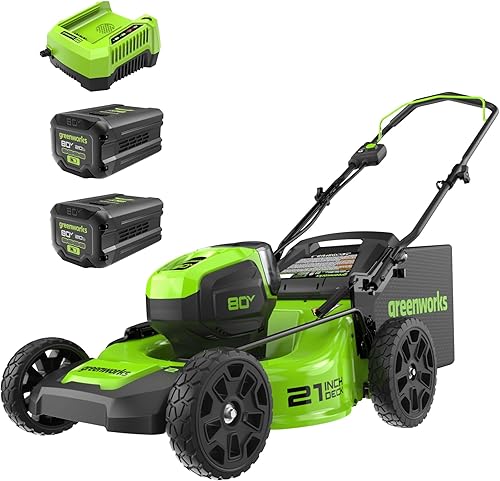
Greenworks 80V 21" Brushless Cordless Push Lawn Mower with (2) 2.0Ah Batteries and Rapid Charger
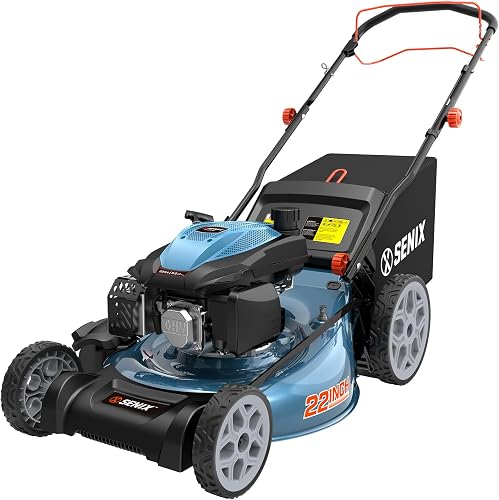
SENIX 22-Inch Self-Propelled Gas Lawn Mower, 201cc 4-Cycle Engine, 3-in-1 Mulch/Bag/Side Discharge

Greenworks 40V 16-Inch Cordless Push Lawn Mower with 4.0Ah Battery and Charger
As an Amazon Associate we earn from qualifying purchases. Product prices and availability are accurate as of the date/time indicated.
Frequently Asked Questions
Can an electric mower handle hills?
Moderate slopes are usually fine, and self-propelled drive makes them easier because the mower pulls itself uphill. Every model has a slope limit in its manual or on its label, so follow it. Slopes also drain the battery faster, so allow extra runtime.
Is a 40V mower enough, or do I need 80V?
Voltage alone does not decide it. A 40V, 5Ah pack holds 200 Wh, the same as an 80V, 2.5Ah pack (80 × 2.5 = 200 Wh). Compare the motor type, deck size and total watt-hours. For a lawn under 1/4 acre, a brushless 40V mower is often enough.
Can I mow a half-acre with one battery?
Usually not. A half-acre takes roughly 60 to 100 minutes (estimate), while one 280 Wh pack runs about 24 to 42 minutes at the assumed 400 to 700 W draw. Plan on a second pack, a fast charger for a mid-job break, or a gas mower.
Do battery mowers work in cold weather?
They work, but lithium packs lose some runtime in the cold. Keep batteries indoors until you mow and have a spare ready. Follow the manual on charging in low temperatures, since charging a frozen pack can damage it.
{“@context”: “https://schema.org”, “@type”: “FAQPage”, “mainEntity”: [{“@type”: “Question”, “name”: “Can an electric mower handle hills?”, “acceptedAnswer”: {“@type”: “Answer”, “text”: “Moderate slopes are usually fine, and self-propelled drive makes them easier because the mower pulls itself uphill. Every model has a slope limit in its manual or on its label, so follow it. Slopes also drain the battery faster, so allow extra runtime.”}}, {“@type”: “Question”, “name”: “Is a 40V mower enough, or do I need 80V?”, “acceptedAnswer”: {“@type”: “Answer”, “text”: “Voltage alone does not decide it. A 40V, 5Ah pack holds 200 Wh, the same as an 80V, 2.5Ah pack (80 × 2.5 = 200 Wh). Compare the motor type, deck size and total watt-hours. For a lawn under 1/4 acre, a brushless 40V mower is often enough.”}}, {“@type”: “Question”, “name”: “Can I mow a half-acre with one battery?”, “acceptedAnswer”: {“@type”: “Answer”, “text”: “Usually not. A half-acre takes roughly 60 to 100 minutes (estimate), while one 280 Wh pack runs about 24 to 42 minutes at the assumed 400 to 700 W draw. Plan on a second pack, a fast charger for a mid-job break, or a gas mower.”}}, {“@type”: “Question”, “name”: “Do battery mowers work in cold weather?”, “acceptedAnswer”: {“@type”: “Answer”, “text”: “They work, but lithium packs lose some runtime in the cold. Keep batteries indoors until you mow and have a spare ready. Follow the manual on charging in low temperatures, since charging a frozen pack can damage it.”}}]}