
The soil for a 4x8x1 raised bed comes to 32 cubic feet, or about 1.2 cubic yards, which is 32 one-cubic-foot bags if you fill it completely.
The math: 4 x 8 x 1 feet equals 32 cubic feet
Multiply length by width by depth, all in feet: 4 × 8 × 1 = 32 cubic feet. One cubic yard is 27 cubic feet (3 × 3 × 3), so 32 ÷ 27 = 1.19, which rounds to 1.2 cubic yards.
Bulk suppliers sell by the yard and bagged soil is sold by the cubic foot, so you need both numbers.
The classic slip is mixing units. A 12-inch-deep bed is 1 foot deep, so use 1 in the formula, not 12. Typing 12 gives 384 cubic feet, which is twelve times too much. For any depth in inches, divide by 12 first.
How many bags of soil for a 4x8x1 raised bed
Divide 32 by the cubic feet printed on the bag and round up. The third column adds 10% (35.2 cubic feet total) for a bed measured inside the boards, explained below.
| Bag size | Bags for 32 cu ft | Bags with 10% extra |
|---|---|---|
| 1 cu ft | 32 | 36 |
| 1.5 cu ft | 22 | 24 |
| 2 cu ft | 16 | 18 |
| 3 cu ft | 11 | 12 |
Read the unit on the label. Some bags are labeled in quarts, and a dry quart is about 1/26 of a cubic foot. A 50-quart bag holds only about 1.9 cubic feet, so it does not replace a 2-cubic-foot bag. Also check whether the label gives loose volume or compressed volume, since compressed bags can expand once opened.
Soil for a 4×8 bed at 6, 8, 10, 12 and 18 inches
Each inch of depth in a 4×8 bed takes 2.67 cubic feet (32 ÷ 12). Multiply your depth in inches by 2.67, then divide by 27 for yards.
| Depth | Cubic feet | Cubic yards | 2 cu ft bags |
|---|---|---|---|
| 6 in | 16 | 0.59 | 8 |
| 8 in | 21.3 | 0.79 | 11 |
| 10 in | 26.7 | 0.99 | 14 |
| 12 in | 32 | 1.19 | 16 |
| 18 in | 48 | 1.78 | 24 |
Going from 12 to 18 inches adds half again as much soil. If you have not settled on a depth, the guide to the best height for a raised garden bed covers what roots need.
Settling and board thickness: what to actually order
Beds are usually listed by outside size. With 1.5-inch boards (the real thickness of 2x lumber), a 4×8 outside bed measures 45 × 93 inches inside. That is 45 × 93 × 12 ÷ 1,728 = 29.1 cubic feet, so 32 cubic feet already includes about 2.9 cubic feet of cushion.
If you measured the inside of the boards, or your walls are thin, add 10% to 32 for settling, which gives 35.2 cubic feet or about 1.3 cubic yards.
Do not fill to the rim. Stop 1 to 2 inches below the top so watering does not wash soil over the edge. Expect the level to drop after the first few waterings, and keep a few bags back to top it off. Mixes heavy in compost sink the most.
Bulk delivery or bags: where the crossover is
One cubic yard equals 27 cubic feet, or 13.5 bags of 2 cubic feet. This bed needs 16 to 18 of those bags, so you are already past a yard. Once your bag count tops about 14, get a bulk quote.
To compare, price both ways yourself:
- Bagged total = number of bags × the shelf price per bag.
- Bulk total = price per yard × 1.3 yards, plus the delivery fee.
Ask the supplier for its minimum order and what is in the blend. Many bulk mixes are screened topsoil and compost, and you may still need to add aeration material.
Bulk wins on price and fewer trips when you fill several beds. Bags win when you have no place to leave a pile, since the load arrives dumped on your driveway. A typical 6 cubic foot wheelbarrow needs about six loads to move 35 cubic feet. For more on loading beds, see the best way to fill raised garden beds. Call 811 before digging or choosing a pile spot, and lift bags with your legs.
A common mix ratio and ways to use less soil
A common starting point is one-third topsoil, one-third compost and one-third an aerating material such as perlite, coir or coarse sand. It is a starting recipe, not the only one. For 32 cubic feet that is about 10.7 cubic feet of each, or roughly seven 1.5-cubic-foot bags. Crop needs shift things, as the guide to soil for tomatoes in raised beds shows.
To buy less, fill the bottom 4 inches with logs, branches and leaves (hügelkultur). That replaces 4 × 2.67 = 10.7 cubic feet, about a third of the soil. The wood rots and sinks over the seasons, so plan to top off with compost. Skip pressure-treated wood and black walnut at the bottom of a vegetable bed.
Our Top Picks
Ready to shop? These are the top-rated options from our related roundup, Best Raised Garden Bed Wood of 2026.

Anleolife 8x4x2ft Oval Deep Root Galvanized Raised Garden Bed, 478 Gallon Extra Tall Metal Planter in Quartz Grey

Reachible 8x2x2FT Galvanized Raised Garden Bed, 24-Inch Deep Metal Planter Box with 32 Cu. Ft Capacity and Internal Support Rods

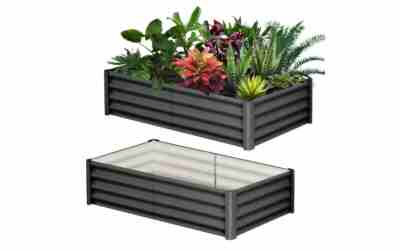
STMHOM 2-Pack Galvanized Raised Garden Beds, 6x3x1 FT Metal Planters with Safety Edges and Open Base for Vegetables and Flowers
As an Amazon Associate we earn from qualifying purchases. Product prices and availability are accurate as of the date/time indicated.
Frequently Asked Questions
Is one cubic yard of soil enough for a 4x8x1 bed?
No. One cubic yard is 27 cubic feet, which fills the bed to about 10 inches. For a full 12 inches with room for settling, order about 1.3 cubic yards, or 1.25 if the supplier sells in quarter-yard steps.
Can I fill the bed with pure compost?
No. Straight compost shrinks quickly, can hold too many salts for seedlings, and packs down. Blend it with topsoil and an aerating material like perlite or coir so the bed stays loose and drains.
Do I need to refill the bed every year?
Plan to top it off, not refill it. Adding 1 inch of compost each spring takes 2.67 cubic feet, about two 1.5-cubic-foot bags, and replaces what settles and what plants use.
Can I put cardboard or lawn under the soil without changing the amount?
Yes. A single layer of cardboard on grass takes no meaningful space and smothers the sod below. Remove tape and staples first. The soil quantity stays the same because the bed depth is unchanged.
{“@context”: “https://schema.org”, “@type”: “FAQPage”, “mainEntity”: [{“@type”: “Question”, “name”: “Is one cubic yard of soil enough for a 4x8x1 bed?”, “acceptedAnswer”: {“@type”: “Answer”, “text”: “No. One cubic yard is 27 cubic feet, which fills the bed to about 10 inches. For a full 12 inches with room for settling, order about 1.3 cubic yards, or 1.25 if the supplier sells in quarter-yard steps.”}}, {“@type”: “Question”, “name”: “Can I fill the bed with pure compost?”, “acceptedAnswer”: {“@type”: “Answer”, “text”: “No. Straight compost shrinks quickly, can hold too many salts for seedlings, and packs down. Blend it with topsoil and an aerating material like perlite or coir so the bed stays loose and drains.”}}, {“@type”: “Question”, “name”: “Do I need to refill the bed every year?”, “acceptedAnswer”: {“@type”: “Answer”, “text”: “Plan to top it off, not refill it. Adding 1 inch of compost each spring takes 2.67 cubic feet, about two 1.5-cubic-foot bags, and replaces what settles and what plants use.”}}, {“@type”: “Question”, “name”: “Can I put cardboard or lawn under the soil without changing the amount?”, “acceptedAnswer”: {“@type”: “Answer”, “text”: “Yes. A single layer of cardboard on grass takes no meaningful space and smothers the sod below. Remove tape and staples first. The soil quantity stays the same because the bed depth is unchanged.”}}]}