
A cedar raised garden bed lifespan is typically 10 to 15 years with 2-inch boards, stretching to 15 to 20 years in dry climates.
How long a cedar raised bed lasts by climate
The ranges below assume untreated 2-inch cedar boards in direct soil contact, with no liner. Treat them as a rule of thumb. Cedar grade, board thickness, soil contact and local weather all move the result, and a liner, a gravel base or better drainage can add years beyond these figures.
| Conditions | Typical life |
|---|---|
| Dry or mild climate, well-drained site | 15 to 20 years |
| Mixed climate with freeze-thaw and normal rain | 10 to 15 years |
| Wet, humid or saturated clay soil | 7 to 12 years |
Thin 1-inch boards, common in kits, wear out faster than any figure above. Cedar’s natural oils slow rot but do not stop it, so a bed that stays wet fails on the wet side first, usually the bottom board.
Beds in mixed climates also face freeze-thaw cycles, which open small cracks that hold water and speed up decay. If your site is wet, plan on the lower end of the range and use the steps further down to push it higher.
What shortens or extends cedar’s life
Cedar resists rot because of natural oils and tannins. Those compounds are concentrated in the dark heartwood. The pale outer sapwood has far less protection and rots much sooner.
Heartwood vs sapwood
Boards with a lot of pale streaks will fail first along those streaks. Premium grades cost more because they are mostly heartwood. Western red cedar is the most common species for beds, and Alaskan yellow cedar is another option. Ask the seller which species and grade you are getting, and sort through the stack if you can.
Board thickness
Two-inch boards give rot more wood to chew through and resist bowing under the weight of wet soil. One-inch boards are the biggest reason kit beds fail early. The same applies to smaller cedar containers, which you can read about in this guide to how long cedar planters last.
Moisture and soil contact
Rot needs sustained moisture. The bottom board sits against damp soil on the inside and wet ground on the outside, so it goes first. Poor drainage, constant overwatering and heavy clay make it worse, while sandy or sloped sites dry out faster and keep the wood healthy longer.
Do you need to seal or paint cedar to make it last?
No. Untreated cedar is widely used for edible beds and does not need a sealer to reach the ranges above. It is not pressure-treated, so there is no preservative to leach into the soil.
- Skip CCA lumber and old treated wood. Avoid chromated copper arsenate (CCA) lumber and pressure-treated wood made before 2004 for any food bed.
- Sealers are optional. If you want one, use only a product labeled safe for food gardens and follow its label.
- Keep paint and stain off the inside faces. Soil and roots touch those surfaces.
How to make a cedar raised garden bed last longer
These steps add the most years for the least money, in order of impact.
- Buy 2-inch boards, mostly heartwood. This matters more than any later step.
- Set the bed on level, well-drained ground. A 2 to 4 inch layer of gravel under the frame keeps the bottom board from sitting in standing water.
- Consider lining the inside walls. A food-safe liner stops wet soil from pressing on the wood. Leave the bottom open so water drains, and see this guide to the best liner for a raised garden bed for options.
- Use sturdy corner hardware. Exterior-rated screws and metal corner brackets stop joints from splitting and let you swap a single board later.
- Water the soil, not the boards. Soaker lines or hand watering at the base keep the outer wood drier.
- Leave an air gap. Keep mulch and soil from piling against the outside faces.
Cedar vs pine, composite and galvanized steel
Composite and steel depend on the maker, so check each product’s warranty. Cedar and pine are compared here as untreated boards in ground contact.
| Material | Typical life | Where it loses |
|---|---|---|
| Cedar | 10 to 15 years, 15 to 20 in dry sites | Costs more than pine; thin boards fail early |
| Untreated pine | Shorter than cedar; the cost example below assumes 4 years | Rots fast in wet soil |
| Composite | No rot; set by the maker’s warranty | Can warp or fade in strong sun |
| Galvanized steel | No rot; set by coating and warranty | Coating can corrode in wet or salty areas |
Decision rule: choose cedar if you want a natural look and 10+ years without chemicals. Choose pine only for a short-term bed, and pick composite or steel if you never want to replace boards. For more options, see the best material to build a raised bed garden.
Is a cedar raised bed worth the cost?
Compare cost per year, not sticker price. The example bed is 4×8 ft and 11 inches high, built from two stacked courses of 2×6 boards. The perimeter is 24 feet, so two courses need 48 linear feet of lumber. Prices and the pine lifespan are assumed for illustration, so plug in your own quotes.
- Cedar: 48 ft at $6 per foot = $288, plus $12 of screws and brackets = $300. Over 12 years, $300 ÷ 12 = $25 per year.
- Pine: 48 ft at $2.25 per foot = $108, plus the same $12 of hardware = $120. Over an assumed 4 years, $120 ÷ 4 = $30 per year.
Over 12 years you would build three pine beds in total, which means two rebuilds and $360 spent, versus $300 for one cedar bed. At the 15-year end of the range, the same cedar bed costs $20 per year.
Break-even rule: cedar wins when its price ratio to pine is lower than its lifespan ratio. With cedar at 12 years and pine at 4, that is 3 times, so cedar wins below $360 against a $120 pine bed. At 15 years the cutoff rises to 3.75 times, or $450. If your cedar bed would only last 8 years, $300 costs $37.50 per year and pine comes out ahead.
Signs your cedar bed is failing and what to do
Check the bottom boards and corners once a year in spring.
- Screwdriver test: if a screwdriver sinks in easily, the wood is soft and rotting.
- Crumbly, dark or spongy wood along the bottom edge.
- Boards bowing outward or gaps opening at the corners.
- Fungus or deep cracks, especially near the ground.
If only one or two bottom boards are soft, replace them. Corner brackets make that a simple swap. If most of the lower boards are soft or the corners no longer hold, rebuild before the wall collapses and spills soil.
Our Top Picks
Ready to shop? These are the top-rated options from our hands-on roundup, Best Raised Garden Bed Wood of 2026.

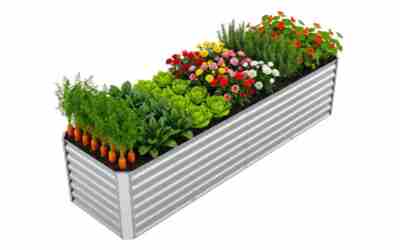
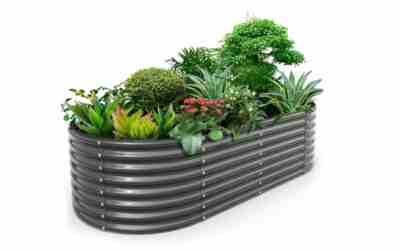
Anleolife 8x4x2ft Oval Deep Root Galvanized Raised Garden Bed, 478 Gallon Extra Tall Metal Planter in Quartz Grey

Reachible 8x2x2FT Galvanized Raised Garden Bed, 24-Inch Deep Metal Planter Box with 32 Cu. Ft Capacity and Internal Support Rods

STMHOM 2-Pack Galvanized Raised Garden Beds, 6x3x1 FT Metal Planters with Safety Edges and Open Base for Vegetables and Flowers
As an Amazon Associate we earn from qualifying purchases. Product prices and availability are accurate as of the date/time indicated.
Frequently Asked Questions
Can I build a bed from cedar fence pickets?
You can, but pickets are usually thin, about 5/8 inch, so expect a much shorter life than 2-inch boards. Doubling them up helps. Rule: use pickets for a temporary bed and 2-inch boards for a lasting one.
Does cedar need to be lined with plastic?
No, cedar works fine unlined. A liner on the inside walls only helps in wet sites or heavy clay, where it keeps damp soil off the wood. Rule: line the walls if your site stays wet, and skip it if your ground drains well.
Should I put cardboard or landscape fabric under the bed?
Either is fine for blocking weeds and grass, and neither replaces drainage. Cardboard breaks down within a season, while fabric lasts longer but should be a woven, water-passing type. Rule: use cardboard for a quick start and fabric if weeds are a long-term problem.
Can I reuse the soil when I replace a cedar bed?
Yes, in most cases. Shovel the soil onto a tarp, rebuild the frame, then refill. Pull out any rotted wood chips and refresh the top few inches with compost.
Is cedar worth it if I may move in a few years?
Probably not at full price. A cedar bed’s cost per year only pays off over a decade or more. Rule: if you will leave within 5 years, build a cheaper bed or use a container you can take with you.
{“@context”: “https://schema.org”, “@type”: “FAQPage”, “mainEntity”: [{“@type”: “Question”, “name”: “Can I build a bed from cedar fence pickets?”, “acceptedAnswer”: {“@type”: “Answer”, “text”: “You can, but pickets are usually thin, about 5/8 inch, so expect a much shorter life than 2-inch boards. Doubling them up helps. Rule: use pickets for a temporary bed and 2-inch boards for a lasting one.”}}, {“@type”: “Question”, “name”: “Does cedar need to be lined with plastic?”, “acceptedAnswer”: {“@type”: “Answer”, “text”: “No, cedar works fine unlined. A liner on the inside walls only helps in wet sites or heavy clay, where it keeps damp soil off the wood. Rule: line the walls if your site stays wet, and skip it if your ground drains well.”}}, {“@type”: “Question”, “name”: “Should I put cardboard or landscape fabric under the bed?”, “acceptedAnswer”: {“@type”: “Answer”, “text”: “Either is fine for blocking weeds and grass, and neither replaces drainage. Cardboard breaks down within a season, while fabric lasts longer but should be a woven, water-passing type. Rule: use cardboard for a quick start and fabric if weeds are a long-term problem.”}}, {“@type”: “Question”, “name”: “Can I reuse the soil when I replace a cedar bed?”, “acceptedAnswer”: {“@type”: “Answer”, “text”: “Yes, in most cases. Shovel the soil onto a tarp, rebuild the frame, then refill. Pull out any rotted wood chips and refresh the top few inches with compost.”}}, {“@type”: “Question”, “name”: “Is cedar worth it if I may move in a few years?”, “acceptedAnswer”: {“@type”: “Answer”, “text”: “Probably not at full price. A cedar bed’s cost per year only pays off over a decade or more. Rule: if you will leave within 5 years, build a cheaper bed or use a container you can take with you.”}}]}