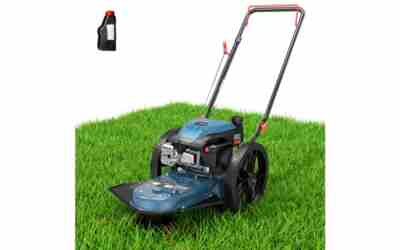

A weed wacker keeps stalling most often because of old fuel, a dirty air filter, or a clogged fuel filter, spark arrestor or carburetor. Work through the seven fixes below from cheapest to most involved, and use the symptom table to start in the right place.
Which stall pattern do you have?
How the engine dies tells you where to begin. Fixes are numbered in the order they appear below.
| When it stalls | Most likely cause | Start at fix |
|---|---|---|
| Dies within seconds of starting | Clogged air filter, fuel filter or spark arrestor | 2 |
| Runs only with the choke on | Stale fuel, carb air leak or stiff diaphragm | 1, then 6 |
| Dies when you squeeze the trigger | Gummed carburetor or fuel starvation | 3, then 6 |
| Dies only after warming up | Clogged spark arrestor or weak spark plug | 4 |
| Dies when tipped sideways | Fuel pickup, filter or hardened fuel line | 3 |
| Idles fine, dies when the head spins in grass | Drag from the head or tangled line | Head section |
If the engine is fine until the head hits grass, an overpacked or badly wound spool can bind it. How to restring a weed wacker shows the correct way to load a bump-feed head.
Safety steps before you open anything
- Stop the engine, let the muffler cool until you can touch it, and pull the spark plug boot off the plug.
- Work outdoors, away from flames, pilot lights and sparks. Carb cleaner and gasoline vapor are flammable.
- Wear gloves and eye protection when spraying cleaner.
- Keep fuel only in an approved container and wipe up spills before you restart.
Fixes 1 to 3: fuel, air filter and fuel filter
Fix 1: Replace the fuel
Drain the tank into an approved container and refill with fresh regular unleaded that has no more than 10% ethanol. Mix it with 2-cycle oil at the ratio printed in your owner’s manual. Common ratios are 40:1 and 50:1, but they differ by manufacturer and model, so do not guess. Many makers consider ethanol-blended mixed fuel stale after roughly 30 days, because it absorbs moisture and leaves sticky deposits.
Fix 2: Clean or replace the air filter
- Remove the air filter cover and lift out the filter.
- Foam filter: wash it in warm soapy water, squeeze it dry and let it air dry. Add a few drops of 2-cycle oil and squeeze it through.
- Paper filter: tap out loose dust. If it is oily, dark or torn, replace it.
Fix 3: Check the fuel filter, lines and vent
- Hook the pickup hose out of the fill opening with a bent wire.
- Pull the filter off the hose. Replace it if it looks dark or stiff. Replacing it every season is cheap insurance.
- Look along the fuel lines for cracks, and squeeze them to check for hardening.
- Vent test: if the engine dies and restarts after you briefly loosen the fuel cap, the tank vent is clogged and needs cleaning or replacing.
Fixes 4 and 5: spark arrestor and spark plug
Fix 4: Clean the spark arrestor screen
The screen sits in the muffler outlet, often behind a small plate held by one or two screws. Remove it once the muffler is cool. Scrub off carbon with a wire brush. Replace the screen if the mesh is torn or the carbon will not come off. A blocked screen traps exhaust, which is why the engine can run fine cold and bog as it heats up.
Fix 5: Inspect the spark plug
Remove the plug with a plug socket. A wet, black, oily tip points to a rich mixture or too much oil in the fuel. A cracked porcelain or burned electrode means replacement. Check the gap against the manual before installing a new plug, since specs differ by model.
Fixes 6 and 7: carburetor cleaning and adjustment
Fix 6: Tighten and clean the carburetor
Vibration can loosen the two carb mounting nuts, which lets in extra air and leans the mixture. Snug them evenly, without crushing the gasket. Then, with the air filter off and the engine cold, spray carb cleaner into the throat, wait a few minutes and restart. Mild gumming often clears this way. A stiff or hardened diaphragm will not pump enough fuel, and the engine then needs the choke to keep running. That calls for a rebuild kit or a new carburetor.
Fix 7: Adjust the idle and mixture screws
Only do this if your carb has screws. Many newer emissions-compliant carbs use fixed jets or plastic limiter caps that allow only about a quarter turn. Do not cut off or defeat the caps, because that conflicts with emissions rules. Start from the settings in your manual.
- Warm the engine for a minute or two.
- Turn the idle speed screw (often marked T or LA) until the engine idles without the head spinning.
- Turn the low-speed screw (L) in 1/8-turn steps, pausing between steps, until the engine accelerates smoothly.
- Adjust the high-speed screw (H) in 1/8-turn steps under load. Leave it slightly rich, with a faint burble at full throttle, rather than lean. A lean setting overheats the engine and can damage the piston.
When the head or shaft is the real problem
If the engine idles but dies when the head spins, stop the engine, disconnect the plug and turn the head by hand. It should spin freely. Grass wrapped around the shaft under the head, a seized bearing or a heavily packed spool all add drag. Remove the wrapped grass and check that the line is the diameter the head specifies. A thicker line or an overfull spool loads the engine more, and why your string trimmer line keeps breaking covers reloading it correctly.
Repair or replace the trimmer?
If fixes 1 to 7 do not cure it, the engine has a deeper fault. Check these before spending money:
- Weak pull: a recoil that pulls with little resistance suggests worn rings or a leaking crankcase seal.
- Scored piston: shine a light into the spark plug hole. Vertical scratches on the piston mean the engine is finished.
- Cracked intake or damaged reed valve: these cause air leaks that no carb adjustment will fix, and they usually need shop testing.
If the engine is mechanically sound, a replacement carburetor or rebuild kit, a filter and a plug is a reasonable repair. As a rule of thumb, once parts plus shop labor reach about half the price of a comparable new trimmer, replace the trimmer. A trimmer showing any of the engine faults above is not worth repairing.
Our Top Picks
Ready to shop? These are the top-rated options from our related roundup, Best Weed Wacker For Heavy Brush of 2026.

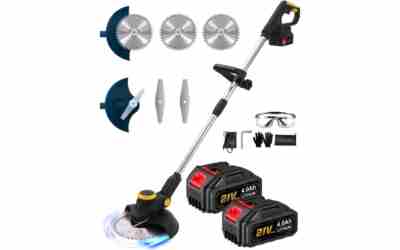
HieYungo Cordless Weed Wacker 8-inch 2x4.0Ah Batteries
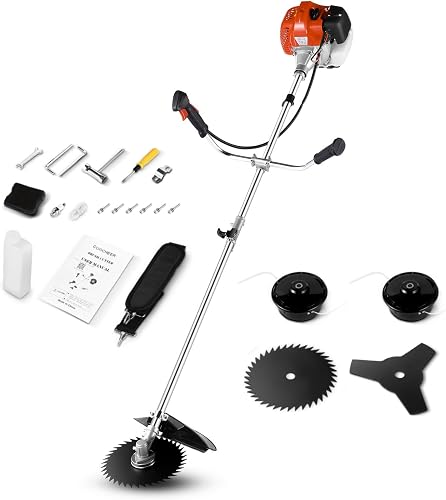
COOCHEER 58CC 4-in-1 Gas Weed Wacker 18.5in Cut
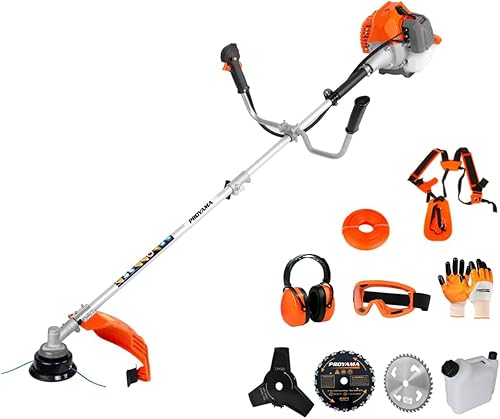
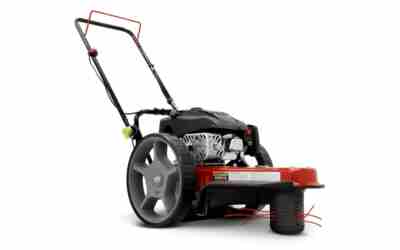
PROYAMA 42.7cc Gas Weed Eater Trimmer
As an Amazon Associate we earn from qualifying purchases. Product prices and availability are accurate as of the date/time indicated.
Frequently Asked Questions
Will fuel stabilizer fix a trimmer that already stalls?
No. Stabilizer only protects fresh fuel from aging. It does not dissolve varnish already in the carburetor. Clean or replace the carb first, then add stabilizer to new mixed fuel if the trimmer will sit unused.
Can I run the trimmer without the spark arrestor screen?
Not as a fix. Removing it will not cure the stall, since cleaning does that. Many areas require a spark arrestor on equipment used near brush, grass or forest land, and running without one raises fire risk.
Does a 4-cycle trimmer stall for the same reasons?
Mostly yes: old fuel, air filter, fuel filter, plug and carburetor problems all apply. The difference is that it runs on plain gasoline with oil in the crankcase. Never add 2-cycle oil to the fuel, and check the oil level.
Why does my battery trimmer cut out instead of stalling?
A battery trimmer has no fuel system, so look at the battery seating, dirty contacts and overload protection. Wrapped grass or heavy line can trip the protection. Let it cool, clear the head and reseat the battery.
{“@context”: “https://schema.org”, “@type”: “FAQPage”, “mainEntity”: [{“@type”: “Question”, “name”: “Will fuel stabilizer fix a trimmer that already stalls?”, “acceptedAnswer”: {“@type”: “Answer”, “text”: “No. Stabilizer only protects fresh fuel from aging. It does not dissolve varnish already in the carburetor. Clean or replace the carb first, then add stabilizer to new mixed fuel if the trimmer will sit unused.”}}, {“@type”: “Question”, “name”: “Can I run the trimmer without the spark arrestor screen?”, “acceptedAnswer”: {“@type”: “Answer”, “text”: “Not as a fix. Removing it will not cure the stall, since cleaning does that. Many areas require a spark arrestor on equipment used near brush, grass or forest land, and running without one raises fire risk.”}}, {“@type”: “Question”, “name”: “Does a 4-cycle trimmer stall for the same reasons?”, “acceptedAnswer”: {“@type”: “Answer”, “text”: “Mostly yes: old fuel, air filter, fuel filter, plug and carburetor problems all apply. The difference is that it runs on plain gasoline with oil in the crankcase. Never add 2-cycle oil to the fuel, and check the oil level.”}}, {“@type”: “Question”, “name”: “Why does my battery trimmer cut out instead of stalling?”, “acceptedAnswer”: {“@type”: “Answer”, “text”: “A battery trimmer has no fuel system, so look at the battery seating, dirty contacts and overload protection. Wrapped grass or heavy line can trip the protection. Let it cool, clear the head and reseat the battery.”}}]}