
The safest way to attach Christmas lights to your house is with plastic clips matched to each surface, never nails, staples or screws through the wire.
Measure your roofline and buy the right amount first
Walk the edges you plan to light and measure each run in feet: eaves, gable edges, porch rail and any window or door frames. Add 10% to the lights for corners and drops to the outlet. Add 10% to the clips for the ones that crack or get dropped.
Worked example: a front eave of 40 ft plus two 10 ft side returns is a 60 ft run.
- Lights: 60 ft + 10% = 66 ft, so three 25 ft strands (75 ft) cover it with slack for the cord to the outlet. Strand length is a typical size, so check your package.
- Gutter clips at one per 8 inches: 60 ft x 12 in / 8 in = 90 clips, plus 10% = 99, so buy 100.
- Shingle clips at one per foot: 60 clips, plus 10% = 66.
For bulb count by house size and style, see our chart on how many Christmas lights you need.
Before anything goes on the house, plug in every strand on the ground and replace any with dead sections, cracked sockets or frayed cord. Fixing a dead strand on a ladder is much harder.
Check wattage and strand limits before you plug in
Use only lights and cords marked for outdoor use. Each light set has a label with its wattage and the maximum number of strands you can connect end to end. Follow that number, because exceeding it can blow the plug fuse or overheat the wire.
For the circuit, a 15-amp, 120-volt outlet circuit delivers 1,800 W, and a continuous load such as lights should stay under 80% of that, or 1,440 W. Add up the wattage on every label, including anything else on the same circuit.
Example only: if a strand’s label says 175 W, the circuit holds 8 of them (1,440 W / 175 W = 8.2). LED strands draw far less, so read your labels for actual figures.
- Plug into a GFCI-protected outdoor outlet.
- Put a timer between the outlet and the first strand.
- Cover every plug-to-plug connection with a weatherproof cover and keep it off the ground.
Which clip to use on each surface
Plastic clips are the standard choice because metal nails and staples can cut into wire insulation. Even small holes in shingles can cause leaks, and lightweight shingles can be pulled out of place by hanging lights.
| Surface | Attachment | Detail |
|---|---|---|
| Gutter without guards | Gutter clip | One every 8 inches |
| Gutter with guards | Shingle clip | About 1 foot apart |
| Roof edge with no gutter | Shingle clip | About 1 foot apart |
| Vinyl siding | Siding clip | Use clips made for siding and follow the package directions |
| Aluminum soffit | Strip bracket | Pilot holes with a 3/32 inch bit |
| Brick | Plastic anchor with screw hook | Drill into the mortar, not the brick; plastic anchors do not rust |
C7 and C9 bulbs are usually spaced 6 to 10 inches apart, so match your clip spacing to the bulb spacing.
How to attach Christmas lights to your house, step by step
- Pick a dry, calm day and set the ladder on firm, level ground, away from power lines.
- Set the ladder angle and height. Extend it about 3 feet past the roofline. Lay a 2×4 in the gutter under the ladder feet to protect it, or use a stand-off if your ladder has one.
- Use a spotter to hold the base and hand up clips. Keep three points of contact, keep your belt buckle between the rails, and move the ladder instead of reaching sideways.
- Install all the clips first along the run at the spacing in the table above, working from the outlet end.
- Clip the lights in, starting at the end nearest the power source. Press each bulb socket into its clip so the bulbs face out and the wire is not pinched in the clip jaws.
- Connect strands only up to the label limit, wrap each connection in a weatherproof cover, and leave a small drip loop in the cord before it reaches the outlet.
- Plug into the timer and check the display at dusk for dark sections.
Never walk on the roof. If a spot cannot be reached from a ladder, skip it.
No gutters, brick, windows and trees
No gutters: clip to the shingle edge or fascia with shingle clips, one about every foot. Do not nail into the roof or fascia.
Brick: drill pilot holes into the mortar joints, insert plastic anchors and screw in hooks. Mortar is easier to patch than brick when you remove them.
Windows: use window clips or adhesive clips made for outdoor use, and test one in a hidden corner first. Run the cord along the frame so it is not pinched when the window closes.
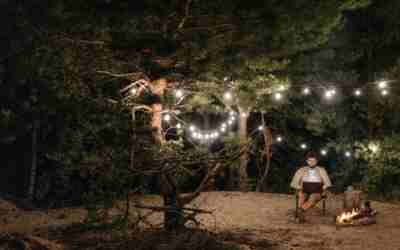
Trees and bushes: wrap loosely from the trunk outward and avoid tight wraps on branches. Take them off before the branches thicken.
If clipping up and taking down every year is the problem, permanent Christmas lights and what they cost per foot are the alternative.
Cold weather, takedown and when to hire a pro
Plastic clips and cord insulation stiffen in freezing temperatures, so handle them gently. Wind and ice add load, so firmly seat each clip and recheck after a storm.
To take lights down, remove them in the order you hung them, gripping the clip and not pulling on the wire. Coil each strand around a reel or cardboard form, label it by location, and keep the clips with that strand so next year’s layout is already set.
Hire a pro for steep roofs, two-story rooflines or any edge you cannot reach from a ladder standing on level ground. Also call one if you have overhead service lines near the work area.
Our Top Picks
Ready to shop? These are the top-rated options from our hands-on roundup, Best Outdoor Lights for Wrapping Trees of 2026.

NISOCYLighting 100FT Warm White LED String Lights, Green Wire

Nielfoi 100FT 300 LED Warm White Christmas Lights

WATERGLIDE 1000 LED 328 FT Outdoor Warm White String Lights
As an Amazon Associate we earn from qualifying purchases. Product prices and availability are accurate as of the date/time indicated.
Frequently Asked Questions
Can I connect as many strands as I want end to end?
No. Connect only the number printed on the light set’s label. Going past it can blow the plug fuse or overheat the wire. Mixing different sets in one run is also unsafe unless the labels say they are compatible.
Can I use indoor Christmas lights outside?
No. Only lights and cords labeled for outdoor use have the insulation and sealing to handle rain, snow and cold. Indoor sets can short out or create a shock hazard when wet.
Can I use adhesive hooks on vinyl siding?
Not reliably. Adhesive hooks tend to let go on textured, cold or damp siding and can pull paint or finish off. Siding hooks or clips made for your siding hold better and come off without damage.
How long can lights stay up after the holidays?
There is no set limit, but take them down once the season ends. Sun, ice and wind wear on clips and cord insulation, and strands left up all year are more likely to fail and to damage trim when removed.
{“@context”: “https://schema.org”, “@type”: “FAQPage”, “mainEntity”: [{“@type”: “Question”, “name”: “Can I connect as many strands as I want end to end?”, “acceptedAnswer”: {“@type”: “Answer”, “text”: “No. Connect only the number printed on the light set’s label. Going past it can blow the plug fuse or overheat the wire. Mixing different sets in one run is also unsafe unless the labels say they are compatible.”}}, {“@type”: “Question”, “name”: “Can I use indoor Christmas lights outside?”, “acceptedAnswer”: {“@type”: “Answer”, “text”: “No. Only lights and cords labeled for outdoor use have the insulation and sealing to handle rain, snow and cold. Indoor sets can short out or create a shock hazard when wet.”}}, {“@type”: “Question”, “name”: “Can I use adhesive hooks on vinyl siding?”, “acceptedAnswer”: {“@type”: “Answer”, “text”: “Not reliably. Adhesive hooks tend to let go on textured, cold or damp siding and can pull paint or finish off. Siding hooks or clips made for your siding hold better and come off without damage.”}}, {“@type”: “Question”, “name”: “How long can lights stay up after the holidays?”, “acceptedAnswer”: {“@type”: “Answer”, “text”: “There is no set limit, but take them down once the season ends. Sun, ice and wind wear on clips and cord insulation, and strands left up all year are more likely to fail and to damage trim when removed.”}}]}