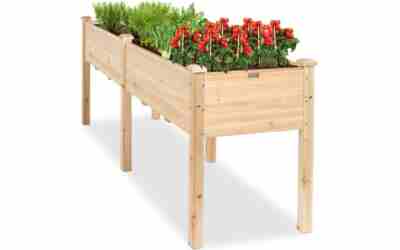
Most cedar planters last about 7 to 15 years outdoors, and well-built ones with a liner and good drainage can go longer. How long cedar planters last depends on the cedar grade, wall thickness, soil moisture, and climate. Thin boards that sit in wet soil or standing water usually rot first, often within 5 to 7 years.
The short answer: 7 to 15 years for most cedar planters
A realistic range for a cedar planter used outdoors is 7 to 15 years. The low end is for thin, cheaper boards that stay wet. The high end is for thick, heartwood-heavy boards that drain well and get basic upkeep. Some cedar fencing and siding lasts 20 years or more, but a planter is a harder job because the wood holds damp soil against it every day.
These are general ranges, not test results. Actual life varies by cedar species, how the box was built, and where you live.
| Condition | Typical lifespan |
|---|---|
| Thin boards (under 3/4 in.), no liner, sits on soil or pavers with no gap | 4 to 7 years |
| Standard 1 in. boards, drainage holes, sits on feet | 7 to 12 years |
| Thick boards (1.5 in. or more), liner, raised off the ground, annual care | 12 to 15+ years |
| Indoor or covered porch use | Often 15+ years |
What decides how long a cedar planter lasts
Cedar resists rot because of natural oils in the wood, but that resistance is not unlimited. Five things matter most.
- Heartwood vs. sapwood: The darker red-brown heartwood is far more rot-resistant. The pale sapwood is not. Boards with lots of pale streaks wear out sooner.
- Species: Western red cedar and Alaskan yellow cedar are common in planter boxes. Aromatic eastern red cedar is also used. Rot resistance differs by species, so check what the maker says it is.
- Board thickness: Thicker walls take longer to soak through and hold screws and joints better as the wood ages.
- Drainage and airflow: Boxes that sit flat on a deck or soil stay wet underneath and fail from the bottom up.
- Climate: Humid, rainy regions and freeze-thaw cycles shorten life. Dry climates stretch it.
Why cedar planters rot from the inside and bottom first
The outside of a planter dries out between rains. The inside face and the bottom boards do not. Watered soil keeps them damp for weeks, which is the exact condition that lets fungus grow in wood.
The usual failure pattern looks like this:
- The bottom boards soften first, especially along the edges that touch the ground.
- Corner joints loosen as fasteners work in softened wood.
- The side panels bow outward from soil weight.
- Soil leaks out through gaps or rotted spots.
Rusting fasteners also cut life short. Use stainless steel or coated exterior-rated screws. Plain steel screws corrode and can stain cedar black, since the wood’s natural tannins react with iron.
How to make a cedar planter last longer
Most of the gain comes from keeping water away from the wood, not from fancy finishes. These steps matter most, in rough order of payoff.
- Raise it. Set the planter on pot feet, bricks, or small strips so air can move under it. A 1 to 2 in. gap helps a lot.
- Make sure it drains. Check for drainage holes. Without them, water pools and soaks the bottom boards. Drill several 1/2 in. holes if they are missing.
- Line the sides, not the bottom. Staple heavy plastic (such as a pond liner or thick landscape sheeting) to the inside walls and cut slits or holes at the base so water still drains. Leaving the bottom open prevents a soggy basin.
- Use good potting mix. Heavy garden soil packs down and holds water. See our guide to the best soil for planters for mixes that drain better.
- Empty it for winter if you can. Soil that stays frozen and wet through winter is hard on wood. Moving a box under cover helps too.
- Re-treat the wood yearly or every other year. See the next section.
If you grow edibles, check that your liner is labeled food-safe. Avoid pressure-treated lumber for vegetable beds unless the product says it is approved for that use.
Seal, stain, or leave cedar bare?
All three work, but they change how the planter looks and how much upkeep it needs.
Bare cedar
Left alone, cedar fades to silvery gray in a year or two. That is cosmetic. The wood still resists rot, but unfinished surfaces take on water faster at end grain and joints, so lifespan tends toward the lower end of the range in wet climates.
Clear sealer or water repellent
A penetrating exterior sealer slows water uptake and keeps the warm color for a while. Plan to reapply every 1 to 3 years. Follow the label, because drying times and reapplication intervals vary by product.
Exterior stain
Semi-transparent stains add UV protection and are easier to refresh. Solid stains act more like paint, which can peel if moisture gets behind them.
Whichever you pick, coat the outside, the top edges, and the bottom edges where water gets in. If you want to compare cedar against other woods before you build or buy, see our rundown of the best wood for planter boxes.
Signs it is time to repair or replace
A gray or faded planter is not a failing planter. Look for structural problems instead.
- Soft wood: If a screwdriver tip sinks in easily or the wood crumbles, it is rotting.
- Sagging or bowed sides: This means joints and boards are giving way under soil weight.
- Loose or pulled-out screws: Fasteners no longer have solid wood to hold.
- Soil leaking from the base: Bottom boards are likely gone.
- Black stains around screws: This points to iron fasteners reacting with the wood. It is a sign to swap hardware.
You can often extend life by replacing the bottom boards, adding a liner, or swapping in stainless screws. If more than a third of the box is soft, replacement is usually the better use of time.
When you do replace it, think about how you will use it. A large, heavy box that stays wet needs different material than a small porch box. Our guide to the best material for outdoor planters compares options like resin, metal, and composite, and our list of the best outdoor planters covers a range of styles.
Frequently Asked Questions
Do cedar planters rot?
Yes, eventually. Cedar resists rot better than most woods, but constant contact with wet soil breaks it down over time. Bottom boards and inside faces fail first. Drainage, raising the box off the ground, and a liner slow rot considerably.
Should I line a cedar planter?
Lining the sides with heavy plastic helps keep soil moisture off the wood and can add years of life. Cut drainage slits at the base and leave the bottom uncovered so water can escape. For edibles, choose a food-safe liner.
Is cedar better than pine for planters?
Generally yes for outdoor use. Cedar contains natural oils that resist rot and insects, while untreated pine breaks down faster in wet soil. Pressure-treated pine can also last, but check the label before using it with edible plants.
Can I leave cedar planters outside in winter?
Yes, cedar handles winter outdoors. Freezing and thawing of wet soil is harder on the wood, so empty the planter or move it under cover when you can. Make sure drainage holes stay clear so water does not freeze inside.