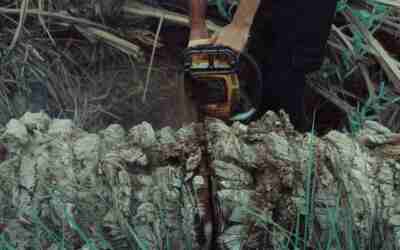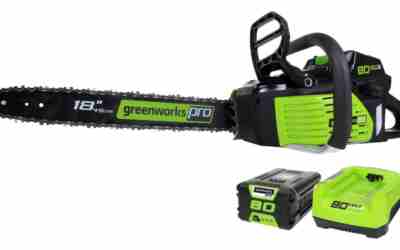

You set up a chainsaw by mounting the bar and chain with cutters facing forward, fueling it, setting the tension, and testing the brake.
What you need before you set up a chainsaw
Gather everything first and read the owner’s manual. It overrides any general guide, this one included, on fuel ratio, chain tension, oil type and every safety limit for your model.
Protective gear
- Chainsaw chaps or cut-resistant pants
- Helmet with a face screen, plus safety glasses
- Hearing protection
- Gloves and sturdy boots
Supplies and tools
- The combination wrench (scrench) that came with the saw
- Bar and chain oil, not motor oil
- A clean rag for wiping the bar groove and spills
- Gas saws: fresh gasoline, 2-stroke oil and an approved fuel container
- Battery saws: a fully charged battery and the matching charger
Check the manual for the bar length and chain type your saw is rated for, and use only those.
| Step | Gas 2-stroke saw | Battery saw |
|---|---|---|
| Fuel | Gasoline mixed with 2-stroke oil at the manual’s ratio | None, charge the battery |
| Bar and chain oil | Required | Required |
| Before touching the chain | Pull the spark plug boot | Remove the battery |
| Starting | Choke, prime, pull cord | Insert battery, squeeze trigger |
How to mount the bar and chain and which way the cutters face
The cutters on the top of the bar must point toward the bar tip, away from the engine. A backward chain is the most common beginner mistake. It cuts poorly, makes dust instead of chips and can grab the wood.
- Set the saw on a flat surface. Remove the spark plug boot or the battery.
- Pull the chain brake hand guard back toward the front handle so the brake is released. The side cover will not come off with the brake on.
- Remove the side cover nuts with the scrench and lift off the cover.
- Slide the bar slot over the studs. Seat the bar’s adjuster hole on the tensioner pin, if your saw has one.
- Wearing gloves, loop the chain around the drive sprocket behind the clutch. Lay the drive links in the bar groove and run them around the nose.
- Check direction. Many bars and chains have an arrow, but the rule is that the top cutters face the tip.
- Refit the cover. Finger-tighten the nuts only. Tension comes next.
If the chain looks backward, flip it over. Do not try to make it work.
How tight should a chainsaw chain be?
A cold chain should sit snug against the underside of the bar with no sag. You should be able to pull it around the bar by hand, and it should snap back into place when you lift it slightly in the middle. Your manual gives the exact allowance for your saw.
- With the nuts finger-tight, lift the bar nose slightly.
- Turn the tensioning screw until the sag disappears and the drive link tangs just touch the underside of the bar.
- Keep the nose lifted and tighten the side cover nuts firmly.
- With the brake released and gloves on, pull the chain along the bar. It should move freely without binding.
- Lift the chain gently at the middle of the bar. It should rise a little and snap back, with the tangs staying in the groove.
| Chain condition | What you see or feel | Risk |
|---|---|---|
| Too loose | Sags below the bar, drive links hang out of the groove, no snap-back | Chain can derail or whip |
| Right | Snug, no sag, pulls around by hand and snaps back when lifted | Normal wear |
| Too tight | Will not pull around by hand | Heat, fast bar and sprocket wear |
Never set tension on a hot chain. Metal contracts as it cools, so a chain that feels right when hot ends up too tight once it cools.
Fuel, bar oil and battery setup
Gas saws
Use the fuel-to-oil ratio printed in your manual or on the saw. Ratios differ by brand and model. Some saws call for 50:1 and others for 40:1, so do not rely on a number from a forum. The manual also states the maximum ethanol content and the type of 2-stroke oil to use.
Here is the 2-stroke oil needed for common container sizes (1 gallon is 128 fluid ounces):
| Gasoline | At 50:1 | At 40:1 |
|---|---|---|
| 1 gallon | 2.6 oz | 3.2 oz |
| 5 gallons | 12.8 oz | 16 oz |
| 1 liter | 20 ml | 25 ml |
Mix in an approved container, shake well, then pour into the saw. Refuel outdoors with the engine off and cool, away from sparks and flame. Wipe up spills and move away from the fueling spot before starting.
Bar and chain oil
Fill the oil reservoir to the fill line with bar and chain oil. Check the manual for the viscosity it recommends, since many makers specify different oil for hot and cold weather. A new chain’s factory coating is not lubricant, so make sure the oiler is working before you cut.
Never let the oil tank run dry. Dry running quickly damages the chain and bar.
Battery saws
Charge the battery fully with the supplied charger, then click it in until it seats. Battery saws still need bar oil, and the chain tension steps are the same as for a gas saw.
Pre-start safety check and how to start a chainsaw
Run through this checklist with the saw off:
- Chain brake: push the hand guard forward and confirm the chain will not move by hand, then release it.
- Throttle trigger lock and chain catcher are present and undamaged.
- Handles are dry and clean, and the fuel and oil caps are tight.
- Bar nuts are tight and the chain is correctly tensioned.
- People and pets are clear, and nothing is near the bar.
Cold start for a gas saw
Exact steps differ by model, so use the manual if it disagrees with the list below.
- Place the saw on flat, level ground and engage the chain brake. The brake stays on until the saw is running.
- Set the choke fully on. Press the primer bulb if your saw has one.
- Put your boot in the rear handle, grip the front handle with your left hand and pull the cord with your right until the engine pops.
- Move the choke to the run position after the engine pops, then pull again until it runs.
- Squeeze the trigger briefly to drop the fast idle, then release the brake.
Never drop-start a saw in the air.
Starting a battery saw
Seat the battery, keep the brake on, switch it on if there is a power button, then release the brake, grip both handles and squeeze the trigger.
First cuts and break-in for a new chainsaw
Break-in is mostly about the chain, which stretches quickly when new. Run the saw for a couple of minutes without cutting, then stop and let it cool. Retension the chain, make a few cuts, then let it cool and retension again. Expect to repeat this several times during the first uses. Check your manual for any engine break-in guidance on a gas saw.
Test the oiler before cutting. Hold the running bar tip close to a piece of cardboard or plywood, without touching it, and look for a thin line of oil spatter.
Kickback and cutting rules
- Kickback happens when the upper tip of the bar hits something and the saw jerks toward you. Keep the tip clear of wood and brush.
- Hold with both hands and wrap your thumbs around the handles.
- Stand slightly to the side of the cut line, not behind the saw.
- Bring the chain to full speed before it touches the wood.
Make your first cuts on a small dry log braced firmly near the ground. A properly set up saw throws chips, not fine dust. If cuts drift or need pressure, check the chain direction and sharpness. Our guide on how to sharpen a chainsaw chain by hand covers touch-ups.
Chainsaw won’t oil, turn or start: first-run fixes
| Problem | Likely cause | Fix |
|---|---|---|
| Chain will not turn | Brake engaged, or chain too tight | Release the brake, then loosen tension slightly |
| No oil spatter | Empty tank or clogged oil port | Fill the tank, clean the bar groove and oil hole |
| Dust, not chips, and the saw pulls away | Chain on backward or dull | Flip the chain or sharpen it |
| Gas saw smells of fuel and will not start | Flooded, often from leaving the choke on after the engine popped | Move the choke to the run position and follow the manual’s flooded-engine steps |
| Battery saw is dead | Battery not seated or safety switch off | Reseat the battery and check any lockout switch |
Decision rule: if the chain pulls around by hand, shows oil spatter and stops when the brake is engaged, it is ready to cut.
Our Top Picks
Ready to shop? These are the top-rated options from our hands-on roundup, Best Easy To Start Chain Saws of 2026.

EGO POWER+ CS1613 16-Inch Cordless Chainsaw with 56V 4.0Ah ARC Lithium Battery and Brushless Motor

Oregon CS1500 18-Inch Self-Sharpening Corded Electric Chainsaw, 15 Amp High-Power Motor

Husqvarna 455 Rancher Gas Chainsaw | 55cc 3.5-HP X-Torq Engine | 20-Inch Bar with Smart Start & LowVib Technology
As an Amazon Associate we earn from qualifying purchases. Product prices and availability are accurate as of the date/time indicated.
Related reading: How Much Does a Chainsaw Cost? Prices by Type · How to Size a Chainsaw Chain (Pitch, Gauge, Links)
Frequently Asked Questions
Can I store leftover mixed fuel for next season?
Mixed fuel ages, so check the 2-stroke oil label and your manual for how long it keeps. Store it in an approved, labeled container with the date and ratio, and shake it before use. Decision rule: if it is past the label’s limit or you do not know its age, mix fresh.
Why do my bar nuts keep loosening?
Vibration and a new chain that is still stretching are the usual causes. Retighten with the bar nose lifted, and check that the cover, studs and bar seat are clean and undamaged. Decision rule: if they loosen repeatedly after that, have a service shop inspect the saw.
Can I run my chainsaw on a cold day?
Yes, within what the manual allows. Check the manual for the bar oil it recommends in cold weather, let the saw warm up briefly before cutting, and recheck tension after the chain has cooled back down.
Can I use pre-mixed fuel in a new gas chainsaw?
Yes, if the ratio and oil type on the can match what your manual calls for. If they differ, mix your own.
Can I put a longer bar on my saw for bigger logs?
Only up to the longest bar and chain combination the manual rates for your model. Decision rule: if the length is not listed in the manual, do not fit it.
{“@context”: “https://schema.org”, “@type”: “FAQPage”, “mainEntity”: [{“@type”: “Question”, “name”: “Can I store leftover mixed fuel for next season?”, “acceptedAnswer”: {“@type”: “Answer”, “text”: “Mixed fuel ages, so check the 2-stroke oil label and your manual for how long it keeps. Store it in an approved, labeled container with the date and ratio, and shake it before use. Decision rule: if it is past the label’s limit or you do not know its age, mix fresh.”}}, {“@type”: “Question”, “name”: “Why do my bar nuts keep loosening?”, “acceptedAnswer”: {“@type”: “Answer”, “text”: “Vibration and a new chain that is still stretching are the usual causes. Retighten with the bar nose lifted, and check that the cover, studs and bar seat are clean and undamaged. Decision rule: if they loosen repeatedly after that, have a service shop inspect the saw.”}}, {“@type”: “Question”, “name”: “Can I run my chainsaw on a cold day?”, “acceptedAnswer”: {“@type”: “Answer”, “text”: “Yes, within what the manual allows. Check the manual for the bar oil it recommends in cold weather, let the saw warm up briefly before cutting, and recheck tension after the chain has cooled back down.”}}, {“@type”: “Question”, “name”: “Can I use pre-mixed fuel in a new gas chainsaw?”, “acceptedAnswer”: {“@type”: “Answer”, “text”: “Yes, if the ratio and oil type on the can match what your manual calls for. If they differ, mix your own.”}}, {“@type”: “Question”, “name”: “Can I put a longer bar on my saw for bigger logs?”, “acceptedAnswer”: {“@type”: “Answer”, “text”: “Only up to the longest bar and chain combination the manual rates for your model. Decision rule: if the length is not listed in the manual, do not fit it.”}}]}