
You should replace a chainsaw bar when inspection shows a worn groove, uneven rails or a bend, not on a calendar, so check the bar every time you change or sharpen the chain.
How often should you replace a chainsaw bar?
Saw makers do not publish a fixed replacement interval for guide bars. Bar life depends on the wood you cut, how many hours you run the saw, and how well you oil, tension and sharpen the chain. The practical rule is to judge the bar by its condition: inspect it at every chain change and replace it when it fails the checks below, however old it is.
Worked example: say you change or swap chains twice a season. That gives you two inspections a season. At each one, clean the groove, check the groove depth against the bar maker’s minimum, lay a straightedge across the rails, and sight down the bar for bends. If the drive link tips touch the groove bottom, the rails are uneven, or the bar is bent, replace it at that inspection, even if the bar is only a year old. If it passes every check, keep running it until the next chain change. The trigger is the failed check, not the number of chains.
| Type of user | What to expect | When to inspect |
|---|---|---|
| Occasional homeowner | Damage such as a bend, heat discoloration or a pinched bar matters more than age | Every chain change, and before storing the saw |
| Regular firewood cutter | Steady wear on the rails and groove; flipping the bar helps spread it | Every chain change |
| Daily professional | Heavy use wears bars faster, so they are treated as a consumable part | Every chain change, plus a quick look at the rails and groove between changes |
Hardwood, dirty or sandy wood, dull chains and low bar oil all shorten bar life. Your saw manual and the bar maker’s literature give the wear limits that apply to your bar.
How to inspect a chainsaw bar in 10 minutes
Safety first: shut the saw off, let it cool, engage the chain brake, and wear cut-resistant gloves and eye protection. The bar can be hot and chain edges stay sharp. Remove the chain before measuring.
- Clean the groove. Scrape out packed sawdust and oil gunk with a groove cleaner or a thin screwdriver so you see the true shape.
- Check the groove depth. Measure from the top of the rail to the bottom of the groove with calipers or a depth gauge. The minimum depth depends on the chain pitch and the bar model, so compare your reading with the bar maker’s wear table or your manual rather than a general number. Take readings at several points, especially the stretch nearest the saw body where most of the cutting load lands, and compare them with the lightly used section near the tip. As a rule of thumb, if the drive link tips scrape the groove bottom, the groove is too shallow.
- Check the groove width. Slip a drive link from a new chain into the groove. It should fit with slight play, not rock from side to side. A groove with rounded, smooth sides instead of crisp ones is worn.
- Check the rails. Lay a straightedge across both rails near the saw body. Rails that are thinner in the middle than at the edges, or one rail lower than the other, mean the bar is worn out.
- Check for bends and burrs. Sight down the bar for a bend or twist. Mushroomed metal along the rail edges can be filed off, but a bend means replacement.
- Check the nose and oil holes. On a sprocket-nose bar, the tip sprocket should spin freely with no wobble, rough spots or missing rollers. Make sure the oil holes are open by running a thin wire through them.
If you are unsure what the minimum groove depth is for your bar, a saw dealer can measure it against the maker’s table in a minute or two.
Signs your chainsaw bar is worn out
If you notice any of these, inspect before the next cut:
- Crooked cuts. The saw pulls to one side and the cut wanders. A dull or unevenly filed chain can cause this too, so resharpen first. If it still drifts, suspect uneven rails.
- The chain keeps derailing. If it comes off after correct tensioning and sharpening, groove wear is the usual cause.
- Extra vibration or chatter. A loose-fitting chain in a widened groove rattles.
- Blue or purple discoloration. That is heat damage from running with little oil or a pinched chain. It can soften the rails.
- A chain that goes slack quickly or needs constant re-tensioning.
- A rough or seized nose sprocket.
Do not run a saw with a bent, cracked or damaged bar or a chain that keeps coming off. A thrown chain can cause serious injury, and a worn bar raises the risk of kickback and losing control.
Dress, regroove, or replace a chainsaw bar?
Not every problem means a new bar. Use this table to decide.
| Problem | Best fix | Notes |
|---|---|---|
| Burrs or mushroomed rail edges | Dress the rails with a flat file or rail dresser | Cheap and quick; keep rails square and level |
| Uneven rails, slight | Dress the rails | Only if there is enough rail left |
| Light to moderate groove wear on a fairly new bar | Regroove (often a dealer service) | Ask the dealer whether it is worth it for your bar |
| Groove too shallow or too wide | Replace | Compare against the maker’s table |
| Rails thin in the middle, bent or cracked bar | Replace | Not a safe repair |
| Blue heat discoloration | Replace if rails or groove are damaged | Fix the oiling or tension problem first |
| Worn or seized nose sprocket | Replace the bar, unless your bar model has a serviceable nose | Your manual or dealer can confirm |
Decision rule: if the damage is on the surface, dress it. If the groove is worn but the bar is fairly new, ask about regrooving. If the groove is too shallow or wide, the rails are uneven, or the bar is bent or cracked, replace it.
How to make a chainsaw bar last longer
- Flip the bar every time you change or sharpen the chain. This spreads wear evenly across both rails.
- Keep the chain sharp. A dull chain makes you push harder, which grinds the rails and heats the bar. Follow our steps for sharpening a chainsaw chain by hand and resharpen as soon as it makes dust instead of chips.
- Keep the oiler working. Fill the bar oil tank at every fuel stop, and confirm oil is flinging off the tip when you rev the saw. Use the bar and chain oil your manual calls for.
- Clean the groove and oil port each time you take the chain off.
- Set tension correctly. Too tight overheats the bar, and too loose lets the chain slap the rails. Follow your manual. Check tension again after the first few cuts, since a new chain stretches.
- Avoid pinching by watching how the log will close on the bar, and never cut in the dirt.
Buying the right replacement bar
A new bar must match your saw. Check these five items, usually printed on the bar or listed in your manual:
- Length (within the range your saw is rated for)
- Gauge (the groove width, which must match the chain’s drive link thickness)
- Pitch
- Drive link count for that length
- Mounting pattern and oiler hole position for your saw model
Gauge and pitch pairings vary by saw and chain, so confirm yours rather than guessing from the saw’s size. Our guide to sizing a chainsaw chain by pitch, gauge and links shows how to read the numbers on your old bar and chain, and the same numbers apply when you shop for a bar.
Should you replace the bar and chain together? Not necessarily, but never put a new chain on a worn bar, because the chain will wear fast, cut poorly and may derail. If you replace the bar, start with a fresh chain. Use only a bar and chain that match the saw maker’s specifications.
Our Top Picks
Ready to shop? These are the top-rated options from our hands-on roundup, Best Chainsaw Chain of 2026.

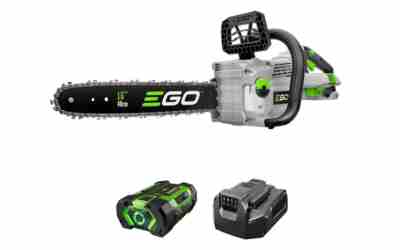
EGO POWER+ CS1613 16-Inch Cordless Chainsaw with 56V 4.0Ah ARC Lithium Battery and Brushless Motor

Oregon CS1500 18-Inch Self-Sharpening Corded Electric Chainsaw, 15 Amp High-Power Motor

EGO POWER+ CS1611 16-Inch 56V Cordless Chainsaw with 2.5Ah Battery and Charger
As an Amazon Associate we earn from qualifying purchases. Product prices and availability are accurate as of the date/time indicated.
Frequently Asked Questions
Can I flip a chainsaw bar upside down?
Yes, on most saws a standard bar can be turned over each time you change or sharpen the chain, which evens out rail wear. Bars with a specific oiler or mounting layout may only fit one way, so check your manual.
How much does a replacement chainsaw bar cost?
It varies with length, gauge and brand, and with whether the bar is a plain or sprocket-nose design. Check current prices for the exact bar your saw manual lists, and compare them with the cost of repairing the old bar.
Why does my chainsaw cut crooked?
Most often the chain teeth are filed unevenly or one side is duller. If a fresh, evenly sharpened chain still drifts, the bar rails are probably uneven or the groove is worn. Dress the rails or replace the bar.
Can I fit a different length bar on my saw?
Only within the range your manual lists for that model, and only with the correct gauge, pitch and drive link count. A longer bar puts more load on the engine and oiler, so staying near the original length is safest.
Is a blue bar ruined?
Not always. Blue color means the bar overheated, usually from low oil or an overtight chain. If the rails and groove still measure within spec and the bar is straight, you can keep using it after fixing the cause. If the rails are rough or warped, replace it.
{“@context”: “https://schema.org”, “@type”: “FAQPage”, “mainEntity”: [{“@type”: “Question”, “name”: “Can I flip a chainsaw bar upside down?”, “acceptedAnswer”: {“@type”: “Answer”, “text”: “Yes, on most saws a standard bar can be turned over each time you change or sharpen the chain, which evens out rail wear. Bars with a specific oiler or mounting layout may only fit one way, so check your manual.”}}, {“@type”: “Question”, “name”: “How much does a replacement chainsaw bar cost?”, “acceptedAnswer”: {“@type”: “Answer”, “text”: “It varies with length, gauge and brand, and with whether the bar is a plain or sprocket-nose design. Check current prices for the exact bar your saw manual lists, and compare them with the cost of repairing the old bar.”}}, {“@type”: “Question”, “name”: “Why does my chainsaw cut crooked?”, “acceptedAnswer”: {“@type”: “Answer”, “text”: “Most often the chain teeth are filed unevenly or one side is duller. If a fresh, evenly sharpened chain still drifts, the bar rails are probably uneven or the groove is worn. Dress the rails or replace the bar.”}}, {“@type”: “Question”, “name”: “Can I fit a different length bar on my saw?”, “acceptedAnswer”: {“@type”: “Answer”, “text”: “Only within the range your manual lists for that model, and only with the correct gauge, pitch and drive link count. A longer bar puts more load on the engine and oiler, so staying near the original length is safest.”}}, {“@type”: “Question”, “name”: “Is a blue bar ruined?”, “acceptedAnswer”: {“@type”: “Answer”, “text”: “Not always. Blue color means the bar overheated, usually from low oil or an overtight chain. If the rails and groove still measure within spec and the bar is straight, you can keep using it after fixing the cause. If the rails are rough or warped, replace it.”}}]}