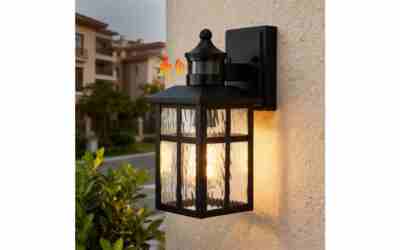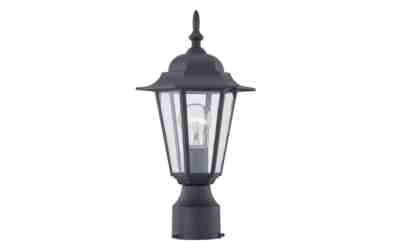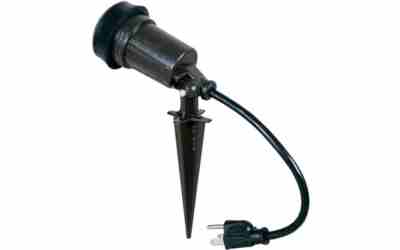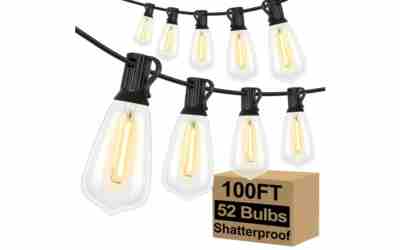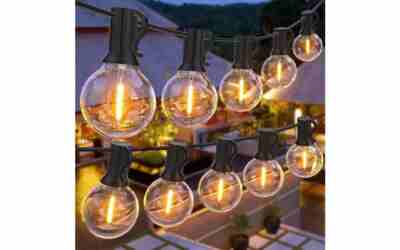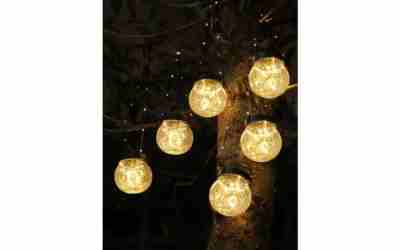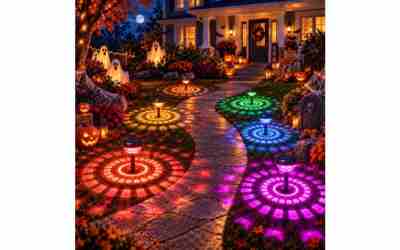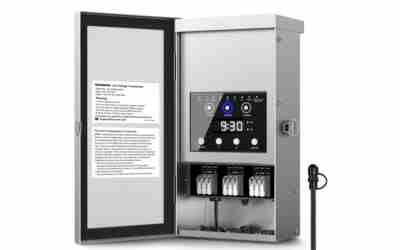

The easiest way to put outdoor lights on a timer is to plug them into a weatherproof outdoor timer on a GFCI-protected outlet. Plug-in lights use that method, while landscape and hardwired lights need a different timer type.
Pick the Timer Type That Matches Your Lights
Match the timer to how the lights get their power. The rule is simple: if the light has a plug, use a plug-in timer; if it runs off a transformer, use the transformer’s timer; if it is wired into the wall, use a timer switch.
| Your lights | Timer that fits | Setup effort |
|---|---|---|
| Plug-in string, porch lamp, holiday lights | Outdoor plug-in timer (mechanical or digital) | Plug and set, no tools |
| Lights that should follow sunset and sunrise | Plug-in timer with a photocell or astronomical clock | Plug and set, no tools |
| Low-voltage path and landscape lights | Transformer with a built-in timer or photocell | Set on the transformer |
| Phone-controlled plug-in lights | Smart plug labeled for outdoor use | App setup |
| Hardwired wall or porch fixtures | In-wall timer switch | Replaces the switch; see the electrician section |
A mechanical timer is the cheapest and keeps working without Wi-Fi. A digital or astronomical timer is better if you want different weekday schedules or automatic sunset tracking.
Check the Weather Rating and Wattage First
Two label checks decide whether a timer is safe for your setup: the outdoor rating and the load rating.
Weather rating
The packaging should say outdoor or weatherproof, and the product should carry a UL or ETL listing. An indoor timer is not made for rain, even under a porch roof.
Wattage and amps
Read the load rating on the timer’s label. A 15 A timer at 120 V handles 1800 W of resistive load. Incandescent (tungsten) bulbs may get a lower allowance on the same timer, so check that line too. Keep a continuous load to 80% of the rating, which is 1440 W on an 1800 W timer.
Worked example: four incandescent strings at 50 W each add up to 200 W. At 120 V that is 200 ÷ 120, or about 1.7 A, far below the 1440 W limit. Add the wattage printed on every string you plug into the timer, then compare the total to the label. LED strings use far less power than incandescent strings, so the same timer can carry many more of them.
Set a Plug-In Outdoor Timer Step by Step
- Press the test button on the GFCI outlet, then the reset button, to confirm it cuts and restores power.
- Plug the timer into that outlet with the timer’s switch or mode set to off.
- Plug the lights into the timer and make sure the lights’ own switch is on.
- Set the current time. On a mechanical dial, rotate it until the arrow points to the correct time of day. On a digital model, set the clock, day and time zone if it asks.
- Set the schedule. On a mechanical timer, push down the pins for the hours the lights should be on. On a digital timer, enter an on time and off time, or choose a dusk-to-dawn or astronomical program.
- Switch the timer to automatic or timer mode, not manual on.
- Test it by setting the on time a few minutes ahead and watching the lights come on.
If the timer has a photocell, point the sensor away from your own porch light and street lamps. Otherwise, it can read that light as daylight and shut the lights off early.
Keep the Timer and Cord Connections Dry
Rain getting into the plug connection is the main hazard when you put outdoor lights on a timer. Cover the outlet with a bubble-style in-use cover that closes over the plugs, so the timer and cords stay protected even when something is plugged in.
- Mount or place the timer upright with the sockets facing down, about 2 ft above the ground, so water drains away.
- Keep plugs and joints off the ground and out of puddles or snowmelt.
- Use outdoor-rated extension cords only, and do not chain one timer or power strip into another.
If you are still deciding where lights and cords will run, our walkthrough on how to put up outdoor patio lights shows cord routing and anchor points.
Timers for Landscape Lights and Hardwired Fixtures
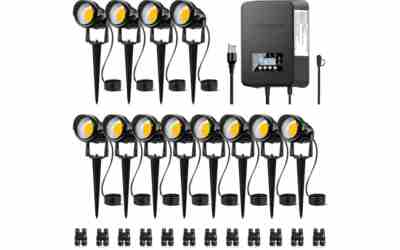
Low-voltage path and landscape lights plug into a transformer, and many transformers include a timer or photocell dial. Plug the transformer into a GFCI outlet, then set the on and off hours or the dusk sensor on the transformer itself. If yours has no timer, put an outdoor plug-in timer between the outlet and the transformer, after checking that the transformer’s wattage fits the timer’s label.
Solar path lights already have a built-in dusk sensor and battery, so they do not take a timer. Our verdict on outdoor solar lights explains what to expect from them.
Hardwired porch and wall lights
A hardwired fixture is controlled by a wall switch, and a timer switch replaces that switch. This involves household wiring, so shut off the breaker, confirm the circuit is dead with a tester, and follow the timer maker’s instructions. Call a licensed electrician if the box has no neutral wire, the wiring is old or unclear, or your area requires a permit. Local code and the National Electrical Code decide what is allowed.
Why Your Outdoor Timer Is Not Working
Work through these causes in order, starting with the quickest to check.
- Tripped GFCI: If the timer has no power, press reset on the GFCI outlet. If it trips again, unplug everything and find the wet or faulty connection before trying again.
- Overload: If the timer shuts off or feels hot, unplug some strings and re-add the wattage against the label.
- Power loss: A digital timer without a backup battery may lose its clock after an outage and run at the wrong hours. Mechanical timers need the dial turned to the correct time after a long outage, and also when daylight saving changes unless the model adjusts automatically.
Related reading: addlon 100FT G40 Outdoor String Lights with Remote Review 2026 · Brightever Outdoor String Lights Review 2026
Frequently Asked Questions
Can a timer run LED and incandescent lights together?
Yes, as long as the combined wattage stays within the timer’s label rating. Check the incandescent allowance on the label, since it may be lower than the resistive rating. Some LED strings flicker or glow faintly on certain electronic timers.
How many lights can I put on one timer?
As many as the timer’s rating allows. Add the wattage printed on every string and keep the total to 80% of the label rating, which is 1440 W on an 1800 W timer.
Does the timer need a battery for power outages?
It depends on the model. Some digital timers have a backup battery that keeps the clock running, while others lose their settings after an outage. Mechanical timers need the dial reset to the correct time after a long outage. Check the manual for your timer.
Can I run a timer through an extension cord?
Yes, as long as the cord is outdoor-rated and its amp rating covers your lights. Better to plug the timer straight into the outlet and run the cord from the timer to the lights, so the timer stays near the protected outlet.
Should I choose a photocell or an astronomical timer?
A photocell reacts to actual light, so it handles cloudy evenings but can be fooled by nearby lights. An astronomical timer follows calculated sunrise and sunset for your date and location, so it does not care about nearby lights.
{“@context”: “https://schema.org”, “@type”: “FAQPage”, “mainEntity”: [{“@type”: “Question”, “name”: “Can a timer run LED and incandescent lights together?”, “acceptedAnswer”: {“@type”: “Answer”, “text”: “Yes, as long as the combined wattage stays within the timer’s label rating. Check the incandescent allowance on the label, since it may be lower than the resistive rating. Some LED strings flicker or glow faintly on certain electronic timers.”}}, {“@type”: “Question”, “name”: “How many lights can I put on one timer?”, “acceptedAnswer”: {“@type”: “Answer”, “text”: “As many as the timer’s rating allows. Add the wattage printed on every string and keep the total to 80% of the label rating, which is 1440 W on an 1800 W timer.”}}, {“@type”: “Question”, “name”: “Does the timer need a battery for power outages?”, “acceptedAnswer”: {“@type”: “Answer”, “text”: “It depends on the model. Some digital timers have a backup battery that keeps the clock running, while others lose their settings after an outage. Mechanical timers need the dial reset to the correct time after a long outage. Check the manual for your timer.”}}, {“@type”: “Question”, “name”: “Can I run a timer through an extension cord?”, “acceptedAnswer”: {“@type”: “Answer”, “text”: “Yes, as long as the cord is outdoor-rated and its amp rating covers your lights. Better to plug the timer straight into the outlet and run the cord from the timer to the lights, so the timer stays near the protected outlet.”}}, {“@type”: “Question”, “name”: “Should I choose a photocell or an astronomical timer?”, “acceptedAnswer”: {“@type”: “Answer”, “text”: “A photocell reacts to actual light, so it handles cloudy evenings but can be fooled by nearby lights. An astronomical timer follows calculated sunrise and sunset for your date and location, so it does not care about nearby lights.”}}]}