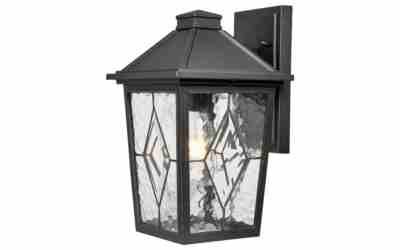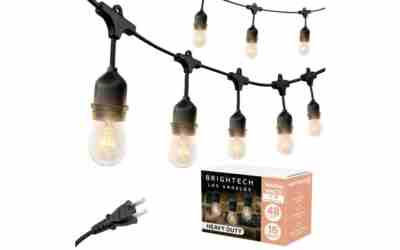

To wire outdoor lights yourself, use a 12V low-voltage kit: plug the transformer into a GFCI outlet, run cable, and connect the fixtures. Hardwired 120V lights need breaker work, code-rated materials and often a permit.
Low-Voltage vs 120V: Which System to Wire
Low-voltage (12V) systems step household power down through a transformer, so the cable and fixtures carry little shock risk. 120V fixtures connect directly to a house circuit and are governed by the National Electrical Code (NEC) and your local amendments.
| Factor | Low-voltage 12V | Hardwired 120V |
|---|---|---|
| Power source | Transformer plugged into a GFCI outlet | Circuit from the panel, switch and GFCI protection |
| Cable | Landscape cable made for low-voltage | UF cable, or wire in conduit |
| Permit | Usually none for a plug-in transformer | Check with your local building department |
| DIY fit | Yes, with basic hand tools | Electrician for any new circuit |
Decision rule: choose low-voltage for paths, beds, steps and accent lighting, and hardwired 120V only for fixtures that must be mounted on the house, such as wall lanterns and floodlights. If you want no wiring at all, read whether outdoor solar lights are any good first.
Tools and Materials for a Low-Voltage Install
- Low-voltage transformer with a built-in timer or photocell, or a separate outdoor timer
- Direct-burial landscape cable in the gauge your load needs (see the sizing section)
- Fixtures and the connectors the manufacturer specifies
- Wire strippers, a flat spade or edger, and a small screwdriver
- Waterproof, gel-filled connectors for any splice
- A multimeter to check voltage at the last fixture
Use connectors designed for your cable gauge. Mixing brands often leaves a loose bite on the cable, which causes flicker later.
Wiring Low-Voltage Landscape Lights Step by Step
- Lay out the fixtures on the ground and mark the cable path. Keep the total run as short as you can.
- Mount the transformer on a post or exterior wall next to a GFCI outlet. Many manuals call for it to sit at least 12 inches above the ground, so check yours.
- Call 811 before digging, even for shallow trenches.
- Run the cable from the transformer along the path, leaving a loop of slack at each fixture. Do not plug in yet.
- Connect each fixture to the cable with its connector, clamping fully so the contacts pierce the insulation or grip the stripped wire.
- Connect the cable to the transformer terminals, wiring to the common terminal and the voltage tap your sizing calls for.
- Plug in and test at night. Check brightness at the last fixture, then bury or stake the cable.
- Set the timer or photocell built into the transformer, or plug the transformer into an outdoor-rated timer.
Sizing the Transformer and Cable for Your Lights
Add up the fixture watts and pick a transformer rated above that total. Many installers stay at or below about 80% of the transformer’s rating, so you have room to add a light later.
Worked example (typical values): 8 path lights at 4W plus 2 spotlights at 7W is 32W + 14W = 46W. A 60W transformer carries it at 46 ÷ 60 = 77%. At 12V, 46W draws 46 ÷ 12 = 3.83A.
Voltage drop grows with run length and shrinks with thicker cable. The table shows the drop in volts for that 3.83A load sitting at the end of one run, using standard copper resistance.
| Cable gauge | 50 ft run | 100 ft run |
|---|---|---|
| 16 AWG | 1.5V | 3.1V |
| 14 AWG | 1.0V | 1.9V |
| 12 AWG | 0.6V | 1.2V |
A common target is a drop under 10% of 12V, or 1.2V. The 12 AWG cable at 100 feet sits right at that line, so split the 46W load into two 50-foot runs from the transformer. Your manual’s voltage-tap chart overrides these numbers. LED fixtures also draw far fewer watts than old halogen ones, which is why the lifespan of outdoor LED lights matters when you plan a long-term layout.
Wiring 120V Outdoor Lights Safely
This is an overview, not a code reference. Exact wire sizes, cover depths and box types depend on the NEC edition your area has adopted.
- Shut off the breaker and confirm the wires are dead with a non-contact tester and then a meter.
- Match the wires: black (hot) to black, white (neutral) to white, and bare copper or green (ground) to ground. Use wire nuts rated for the box size.
- Use a weatherproof box and gasketed cover, and a fixture rated for the exposure. The wet vs damp rules for outdoor lights explain which rating goes where.
- Protect the circuit with GFCI. NEC 210.8 requires GFCI for outdoor receptacles, and many local codes extend it to outdoor lighting circuits.
- Choose cable by route: UF cable for direct burial, or individual wires with a “W” rating such as THWN in conduit.
Minimum burial depth comes from NEC Table 300.5. It varies by cable or conduit type and by whether the circuit has GFCI protection, so read the table in your adopted edition rather than relying on a number from a web page.
When to Hire an Electrician or Pull a Permit
Hire a licensed electrician if the job needs a new circuit, panel work, a new breaker, a trench for line-voltage cable, or a switch added to existing house wiring. Most jurisdictions require a permit and inspection for those jobs, and DIY work done without one can complicate insurance claims or a home sale.
A plug-in 12V kit generally needs no permit, but call your building department if you are unsure. If you do not already have a GFCI outlet outside, having one installed is an electrician job.
Common Wiring Mistakes and Quick Fixes
- Dim lights at the end of the run: this is voltage drop. Move the cable to a thicker gauge, split the run, or feed the cable from the middle.
- Flickering fixtures: a connector is not fully clamped, or a splice has let moisture in. Re-seat it or replace it with a gel-filled connector.
- GFCI keeps tripping: water is in a fixture, connector or box. Unplug sections one at a time to find it, and dry or replace the part.
- Lights cycling on and off: a photocell is seeing light from a nearby fixture. Aim it away.
- Reading voltage with the lights off: measure at the last fixture with everything switched on, or the number tells you nothing.
Our Top Picks
Ready to shop? These are the top-rated options from our related roundup, Best Low Voltage Landscape Lighting of 2026.

SUNVIE 12-Pack 300W Low Voltage LED Landscape Lights
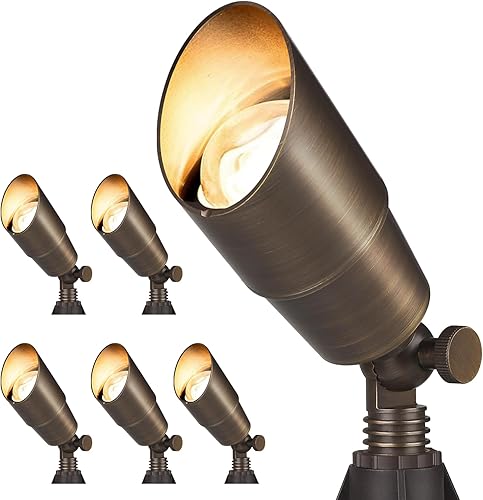
Gardencoin Solid Brass Outdoor Landscape Spotlights

SUNVIE 6W Anti-Glare LED Low Voltage Landscape Lighting 4-Pack
As an Amazon Associate we earn from qualifying purchases. Product prices and availability are accurate as of the date/time indicated.
Frequently Asked Questions
Can I plug a landscape transformer into an extension cord?
Not as a permanent setup. Extension cords are not made for long-term outdoor use, and the connection is a weak point for moisture. Have a GFCI outlet installed near the transformer, or use an outdoor-rated timer plugged directly into the outlet.
Can I splice low-voltage cable underground?
Yes, but only with waterproof, gel-filled connectors rated for direct burial. Twisted wire with electrical tape fails within a season because moisture wicks in and corrodes the copper, which causes flicker and dead sections.
Can I mix different wattage fixtures on one transformer?
Yes. Only the combined wattage matters, so add every fixture together and stay under the transformer rating. Check the manual for any minimum load, since some transformers need a certain draw to regulate voltage properly.
Can I add a wall switch to a plug-in low-voltage system?
Yes, without touching house wiring. Use the transformer’s built-in timer or photocell, or plug it into an outdoor-rated smart plug or timer. A true wall switch means new 120V wiring, which is electrician work.
{“@context”: “https://schema.org”, “@type”: “FAQPage”, “mainEntity”: [{“@type”: “Question”, “name”: “Can I plug a landscape transformer into an extension cord?”, “acceptedAnswer”: {“@type”: “Answer”, “text”: “Not as a permanent setup. Extension cords are not made for long-term outdoor use, and the connection is a weak point for moisture. Have a GFCI outlet installed near the transformer, or use an outdoor-rated timer plugged directly into the outlet.”}}, {“@type”: “Question”, “name”: “Can I splice low-voltage cable underground?”, “acceptedAnswer”: {“@type”: “Answer”, “text”: “Yes, but only with waterproof, gel-filled connectors rated for direct burial. Twisted wire with electrical tape fails within a season because moisture wicks in and corrodes the copper, which causes flicker and dead sections.”}}, {“@type”: “Question”, “name”: “Can I mix different wattage fixtures on one transformer?”, “acceptedAnswer”: {“@type”: “Answer”, “text”: “Yes. Only the combined wattage matters, so add every fixture together and stay under the transformer rating. Check the manual for any minimum load, since some transformers need a certain draw to regulate voltage properly.”}}, {“@type”: “Question”, “name”: “Can I add a wall switch to a plug-in low-voltage system?”, “acceptedAnswer”: {“@type”: “Answer”, “text”: “Yes, without touching house wiring. Use the transformer’s built-in timer or photocell, or plug it into an outdoor-rated smart plug or timer. A true wall switch means new 120V wiring, which is electrician work.”}}]}