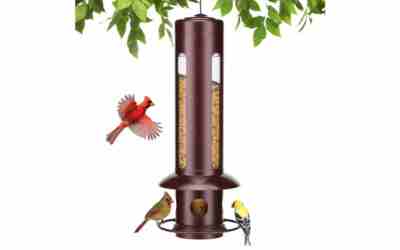
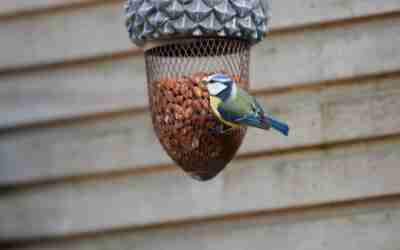
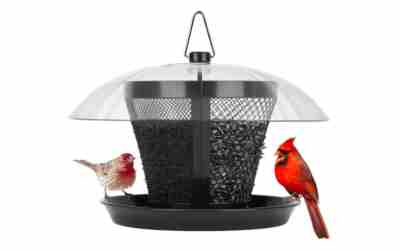
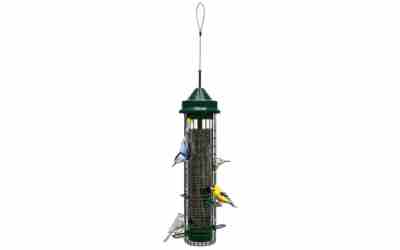
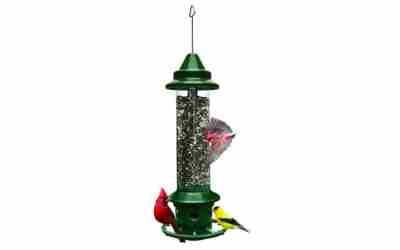
The best thing to put under a bird feeder is a bird feeder seed catcher: a tray or mesh screen that hangs or mounts a few inches below the feeding ports and drains rain. It catches most drops before they reach the ground. For hulls you can’t catch, use a rakeable ground cover and switch to hulled seed.
Which bird feeder seed catcher fits your problem?
Pick by the problem you actually have, not by the product type. Use this rule:
| Your main problem | Start with |
|---|---|
| Hulls killing the lawn or smothering grass | Catcher tray, plus hulled seed (no shells) |
| Hulls and seed on a deck or patio | Catcher tray or a rimmed, draining pan under the feeder |
| Rats, mice or raccoons showing up | Catcher tray, daily pickup, feeder brought in at night; pause feeding if they persist |
| Seed sprouting in beds or gravel | Catcher tray, or a tarp or sheet you shake out weekly |
| You like ground-feeding birds (doves, juncos, sparrows) | A small, clean, raked ground area instead of a cover-all |
No option fully stops mess or pests. Each one reduces how much seed reaches the ground and makes the rest easier to remove. Our guide on how to choose a bird feeder covers feeder styles that spill less in the first place.
Seed catcher options compared
Prices vary by brand and size, so check current listings. This compares how each type behaves.
| Option | Best for | Drawbacks |
|---|---|---|
| Pole-mounted tray catcher | Pole feeders; lawns and decks | Needs a compatible pole; seed can pool if it doesn’t drain |
| Hanging mesh catcher | Hanging tube and hopper feeders | Light, can swing in wind; mesh needs scrubbing |
| DIY pan or saucer with drainage holes | Low budget, deck or ground placement | Must be cleaned as often as a feeder; plastic can crack in winter |
| Tarp or old sheet | Short-term catch over lawn or beds | Holds water, grows mold if left; not attractive |
| Gravel or mulch | Hiding spills in a bed | Seed sinks in and sprouts; harder to clean than a tray |
Some manufacturers claim their trays catch up to 90% of spilled seed. That is a marketing claim, not independent testing. Real results depend on the feeder, the seed and how messy the birds are.
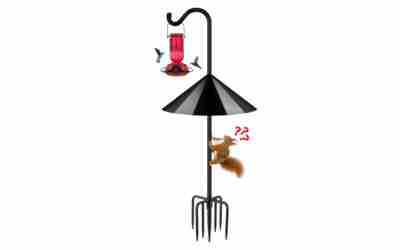
Choose a tray if you have a pole and want the least cleanup. Choose mesh if you hang feeders from a branch or hook. Choose a DIY pan if you want to test the idea cheaply. Choose a tarp only as a short fix. If you use a pole, our review of the FEED GARDEN squirrel proof bird feeder pole shows what a pole setup looks like.
How far below and away from the feeder should it go?
There is no official standard, so use these rules of thumb and adjust after watching your birds:
- Tray or mesh catcher: mount it about 2 to 6 inches below the lowest feeding port. Too far down and wind and flicking birds miss it; too close and birds cannot reach the ports.
- Width: choose a catcher wider than the feeder base. Many tubes are 4 to 6 inches across, so a catcher of 15 to 20 inches covers most drops. Check the size on the model you buy.
- Ground cover: extend a tarp or cleaning zone about 2 to 3 feet beyond the feeder on every side. Birds like finches and jays toss seed outward while hunting for favorites.
Worked example: A tube feeder hangs 5 feet up with the lowest port at 54 inches. Mount a mesh catcher at about 48 to 50 inches. Put a 4 by 4 foot sheet under it for a week. If most seed lands in the outer 2 feet, widen the zone or switch to a larger catcher.
Feeder height matters too. Hanging feeders lower than 4 feet get more ground-feeding visitors and more spills.
What works on grass versus a deck or patio?
On grass
Thick piles of shells smother turf and can leave dead patches. Sunflower hulls also contain compounds that can suppress some plants growing beneath them, though the effect varies. A catcher tray is the cleanest fix. If seed still falls, rake it up weekly, and move the feeder a few feet every month or two so no one spot takes all the load. The Cornell Lab recommends moving feeders occasionally to limit disease buildup.
On a deck or patio
Use a catcher with drainage and sweep or hose the surface after emptying it. Skip tarps on a deck since they hold water against the boards. If your feeder mounts on a railing, see our roundup of the best deck mounted bird feeders. On a small space, the best bird feeders for an apartment balcony include ones with built-in trays.
In beds, gravel or mulch
Gravel and mulch hide spilled seed but do not stop it from sprouting, and decomposing seed under them is hard to clean. Move the feeder over a hard surface or lawn you can rake, or add a tray. Do not rely on mulch to absorb the mess.
Does hulled or no-mess seed reduce the problem?
Yes. Hulled sunflower (often sold as chips or hearts) leaves no shells, so there are no hulls to rake. Birds also eat nearly all of it, so less is wasted.
- Look for: hulled sunflower, shelled peanuts, and blends labeled no-mess or no-waste.
- Avoid: blends heavy in milo, wheat, cracked corn or red millet. Many birds flick these out onto the ground looking for sunflower.
- Trade-off: hulled seed usually costs more per pound and spoils faster when wet, so buy smaller bags and use a feeder with a roof.
Hulled seed still drops crumbs, so a catcher helps, but cleanup shrinks and lawn smothering mostly goes away. Specific feeders like those in our guides for finches and chickadees pair well with hulled seed.
How do you avoid rats, mice and raccoons?
Spilled seed is the main draw for rodents. A catcher helps, but nothing guarantees they stay away.
- Pick up spills daily at dusk if you have seen rodents. Empty the tray too.
- Bring feeders in at night or empty them if raccoons visit. Our guide on keeping raccoons away from bird feeders has more steps.
- Use a pole baffle to block climbing. See the best squirrel baffles for bird feeder poles.
- Offer less seed. Fill only what birds finish in a day or two.
- Pause feeding for a couple of weeks if rats or mice keep showing up. Wildlife agencies also advise taking feeders down when bears are active in your area.
Avoid putting a tray where cats or other predators can hide nearby, and keep feeders away from dense brush that shelters rodents.
How often should you clean under a feeder?
Cornell Lab and Audubon guidance is to clean feeders about every two weeks, and more often in damp weather. Apply the same to catchers and the ground below, because damp, moldy seed can spread diseases such as salmonellosis among birds.
| Task | Dry weather | Wet or humid weather |
|---|---|---|
| Empty catcher, rake or sweep spills | Weekly | Every 2 to 3 days |
| Scrub tray or mesh with soap and water | Every 2 weeks | Weekly |
| Disinfect | Monthly | Every 2 weeks |
| Replace mulch or gravel layer | Each season | As soon as it looks damp or clumped |
To disinfect, wear gloves, soak in a mix of 1 part bleach to 9 parts water for about 10 minutes, rinse well and dry fully before refilling. Throw out any seed that is clumped, wet, moldy or smells sour. Bag the waste and put it in the trash, not a compost pile that rodents can reach. Our step-by-step guide to cleaning a bird feeder and the note on how often to clean a bird feeder cover the feeder itself.
Quick test: if seed in the tray stays wet 24 hours after rain, add drainage holes or a mesh bottom.
Frequently Asked Questions
Can I put a tarp or mulch under a bird feeder?
A tarp works as a short-term catch if you shake it out weekly and let it dry, since wet tarps grow mold. Mulch hides spills but does not stop sprouting or rot, and it is hard to clean. A draining tray is easier.
How do I stop seed from sprouting under my feeder?
Catch seed before it lands, rake weekly, and switch to hulled sunflower or blends without filler grains. Hard surfaces and trays give seed nowhere to root. Gravel and mulch usually let it sprout.
Do seed catcher trays attract rodents?
They can if seed sits there overnight, since any spilled seed feeds rodents. Empty trays at dusk if you see signs of mice or rats, keep them draining and dry, and pause feeding if the problem continues.
How can I make a DIY seed catcher?
Use a shallow plastic saucer, pan or plate wider than the feeder, drill several drainage holes, and mount it a few inches under the ports with strong wire or a pole bracket. Scrub it as often as the feeder.
{“@context”: “https://schema.org”, “@type”: “FAQPage”, “mainEntity”: [{“@type”: “Question”, “name”: “Can I put a tarp or mulch under a bird feeder?”, “acceptedAnswer”: {“@type”: “Answer”, “text”: “A tarp works as a short-term catch if you shake it out weekly and let it dry, since wet tarps grow mold. Mulch hides spills but does not stop sprouting or rot, and it is hard to clean. A draining tray is easier.”}}, {“@type”: “Question”, “name”: “How do I stop seed from sprouting under my feeder?”, “acceptedAnswer”: {“@type”: “Answer”, “text”: “Catch seed before it lands, rake weekly, and switch to hulled sunflower or blends without filler grains. Hard surfaces and trays give seed nowhere to root. Gravel and mulch usually let it sprout.”}}, {“@type”: “Question”, “name”: “Do seed catcher trays attract rodents?”, “acceptedAnswer”: {“@type”: “Answer”, “text”: “They can if seed sits there overnight, since any spilled seed feeds rodents. Empty trays at dusk if you see signs of mice or rats, keep them draining and dry, and pause feeding if the problem continues.”}}, {“@type”: “Question”, “name”: “How can I make a DIY seed catcher?”, “acceptedAnswer”: {“@type”: “Answer”, “text”: “Use a shallow plastic saucer, pan or plate wider than the feeder, drill several drainage holes, and mount it a few inches under the ports with strong wire or a pole bracket. Scrub it as often as the feeder.”}}]}