
You should never use a smoker inside a house, garage, shed or enclosed porch, because charcoal, wood, pellet and gas models produce carbon monoxide, and even electric ones create smoke and fire risk. Only appliances specifically rated for indoor use are meant for a kitchen, and everything else belongs outside in open air.
Why you can’t use a smoker inside: carbon monoxide comes first
Smokers burn fuel slowly with limited air, which is exactly the condition that makes carbon monoxide (CO). CO is colorless and odorless. The CDC lists headache, dizziness, nausea and confusion as early symptoms, and high levels cause unconsciousness and death. Indoors, nothing carries it away.
| Smoker type | CO from the unit | Other indoor hazards | Use indoors? |
|---|---|---|---|
| Charcoal | Yes, high while lighting and smoldering | Embers, hot ash, grease flare-ups | No |
| Wood or offset stick burner | Yes | Sparks, creosote, very hot firebox | No |
| Pellet | Yes | Hot burn pot, fan or auger failure, ash | No |
| Propane or gas | Yes | Gas leaks, cylinder stored indoors | No |
| Electric with wood chips | Some, from smoldering chips | Hot element, grease, power cord, smoke | No, unless the manual says otherwise |
| Indoor-rated countertop smoker | Designed with smoke filtration | Clearance and ventilation set by the manual | Yes, only as the manual directs |
Electric smokers are the gray area people ask about. The heating element does not burn fuel, but the wood chips in the tray smolder, which makes smoke and some CO. Grease can also drip onto hot parts. Most makers specify outdoor use only. Indoor ratings, manual wording and clearances all vary by model; check the label or manual. Before buying any indoor-rated unit, verify that the current model carries that rating and read its manual.
If you are shopping for an outdoor electric model, our Masterbuilt 30-inch Digital Electric Smoker review shows what a typical outdoor electric smoker offers.
Does an open door, garage or porch make it safe to use a smoker inside?
No. An open door helps a little, but CO spreads through the whole space, so standing near the opening does not protect you. Here is how each common spot fails.
- Attached garage: It shares air with the house through door gaps, walls and ducts. Garages also hold gasoline, paint thinner, propane and oil that heat or a spark can ignite. Running the smoker for only a short time does not change this.
- Shed or workshop: The small volume lets CO build quickly, and wood walls sit close to the heat.
- Covered or screened porch: A roof and screens trap smoke and heat. Eaves, railings and vinyl siding can melt or catch fire. Treat it as indoors.
- Fireplace: It is not a smoker. Draft varies, drippings and creosote build up in the firebox and flue, and smoke can roll back into the room.
- Tent, camper or vehicle: Small enclosed air, same CO problem.
Decision rule: if there is a roof or ceiling over the smoker, or walls on more than one side, it is not open enough. A smoker needs open sky above it and open air around it.
The same logic applies to carports and breezeways. They feel outdoors, but the roof holds smoke and heat in, so they fail the rule above.
Fire, creosote and smoke damage: the other risks indoors
Smoking is usually done at roughly 225-275°F in the cooking chamber (a rule of thumb), and the firebox, door and exhaust run hotter. Repeated heat can dry and char nearby wood, so a smoker parked against a wall is a fire risk. Grease flare-ups, stray embers and pellet burn-back add to it.
The usual causes of smoker fires:
- Placing the unit against a wall, fence or railing, or under a ceiling.
- Grease built up in the drip pan, on the element or in the firebox.
- Propane cylinders, lighter fluid or gasoline stored nearby.
- Dumping ash too soon. Ash and coals can hold heat long after the cook, so let them cool completely, preferably soaked in water, then store them in a metal container with a tight lid set outside on a non-combustible surface away from the house. Never use a paper bag or plastic bin.
Even when nothing ignites, indoor smoke leaves creosote and odor behind. The residue soaks into drywall, insulation, upholstery and concrete, is hard to remove, and will set off smoke alarms.
What can you use inside instead of a smoker?
Three options give smoky flavor without an outdoor smoker. Only the first is a purpose-built indoor appliance.
| Option | Smoke flavor | Ventilation | Best for |
|---|---|---|---|
| Indoor-rated countertop smoker | Real smoke, filtered inside the unit | Follow the manual | Small batches on the counter |
| Stovetop smoker | Real smoke, short cook | Range hood vented outside, or an open window | Fish, chicken pieces, vegetables |
| Oven with liquid smoke or smoked paprika | Added flavoring only | Normal kitchen use | Ribs, roasts, whole chicken |
Where each one loses: the countertop unit holds less food than a backyard smoker, and the manual sets its limits. A stovetop smoker is a lidded pan with a tray of fine wood dust, still makes some smoke, and is only meant for small cuts. Oven methods give no true smoke ring.
Do not put wood chips or chunks in an oven or on a stovetop burner unless the product is designed for it. For oven ribs, a low roast with liquid smoke works, and when the weather allows, our guide on how to smoke ribs in a smoker gives times and temps for the real thing.
How to set up a smoker outdoors safely
Always follow the manual first, because clearances and limits differ between models. These steps are a safe default.
- Choose a level, non-combustible surface such as concrete, pavers or gravel. Use a deck only if the manual allows it.
- Keep it about 10 feet from walls, eaves, fences and railings. Many fire codes require about 10 feet between grills and combustible construction. Smokers are not always named specifically, so treat this as a rule of thumb and defer to your manual and local code, which may require more.
- Clear the space overhead. No roof, awning or tree branches above it.
- Watch the wind. Set the smoker so smoke drifts away from windows, vents and your neighbors. Any windbreak must be non-combustible and set back as far as the manual says.
- Store fuel away from the heat. Keep propane, lighter fluid and charcoal several feet away, and keep pellets in a dry, sealed container.
- For electric models, plug into a GFCI-protected outdoor outlet with an outdoor-rated cord, and keep the cord off hot surfaces.
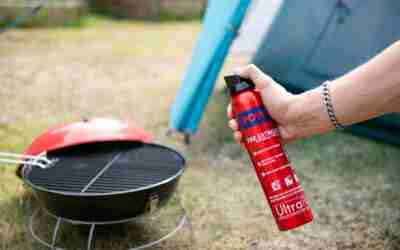
- Keep an ABC fire extinguisher nearby. Do not use water on a grease fire.
CO alarms are a backup, not permission. Residential CO alarms are built so they do not sound at low levels right away, so they may not sound until levels have been elevated for an hour or more. That is too slow to make indoor smoking safe. Install them as the alarm instructions say, including near sleeping areas.
Apartments and HOAs: many leases, HOA rules and local fire codes ban charcoal and gas on balconies, and electric units may be allowed or not. Check before you buy.
What if you have no safe outdoor space?
Choose an indoor-rated unit (after verifying its rating and manual) or the oven method, and do not buy an outdoor smoker and hope for the best. If you do have open space and are new to smoking, start with our best smoker for beginners picks.
Quick checklist before the first cook: read the manual’s location warnings, measure your clearances, confirm HOA or lease rules, test the CO alarms in the house, and set the extinguisher within reach.
Our Top Picks
Ready to shop? These are the top-rated options from our hands-on roundup, Best Smoker For Outdoor Kitchen of 2026.

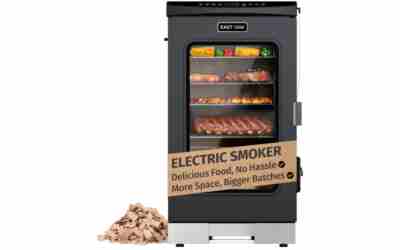
EAST OAK 30" Electric Smoker 725 sq in

PIQUEBAR Propane Smoker with Cover, Vertical Gas Smoker Grill, 477 sq in, 3 Removable Racks, Black

Smokehouse Little Chief Front Load Smoker 165F
As an Amazon Associate we earn from qualifying purchases. Product prices and availability are accurate as of the date/time indicated.
Related reading: The Best Vertical Charcoal Smoker of 2026 · The Best Small Smoker Grill of 2026
Frequently Asked Questions
How far from the house should a smoker be?
Follow the manual first. As a rule of thumb, keep about 10 feet from walls, eaves, fences and railings, since many fire codes require about that distance for grills. Local code or the manual may require more, and the space above the smoker must be open.
Can I put a smoker on a wooden deck?
Only if the manual allows it. Embers, grease and hot ash can scorch or ignite decking, so the safer choice is a concrete pad, pavers or gravel. Keep the same distance from railings and siding as on any other surface.
Can I use a stovetop smoker in an apartment?
Often yes, for small cuts, if your lease allows it. Run a range hood vented outside or open a window, use only the fine wood dust the product is designed for, and expect that the smoke may still trigger a nearby smoke alarm.
Can I use a smoker in rain or snow?
Sometimes, outdoors only. Keep electrical parts and cords dry, use a GFCI outlet, and never move the smoker under a roof, awning or into a garage to avoid weather. Check the manual for wet-weather limits, which vary by model.
{“@context”: “https://schema.org”, “@type”: “FAQPage”, “mainEntity”: [{“@type”: “Question”, “name”: “How far from the house should a smoker be?”, “acceptedAnswer”: {“@type”: “Answer”, “text”: “Follow the manual first. As a rule of thumb, keep about 10 feet from walls, eaves, fences and railings, since many fire codes require about that distance for grills. Local code or the manual may require more, and the space above the smoker must be open.”}}, {“@type”: “Question”, “name”: “Can I put a smoker on a wooden deck?”, “acceptedAnswer”: {“@type”: “Answer”, “text”: “Only if the manual allows it. Embers, grease and hot ash can scorch or ignite decking, so the safer choice is a concrete pad, pavers or gravel. Keep the same distance from railings and siding as on any other surface.”}}, {“@type”: “Question”, “name”: “Can I use a stovetop smoker in an apartment?”, “acceptedAnswer”: {“@type”: “Answer”, “text”: “Often yes, for small cuts, if your lease allows it. Run a range hood vented outside or open a window, use only the fine wood dust the product is designed for, and expect that the smoke may still trigger a nearby smoke alarm.”}}, {“@type”: “Question”, “name”: “Can I use a smoker in rain or snow?”, “acceptedAnswer”: {“@type”: “Answer”, “text”: “Sometimes, outdoors only. Keep electrical parts and cords dry, use a GFCI outlet, and never move the smoker under a roof, awning or into a garage to avoid weather. Check the manual for wet-weather limits, which vary by model.”}}]}