
A lawn mower cord won’t pull most often because of a held brake bar, packed deck, hydrolock or seized engine; a jammed recoil starter is the next suspect. Disconnect the spark plug wire first, then work through the checks below in order, from free two-minute tests to the recoil repair.
Which cause matches your mower?
Seven causes cover most stuck pull cords, and the first four are the most common. What the cord does when you pull it points to the likely one faster than guessing.
| Cause | What you notice | Where to fix it |
|---|---|---|
| 1. Blade brake bar not held | Cord feels locked on a mower with a flywheel brake | Deck, blade and brake check |
| 2. Packed deck or jammed blade | Cord is stiff or will not move | Deck, blade and brake check |
| 3. Hydrolock | Cord stops hard after a short pull, often after tilting the wrong way or overfilling oil | Hydrolock test |
| 4. Seized engine | Cord will not move even with the plug out and the deck clear | Seized engine check |
| 5. Jammed recoil spring or pulley | Cord pulls only a few inches or will not retract | Recoil repair |
| 6. Frayed, knotted or snapped rope | Cord comes out limp with no resistance | Recoil repair |
| 7. Worn pawls | Cord pulls freely but the engine does not turn | Recoil repair |
Quick sort: a cord that is locked solid points to causes 1 to 4. A cord that moves but does nothing, or will not rewind, points to causes 5 to 7.
Lawn mower cord won’t pull: check the brake bar, deck and blade
Do these checks first. They cost nothing and rule out the most common causes. Check the blade-stop bar before you assume anything is broken, because a bar that is not held is the simplest reason a cord will not move.
- Make it safe. Shut the engine off, let it cool, and pull the spark plug wire off the plug. Tuck the wire away so it cannot touch the plug.
- Test the brake bar. Set the mower upright, squeeze the bar against the handle and hold it, then pull the cord. Many walk-behind mowers use a flywheel brake that locks the engine whenever the bar is released. If the cord moves with the bar held, nothing is broken.
- Tilt it the right way. Wear heavy gloves. Tilt the mower with the air filter and carburetor side facing up (your manual shows the correct side). A low fuel tank helps. Tilting the wrong way lets oil and fuel run into the cylinder.
- Clear the deck. Scrape out packed grass, sticks and stones with a stick or plastic scraper, never your fingers. Wet, heavy clippings are a frequent cause of a jammed blade.
- Turn the blade by hand. With the wire off, a gloved hand should be able to rotate the blade against firm resistance. If it stops dead against the deck or debris, keep clearing. Also look for a bent blade or loose blade bolt.
- Inspect the cable. Look for a kinked, frayed or stretched blade control cable. A cable that does not fully release the brake makes the cord feel stuck. Adjustment steps vary by model; check the manual.
On self-propelled models, release the drive bar too and make sure no control cable is binding. If the cord now pulls smoothly, reconnect the wire and start the mower. If it is still locked, move on to hydrolock.
How do you test for and clear hydrolock?
Hydrolock means liquid, usually oil or fuel, is in the cylinder. Liquid does not compress, so the piston stops partway and the cord halts hard. Suspect it if the mower was tilted the wrong way, stored on its side, or has oil above the full mark. Clear the cylinder in this order, and do not try to restart until the liquid is out.
- Confirm the spark plug wire is off and the brake bar was held during your pull test.
- Check the oil on the dipstick. If it is above the full mark, drain the extra following the manual. If you must tilt the mower to drain it, keep the air filter side up.
- Remove the spark plug with a spark plug socket.
- Hold a rag over the plug hole, keep your face to the side, and pull the cord slowly several times. Oil or fuel will spit out of the hole, and the cord should get easier.
- Wipe up all spilled oil and fuel. Keep sparks, cigarettes and the hot muffler away, since spilled fuel is a fire risk.
- Inspect the plug. Clean it or replace it if it is oily or fouled. If the air filter is soaked with oil, clean or replace it per the manual.
- Reinstall the plug, set the oil to the full mark, reconnect the wire and start the mower.
White smoke from the muffler for a short time afterward is normal as leftover oil burns off. If smoke continues or you hear knocking, shut it off. If you need to top off or change oil while you are in there, our guide to the best oil for lawn mowers covers what to buy; the correct grade and capacity vary by engine, so check the manual.
If the cord is still locked after the cylinder is clear, stop and have a shop look at it. As an approximate figure, a basic small-engine shop repair often runs roughly $50 to $150, but prices vary by shop, region and what is found.
How can you tell if the engine is seized?
A seized engine has internal damage or rust that locks the crankshaft. Suspect it when the cord still will not move with the spark plug out, the deck is clear, the brake bar is held and no liquid came out of the cylinder.
- Hydrolock: the cord moves a few inches, then stops hard. Once the plug is out, the cord pulls easily and liquid sprays out.
- Seized: the cord and blade stay stuck with the plug out. Nothing sprays out.
Common causes are running low on oil, overheating, long storage with rust, or forcing a hydrolocked engine until a part bends. Do not force it. Yanking the cord, using a pipe on the blade or hammering the flywheel can break the recoil, bend the connecting rod and turn a small repair into a large one.
A light surface-rust lock sometimes frees up. A failed bearing, bent rod or scored piston will not. Opening the engine to find out is usually a shop job, and the cost of that work is often a good reason to compare it against a replacement mower.
Lawn mower cord won’t pull: recoil starter repair
If the cord pulls but does nothing, will not rewind, or comes out only a few inches, the recoil starter is the problem. As a rule of thumb, a rope swap takes a first-timer roughly 30 to 60 minutes; the time and parts cost vary by model.
Safety: the recoil spring is under tension and can snap out when you open the housing. Wear safety glasses and gloves, and keep the spark plug wire off.
- Remove the bolts holding the recoil housing (the count varies by engine) and lift it off. Keep a hand on the pulley so the spring cannot spin free.
- Look for a frayed or snapped rope, a slipped knot, rust, a bent pulley, a broken spring or worn pawls (the small catches that grab the flywheel).
- Rope only: let the spring unwind slowly, remove the old rope and note its path. Thread a new rope of the diameter and length listed in your manual through the handle, housing and pulley, then knot both ends.
- Preload the spring by turning the pulley the number of turns your manual specifies, then feed the rope through and let it wind in.
- Broken spring, bent pulley or worn pawls: replacing the complete recoil assembly for your engine model number is usually easier than rewinding a loose spring.
- Test the pull and rewind before you reconnect the spark plug wire.
Common mistake: pulling hard or at an angle can jam the spring. Pull straight out with a smooth, firm stroke.
When should you call a pro or replace the mower?
Stop and call a shop if the engine is seized, knocks after you clear hydrolock, the recoil spring has escaped and will not rewind, or you do not have the right parts and tools for the engine.
Decision rule of thumb: if a repair quote is more than about half the price of a comparable new mower, and your mower is old or has other problems, replace it. Quotes vary by model and region, so get one before deciding.
If you do replace it, our guide on how to choose a lawn mower by yard size and terrain will help you narrow the field.
How do you keep the cord from sticking again?
- Store and tilt correctly. Keep the mower upright. When you must tilt it, wire off, air filter and carburetor side up.
- Keep oil at the full mark, not above. Overfilling pushes oil toward the cylinder.
- Clean the deck after each mow. Scrape off wet clippings before they dry into a jam.
- Add fuel stabilizer. If the mower will sit for a month or more, add lawn mower fuel stabilizer at the ratio on the label. Old fuel causes hard starting, which leads people to yank the cord.
- Replace a fraying rope early. A frayed rope snaps at the worst time.
Our Top Picks
Ready to shop? These are the top-rated options from our hands-on roundup, Best Engine For Lawn Mowers of 2026.
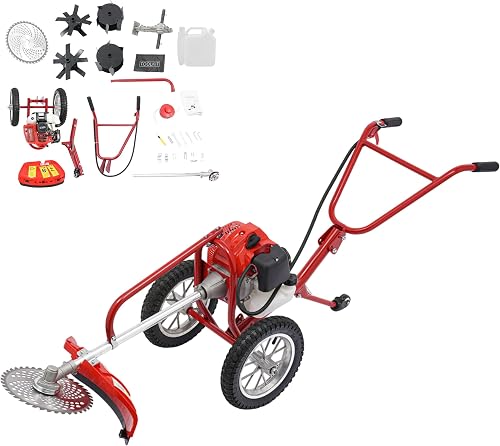
OMMUNICT 52CC Walk Behind Brush Cutter

Earthquake 47325 Walk-Behind String Mower

LawnMaster LMRM2001 20" 5-Blade Push Reel Mower
As an Amazon Associate we earn from qualifying purchases. Product prices and availability are accurate as of the date/time indicated.
Frequently Asked Questions
Can I use WD-40 on a stuck pull cord?
It may loosen a rusty external pivot, but it will not fix a jammed spring, a hydrolocked cylinder or a seized engine. Keep spray off the rope, the brake surfaces and the flywheel, and follow the manual for lubricating the recoil. Find the real cause first.
Why is the cord hard to pull only when the engine is hot?
A cord that stiffens when hot often points to low oil, overheating or internal wear that expands as metal heats up. Shut it off, let it cool, check the oil level and add oil to the full mark. If it keeps happening, have a shop inspect the engine.
Can I replace a pull cord with a different diameter?
Use the diameter and length listed in your manual or on the recoil assembly for your engine model. A rope that is too thick may not fit the pulley or handle, and one that is too thin can slip, fray or knot. Do not guess.
Is it safe to pour oil into the cylinder to free a seized engine?
No, not as a fix. Extra oil in the cylinder can cause hydrolock, and it will not repair a bent rod, failed bearing or scored piston. Only add oil to the cylinder if your manual specifically calls for it, and clear any excess before starting.
Can I keep mowing with a frayed pull cord?
Replace it first. A frayed rope can snap mid-pull, leaving you with a dead mower and a possible knuckle strike on the housing. A rope swap is usually a simple repair if the spring and pawls are in good shape.
{“@context”: “https://schema.org”, “@type”: “FAQPage”, “mainEntity”: [{“@type”: “Question”, “name”: “Can I use WD-40 on a stuck pull cord?”, “acceptedAnswer”: {“@type”: “Answer”, “text”: “It may loosen a rusty external pivot, but it will not fix a jammed spring, a hydrolocked cylinder or a seized engine. Keep spray off the rope, the brake surfaces and the flywheel, and follow the manual for lubricating the recoil. Find the real cause first.”}}, {“@type”: “Question”, “name”: “Why is the cord hard to pull only when the engine is hot?”, “acceptedAnswer”: {“@type”: “Answer”, “text”: “A cord that stiffens when hot often points to low oil, overheating or internal wear that expands as metal heats up. Shut it off, let it cool, check the oil level and add oil to the full mark. If it keeps happening, have a shop inspect the engine.”}}, {“@type”: “Question”, “name”: “Can I replace a pull cord with a different diameter?”, “acceptedAnswer”: {“@type”: “Answer”, “text”: “Use the diameter and length listed in your manual or on the recoil assembly for your engine model. A rope that is too thick may not fit the pulley or handle, and one that is too thin can slip, fray or knot. Do not guess.”}}, {“@type”: “Question”, “name”: “Is it safe to pour oil into the cylinder to free a seized engine?”, “acceptedAnswer”: {“@type”: “Answer”, “text”: “No, not as a fix. Extra oil in the cylinder can cause hydrolock, and it will not repair a bent rod, failed bearing or scored piston. Only add oil to the cylinder if your manual specifically calls for it, and clear any excess before starting.”}}, {“@type”: “Question”, “name”: “Can I keep mowing with a frayed pull cord?”, “acceptedAnswer”: {“@type”: “Answer”, “text”: “Replace it first. A frayed rope can snap mid-pull, leaving you with a dead mower and a possible knuckle strike on the housing. A rope swap is usually a simple repair if the spring and pawls are in good shape.”}}]}