
To grill steaks lid open or closed, go by thickness: keep the lid open for steaks under 1 inch, and sear then close the lid to finish steaks 1 inch or thicker.
Grill steaks lid open or closed: the rule by thickness
Thickness decides. Thin steaks cook through before a crust forms if you trap heat, so leave the lid up. Thicker steaks need time for the center to catch up, so finish them on a cooler side with the lid closed.
| Steak thickness | Lid | Method |
|---|---|---|
| Under 1 inch | Open the whole cook | Direct high heat, flipping as needed |
| 1 inch to under 1½ inches | Open to sear, then closed | Sear both sides over high heat, then move to the cool side and close the lid until the steak reaches your pull temperature |
| 1½ inches and thicker | Closed for most of the cook | Two-zone fire: sear first and finish covered, or reverse sear (cool side first, sear last) |
This is a rule of thumb from common grilling practice, not a lab test. Cook times vary with your grill, the heat and the weather, so go by a thermometer, not the clock.
Why the lid changes how the steak cooks
With the lid open, most of the heat comes straight up from the flames or coals. The bottom of the steak gets blasted while the top gets very little until you flip. That is what you want for a fast sear on a thin cut.
With the lid closed, hot air circulates around the steak like an oven. The top cooks too, the center catches up, and smoke stays in contact with the meat longer. That is why thick cuts like a bone-in ribeye do better covered once the sear is done.
The crust comes from browning (the Maillard reaction), which needs a dry surface and strong heat. Many gas grills can reach 500°F or more on high, and charcoal can run hotter, though both depend on the model and conditions.
How to set up a two-zone fire on gas and charcoal
A two-zone fire gives you a hot side for searing and a cooler side for gentle, covered cooking. It also gives you a place to move a steak when grease flares up.
Gas grill
- Preheat all burners on high for 10 to 15 minutes with the lid closed.
- Leave one side on high. Turn the other side off (two-burner grills) or to low (three or more burners).
- The off side often sits around 250 to 350°F with the lid closed. Built-in lid thermometers can read off, so a grate thermometer is more reliable.
Charcoal grill
- Light the coals, and when they are covered in gray ash, pile them on one half of the grate.
- Put the cooking grate on and let it heat for 5 to 10 minutes.
- Set the lid vent over the cool side so heat and smoke pull across the steak.
- Control the temperature with the vents. More air through the bottom vent makes a hotter fire, and closing it down cools things off.
On charcoal, the lid usually stays closed between sears, with the vents doing the work a gas knob would. Open it for the hot sear, flipping and checking temperature.
Step-by-step: sear, finish and rest
- Take the chill off. Pull the steak from the fridge 30 to 45 minutes before cooking, pat it very dry and season with salt.
- Preheat and clean. Heat the grill 10 to 15 minutes with the lid closed, then scrape the grates.
- Sear on the hot side with the lid open. Give steaks 1 inch and thicker about 1 to 2 minutes per side. Steaks under 1 inch may need 2 to 3 minutes per side, and then they are nearly done.
- Finish thicker steaks on the cool side with the lid closed. Check the temperature every few minutes.
- Check the doneness. Slide an instant-read thermometer into the thickest part from the side.
- Rest the steak. Thick cuts benefit from 5 to 10 minutes under loose foil, as a rule of thumb. The USDA’s 3-minute rest is covered in the chart notes below.
Flipping more than once is fine, and turning every minute or so can even out the cook. Just do not press the steak down.
Steak thickness, timing and doneness chart
These are estimates for medium-rare on a hot grill, based on common high-heat grilling practice. Your grill, the weather and the cut will change them.
| Thickness | Setup | Estimated time |
|---|---|---|
| ¾ inch | Lid open, direct high | 2 to 3 minutes per side |
| 1 inch | Sear lid open, then cool side lid closed | 2 minutes per side, plus 2 to 4 minutes covered |
| 1½ inches | Sear lid open, then cool side lid closed | 1 to 2 minutes per side, plus 5 to 10 minutes covered |
| 2 inches | Reverse sear: cool side at about 275°F, lid closed, then sear lid open | 25 to 40 minutes covered, then 1 to 2 minutes per side |
For a reverse sear, cook on the cool side until the steak is 10 to 15°F below your pull temperature. Then move it to the hot side, lid open, for the crust. It works best on steaks 1½ inches or thicker.
| Doneness | Pull from grill | After resting (estimate) |
|---|---|---|
| Medium-rare | 130 to 135°F | 135 to 140°F |
| Medium | 140 to 145°F | 145 to 150°F |
| Medium-well | 150 to 155°F | 155 to 160°F |
Estimate method: the pull temperature plus about 5°F of carryover while resting; thick steaks can rise a bit more.
The USDA’s safe minimum for steaks is 145°F measured at removal, followed by a 3-minute rest. Medium-rare pulls and the lower end of the medium range fall below that minimum, so they are cooked to taste, not to the USDA figure.
How to handle flare-ups safely
Flare-ups come from fat dripping onto flames or hot coals. A brief flame adds char, but a steady one makes bitter, sooty steak and can start a grease fire.
Use this sequence, in order:
- Use tongs to move the steak to the cool zone.
- Let the flames die down on the empty hot side. If they keep going, lower the burners or close the vents, and you can briefly close the lid to cut off air. Lift it slowly and stand back, because heat and flame can flash up.
- Return the steak to the hot side only when the flames are gone.
To prevent them, trim fat to about ¼ inch (a rule of thumb), pat off marinade, and clean the grease tray and grates regularly, because built-up grease feeds fires. Stay at the grill the whole time.
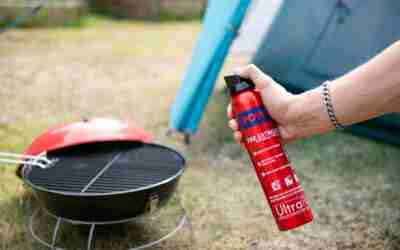
If a grease fire does not die down, follow your grill’s manual. Many manuals say to turn off the burners, keep the lid closed and shut off the gas supply if you can do it safely. Never spray water on a grease fire, add lighter fluid to lit coals, or move a flaming grill. Keep a fire extinguisher rated for grease fires within reach, and use the grill outdoors, following the manual’s clearances from walls, eaves and railings.
Mistakes that ruin steaks
- Cooking a cold, wet steak. Surface moisture steams the meat and slows the crust.
- Skipping the preheat. A lukewarm grate leads to gray, stuck steaks.
- Pressing with the spatula. It squeezes out juices and causes more flare-ups.
- Searing a thick steak only over direct heat. You get a burned outside and a raw center.
- Cutting in to check. Use a thermometer instead.
- Skipping the rest. Cut too soon and the juices run out onto the board.
If your grill struggles to get hot or has uneven burners, the grill may be the real problem. Our best grills for steaks guide covers options that sear well.
Our Top Picks
Ready to shop? These are the top-rated options from our hands-on roundup, Best Grills For Steaks of 2026.

CAROTE 11 Inch Grill Pan Granite Nonstick

Ninja Sizzle GR101 Indoor Grill & Griddle 14"

BIG HORN OUTDOORS 1500°F Infrared Propane Gas Grill
As an Amazon Associate we earn from qualifying purchases. Product prices and availability are accurate as of the date/time indicated.
Related reading: What Size Grill Should I Buy? Sizes by Household · How to Clean a Pellet Grill
Frequently Asked Questions
Should I keep the lid open or closed while the grill preheats?
Closed. A closed lid heats the grate and the cooking chamber faster and more evenly. Open it once the grill is hot, scrape the grates and put the steaks on.
Can I grill a steak straight from frozen, and what does that do to the lid rule?
It is safe to cook frozen meat, but it takes noticeably longer and the outside tends to overcook before the center thaws. Thawing in the fridge first gives better results. If you must cook from frozen, start on the cool side with the lid closed, then sear over high heat with the lid open.
Does closing the lid make steak taste bitter?
Not by itself. Bitterness usually comes from burning grease, dirty grates or stale smoke. Keep the grates and grease tray clean, and on charcoal keep the vents open enough that the fire burns cleanly.
Is cast iron or the grill better for thin steaks?
Either works. A preheated cast-iron pan gives a strong, even crust on thin steaks with no lid to manage. The grill adds smoky flavor and char, and thin steaks cook best there with the lid open.
Can I close the lid to melt cheese or finish a steak that is browning too fast?
Yes. Move the steak to the cool side, close the lid and check the temperature every few minutes. This is the same cool-side method used for thick steaks.
{“@context”: “https://schema.org”, “@type”: “FAQPage”, “mainEntity”: [{“@type”: “Question”, “name”: “Should I keep the lid open or closed while the grill preheats?”, “acceptedAnswer”: {“@type”: “Answer”, “text”: “Closed. A closed lid heats the grate and the cooking chamber faster and more evenly. Open it once the grill is hot, scrape the grates and put the steaks on.”}}, {“@type”: “Question”, “name”: “Can I grill a steak straight from frozen, and what does that do to the lid rule?”, “acceptedAnswer”: {“@type”: “Answer”, “text”: “It is safe to cook frozen meat, but it takes noticeably longer and the outside tends to overcook before the center thaws. Thawing in the fridge first gives better results. If you must cook from frozen, start on the cool side with the lid closed, then sear over high heat with the lid open.”}}, {“@type”: “Question”, “name”: “Does closing the lid make steak taste bitter?”, “acceptedAnswer”: {“@type”: “Answer”, “text”: “Not by itself. Bitterness usually comes from burning grease, dirty grates or stale smoke. Keep the grates and grease tray clean, and on charcoal keep the vents open enough that the fire burns cleanly.”}}, {“@type”: “Question”, “name”: “Is cast iron or the grill better for thin steaks?”, “acceptedAnswer”: {“@type”: “Answer”, “text”: “Either works. A preheated cast-iron pan gives a strong, even crust on thin steaks with no lid to manage. The grill adds smoky flavor and char, and thin steaks cook best there with the lid open.”}}, {“@type”: “Question”, “name”: “Can I close the lid to melt cheese or finish a steak that is browning too fast?”, “acceptedAnswer”: {“@type”: “Answer”, “text”: “Yes. Move the steak to the cool side, close the lid and check the temperature every few minutes. This is the same cool-side method used for thick steaks.”}}]}