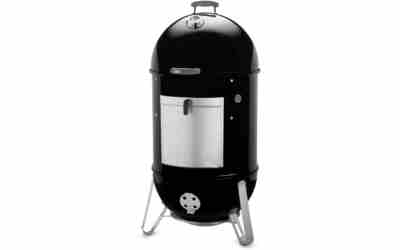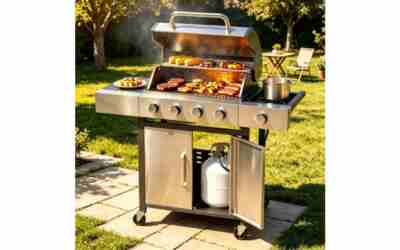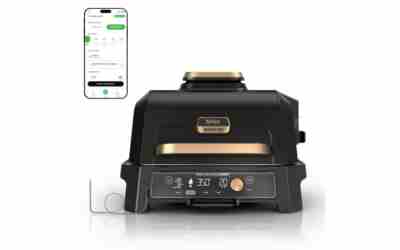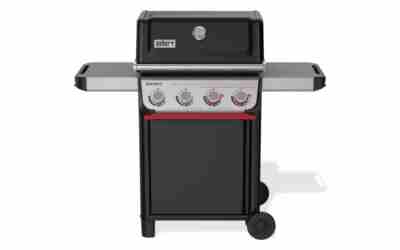

How to choose a grill comes down to two steps: pick gas, charcoal or pellet by how you cook, then size by burger count, where up to 18 patties is small, 19 to 28 is midsized and 29 or more is large.
How to choose a grill fuel type
Fuel changes flavor, heat, speed and cleanup more than any other choice. The price tiers below are rough rules of thumb, not quotes, and they vary by brand and model.
| Fuel | Best for | Rough price tier | Where it loses |
|---|---|---|---|
| Gas (propane or natural gas) | Fast, repeatable weeknight cooking | Budget: under $500. Mid: $500 to $1,000. Premium: above $1,000 | Less smoky flavor than charcoal |
| Charcoal kettle | Searing and classic flavor on a budget | Often under $300 | Slower startup, ash cleanup, more tending |
| Kamado (ceramic) | Searing and long smoking in one cooker | Often $800 and up | Heavy (weight is model-dependent) and costly |
| Pellet | Low-and-slow smoking with a dialed-in temperature | Often $300 to $1,300 | Needs electricity; weaker sear on many models |
| Flat-top griddle | Smash burgers, breakfast, vegetables, stir-fry | Often $300 to $1,100 | No grill marks and no real smoke flavor |
Many pellet grills run from roughly 160°F to 600°F, though the range is model-dependent. That covers smoking and basic grilling. If smoking is your goal, see our roundup of the best pellet grills and smokers.
Electric grills are the option when your building bans open flame. They heat quickly and are simple to run, but you give up most of the smoky flavor. Check your lease or HOA rules first.
How to choose a grill: quick decision rule
Most buyers want three things and can only fully get two. Pick your top priority from this list:
- Speed and low effort on weeknights: gas.
- Best sear and smoky flavor for the least money: charcoal kettle.
- Brisket, ribs and pulled pork without babysitting: pellet.
- One cooker for hot searing and long smokes, and you will tend the fire: kamado.
- Breakfast, smash burgers and a big flat cooking surface: flat-top.
- No open flame allowed: electric.
If two fit, choose the one you will use on an ordinary Tuesday, not the one for a rare holiday cook. A common mistake is buying a smoker for a few special weekends, then going back to a quick grill the rest of the year.
Gas versus charcoal is the usual split. Gas wins on convenience: you turn a knob, preheat for a short time and start cooking. Charcoal wins on flavor and price, but you manage vents and coals and wait longer to start.
How to choose a grill size
Size by how many burger patties fit on the grate at once. Consumer Reports describes gas grills by patty capacity. This guide uses one set of cutoffs throughout: small is up to 18 patties, midsized is 19 to 28, and large is 29 or more.
Worked example
- You feed a family of 4 and each person eats 2 burgers: 4 x 2 = 8 patties. A small grill is plenty.
- You often host 6 neighbors too, so 10 people x 2 = 20 patties. That points to a midsized grill (19 to 28).
- You host 14 people at 2 burgers each: 14 x 2 = 28. That is the top of the midsized range.
- You host 16 people at 2 burgers each: 16 x 2 = 32. That is large-grill territory (29 or more).
A rule of thumb: size so your usual batch fills about two-thirds of the grate. That leaves a cooler zone for resting food or moving flare-ups. Assumption: you cook one batch at a time. A usual batch of 12 patties divided by two-thirds gives 18, so a grate that holds about 18 patties fits, and that is a small grill. This matches the family-of-4 case above.
Two burners suit small grills and small patios. More burners mainly give you more heat zones, not just more heat. If you cook for one or two, or have a balcony or small deck, look at our best small grills.
How many BTUs does a gas grill need?
Compare BTU per square inch of cooking area, not the total BTU number alone. A common rule of thumb is about 80 to 100 BTU per square inch. It is not a tested standard, and the right figure depends on the grill’s design, so treat it only as a screening tool.
Here is the math, an estimate from the listed specs (BTU divided by cooking area):
- Grill A: 48,000 BTU on 600 square inches = 80 BTU per square inch. In the rule-of-thumb range.
- Grill B: 30,000 BTU on 500 square inches = 60 BTU per square inch. Below the range, so expect slower preheating and a weaker sear, especially in cold or windy weather.
BTU does not guarantee good cooking. Burner design, lid fit and metal thickness decide how evenly heat spreads. If you can test one in a store, or after assembly, use this check:
- Preheat with the lid closed for 10 to 15 minutes.
- Lay slices of white bread across the whole grate.
- Close the lid for a minute or two, then look at the toast. Big dark and pale patches mean hot spots.
Charcoal does not use BTU ratings. Look for at least two vents or dampers, since airflow is how you control temperature. On long cooks you will need to add coals as the fire burns down.
Build quality and features worth paying for
Price tags often reflect materials more than cooking power. Check these before you buy:
- Body and lid: thick stainless steel or heavy cast aluminum holds up better than thin painted sheet metal. Wobble the grill in the store; flimsy frames feel loose.
- Grates: cast iron (often porcelain-coated) sears well but can rust if chipped. Stainless grates clean easily. Both work if kept clean.
- Warranty: compare length for burners, firebox and lid separately. Terms vary by brand, so read the paperwork.
- Ignition and thermometer: a reliable igniter and a lid thermometer are worth having. Lid thermometers can read off, so a separate probe is more accurate for meat.
- Pellet hopper size: a bigger hopper means fewer refills on long smokes.
- Cart and wheels: shelves and locking casters matter more than a side burner for most cooks.
You do not need to spend a lot to get a solid grill, and a sturdy build matters more than extra features. If you are price-sensitive, start with our best grills under $500.
Cost and space checks before you buy a grill
Think about what owning the grill involves, not just the sticker price.
- Fuel: propane means swapping or refilling tanks. Charcoal means buying bags regularly. Pellet grills use pellets plus household electricity. Costs depend on how often you cook and local prices.
- Natural gas: if your home has a gas line, a natural gas grill removes tank swaps. Some propane models can be converted with a manufacturer-approved kit, and kit prices vary. Have a licensed professional run the gas line. See our best natural gas grills.
- Weight and delivery: ceramic kamados are heavy, and weight varies by model. Plan for two people and a clear path to the patio.
- Assembly: larger gas grills can take a couple of hours with two people.
- Rules: many apartments and HOAs ban charcoal or gas grills on balconies. Check your lease and local fire code before ordering.
Grill safety basics
Never use a gas, charcoal or pellet grill indoors or in a garage. They produce carbon monoxide and are a fire risk. Follow the manual or label for clearance from siding, railings, eaves and overhangs; many say to leave several feet, and distances vary by model.
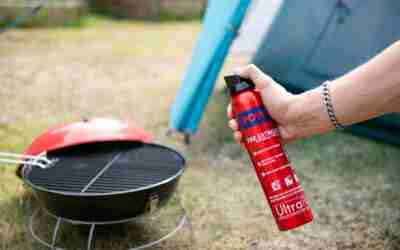
Before the first gas cook of the season, brush soapy water on hoses and connections. Bubbles mean a leak. Keep a fire extinguisher nearby, never leave a lit grill unattended, and dispose of charcoal ash only when it is fully cool.
Our Top Picks
Ready to shop? These are the top-rated options from our hands-on roundup, Best Gas Grills of 2026.

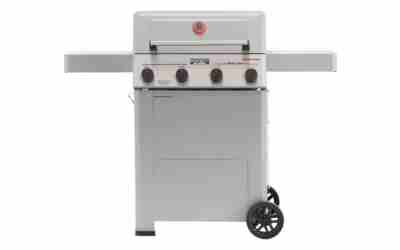
Monument Grills Mesa 415BZNG 4+1 Burner Natural Gas Grill, 50,000 BTU Stainless Steel BBQ with Broil Zone and Viewing Window

Charbroil Pro Series 4-Burner Propane Gas Grill with Amplifire Technology, Griddle Insert & Side Burner

Weber Spirit E-425 4-Burner Propane Gas Grill with Sear Zone and Weber Works Rails, Black
As an Amazon Associate we earn from qualifying purchases. Product prices and availability are accurate as of the date/time indicated.
Frequently Asked Questions
What is the difference between a kamado and a regular charcoal grill?
A kamado is a thick ceramic cooker that holds heat well and often uses less charcoal on long cooks. Many can reach very high searing temperatures, but the maximum depends on the model, so follow the manual. A regular kettle is thin steel, lighter and usually much cheaper, but it loses heat faster and needs more fuel for long cooks.
Can I convert a propane grill to natural gas?
Some models can, using a conversion kit approved by the manufacturer, but not all. Check your manual or ask the manufacturer. Have a licensed professional connect the gas line, and never swap parts that are not approved for your grill.
Can I use a grill on an apartment balcony?
Often not. Many leases, HOAs and local fire codes ban charcoal and propane grills on balconies. Check yours first. An electric grill is commonly allowed where open flame is not, but confirm the rule in writing before you buy.
Is a gas grill or charcoal grill cheaper to run?
It depends on local prices and how often you cook. Charcoal grills often cost less upfront, while gas can be cheaper per cook if you grill often. To estimate your own cost, divide the price of a propane refill or a charcoal bag by the number of cooks you get from it, then compare the two figures.
Can a flat-top griddle replace a grill?
For breakfast, smash burgers, vegetables and stir-fry, yes. A griddle gives a large, even cooking surface. It will not give grill marks or real smoke flavor, so keep a grill if you want steaks with char or low-and-slow barbecue.
{“@context”: “https://schema.org”, “@type”: “FAQPage”, “mainEntity”: [{“@type”: “Question”, “name”: “What is the difference between a kamado and a regular charcoal grill?”, “acceptedAnswer”: {“@type”: “Answer”, “text”: “A kamado is a thick ceramic cooker that holds heat well and often uses less charcoal on long cooks. Many can reach very high searing temperatures, but the maximum depends on the model, so follow the manual. A regular kettle is thin steel, lighter and usually much cheaper, but it loses heat faster and needs more fuel for long cooks.”}}, {“@type”: “Question”, “name”: “Can I convert a propane grill to natural gas?”, “acceptedAnswer”: {“@type”: “Answer”, “text”: “Some models can, using a conversion kit approved by the manufacturer, but not all. Check your manual or ask the manufacturer. Have a licensed professional connect the gas line, and never swap parts that are not approved for your grill.”}}, {“@type”: “Question”, “name”: “Can I use a grill on an apartment balcony?”, “acceptedAnswer”: {“@type”: “Answer”, “text”: “Often not. Many leases, HOAs and local fire codes ban charcoal and propane grills on balconies. Check yours first. An electric grill is commonly allowed where open flame is not, but confirm the rule in writing before you buy.”}}, {“@type”: “Question”, “name”: “Is a gas grill or charcoal grill cheaper to run?”, “acceptedAnswer”: {“@type”: “Answer”, “text”: “It depends on local prices and how often you cook. Charcoal grills often cost less upfront, while gas can be cheaper per cook if you grill often. To estimate your own cost, divide the price of a propane refill or a charcoal bag by the number of cooks you get from it, then compare the two figures.”}}, {“@type”: “Question”, “name”: “Can a flat-top griddle replace a grill?”, “acceptedAnswer”: {“@type”: “Answer”, “text”: “For breakfast, smash burgers, vegetables and stir-fry, yes. A griddle gives a large, even cooking surface. It will not give grill marks or real smoke flavor, so keep a grill if you want steaks with char or low-and-slow barbecue.”}}]}