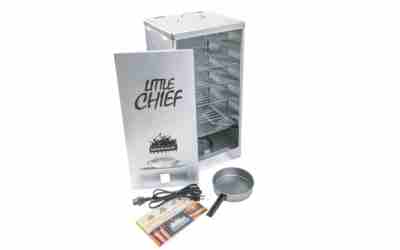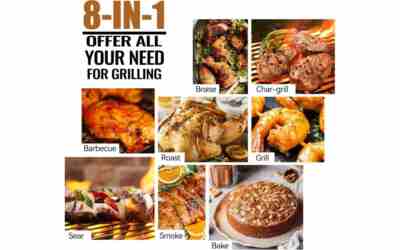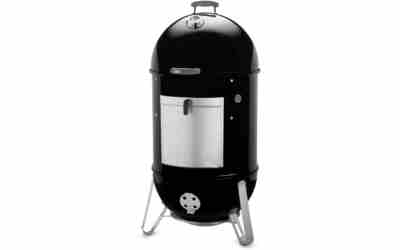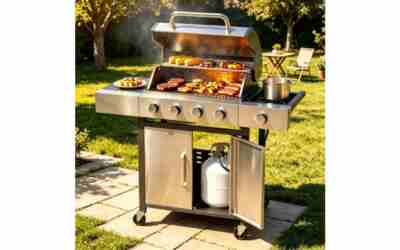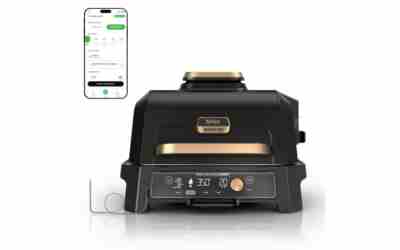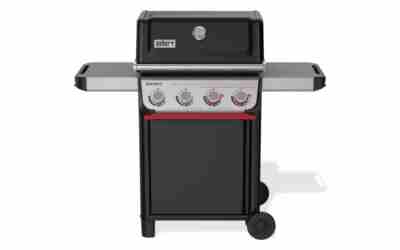

In grills vs barbecue pits, a grill cooks food fast over direct heat, while a pit smokes meat low and slow.
What is the difference between a grill and a barbecue pit?
The difference is the cooking method, not the fuel. Grilling puts food right over the heat source, usually at high heat of up to about 500°F, and many foods finish in minutes. Barbecuing cooks food at roughly 225–275°F, often for hours, with smoke from burning wood. These temperatures are typical, and your cooker’s manual sets its real range.
A barbecue pit is the equipment built for barbecuing. The name covers several designs, and each handles heat a little differently:
- Offset smoker: a firebox on the side feeds heat and smoke across a long cooking chamber, so the food cooks by indirect heat.
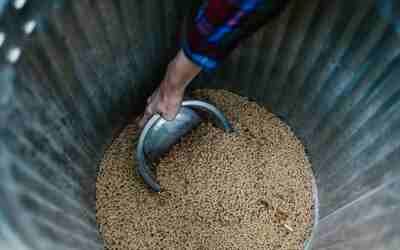
- Drum or pit barrel cooker: a vertical barrel with the fire at the bottom and meat hanging above. The fire is direct and below the meat, but the hanging height and closed lid keep the temperature steady.
- Masonry or in-ground pit: a brick, block or dug pit, usually built once and left in place.
- Pellet cooker: a boxed cooker that feeds wood pellets automatically to hold a set temperature. This guide counts it as a pit, because its main job is steady low-and-slow cooking. Some models also run at higher settings, so check the spec sheet for the top temperature.
Gas, charcoal and wood can fuel either a grill or a pit, so fuel alone does not tell you which one you have.
What "barbecue" and "pit" mean in the US
In the US South, "barbecue" names the food: smoked pork, ribs and brisket. In much of the country, it means any outdoor cooking, including burgers on a gas grill. When a shopper says "pit," they almost always mean the low-and-slow kind.
Grills vs barbecue pits side by side
Use this table to compare the three common setups on heat, time, fuel, cost and capacity.
| Factor | Gas grill | Charcoal grill | Barbecue pit (offset, drum, pellet, masonry) |
|---|---|---|---|
| Heat style | Direct, with an indirect zone possible | Direct, with an indirect zone possible | Mostly indirect; drums use a direct fire below hanging meat |
| Typical cooking range | Up to about 500°F | Up to about 500°F and higher | About 225–275°F; some pellet and drum models run hotter |
| Cook time | Minutes | Minutes to an hour | Hours, sometimes most of a day |
| Startup | Short preheat | Lighting and ashing over the coals | Longest: building a steady fire, or bringing a pellet cooker up to temperature |
| Fuel | Propane or natural gas | Briquettes or lump charcoal, plus wood chunks for smoke | Wood, charcoal or pellets, depending on the design |
| Fuel use per cook | Lowest for short cooks | Moderate | Highest, because the fire runs for hours |
| Purchase cost | Mid-range | Usually the lowest entry point | Widest spread, from budget drums to large offsets; masonry adds materials and labor |
| Capacity | Many burgers at once; a whole brisket fits only on large models | Burgers for a crowd on bigger kettles; a whole brisket is a tight fit | Built for whole briskets, pork shoulders and racks of ribs |
| Footprint | Cart-size, easy to move | Compact to mid-size | Largest; masonry is permanent |
| Learning curve | Low | Moderate | Steepest, because you manage the fire; pellet cookers are the easiest |
Choose this if, and where it loses
- Gas grill: choose it for weeknight speed and easy cleanup. It loses on deep smoke flavor and is a poor fit for all-day cooks.
- Charcoal grill: choose it for strong sear and smoky flavor on a budget. It loses on convenience, since lighting and ash handling take time.
- Barbecue pit: choose it for brisket, ribs and pork shoulder. It loses on speed, space and effort, and it needs attention for hours.
Which is better for burgers and steaks versus brisket and ribs?
Use a grill for thin, tender foods that need a fast sear: burgers, steaks, chops, hot dogs, chicken pieces and vegetables. Direct heat browns the outside while the inside stays juicy, and the whole cook is over in minutes.
Use a pit for tough, thick cuts such as brisket, pork shoulder and ribs. Low, steady heat gives connective tissue time to break down, which is why these cuts turn tender instead of chewy. A grill’s high heat would burn the outside long before the inside softened.
A time example
As a rule of thumb, a 10-pound brisket at 225–275°F takes roughly 8 to 14 hours, plus a rest before slicing. Every brisket stalls at a different point, so plan for the long end and start before dawn for a dinner serving. A burger patty is done in minutes on a grill, so the same time budget on a weeknight gets you dinner for a crowd.
Doneness still matters. USDA guidance lists 145°F for whole cuts of pork and beef, 160°F for ground meat and 165°F for poultry. Brisket is typically pulled around 195–205°F, when a probe slides in with little resistance, because collagen needs that extra heat to soften. Cook to feel as well as temperature.
Does a pit need more space or permits than a grill?
Yes. A pit needs room for the firebox or fire, a wood stack and clear air around the smoke stack. Masonry and in-ground pits are fixed structures, so check city, county and homeowners association rules, and any burn ban, before you build.
For clearances, fuel handling and carbon monoxide, follow the manual or label, and cook outdoors only.
Which should you buy: a grill or a barbecue pit?
Beginners should start with a grill. It teaches fire control, heat zones and temperature checks with quick feedback, and it covers most weeknight meals.
Decision rule: if most of your cooks take under an hour, buy a grill. If you want to spend a weekend day on brisket or ribs and have the yard space, buy a pit, or a pellet cooker if you want help holding temperature. On a small patio or balcony, a compact grill is the safer choice, checked against your building’s rules. On a tight budget with a taste for smoke, a charcoal grill set up for two-zone cooking is the closest fit.
A kettle or gas grill can smoke food with a two-zone setup: heat on one side, food on the other, lid closed, and a small wood chunk or chip packet over the heat. It will not match a dedicated pit for hours-long stability or capacity, but it covers ribs, chicken and small roasts. On charcoal, bank the lit coals on one side and put a drip pan under the food side. On gas, light one burner and cook over the unlit side. An oven-style thermometer at grate level beats the lid gauge.
If you want both styles in one footprint, look at a gas and charcoal combo grill. When you are ready to compare models, our roundup of BBQ grills and smokers covers both styles.
Our Top Picks
Ready to shop? These are the top-rated options from our hands-on roundup, Best Barbecue Grills of 2026.

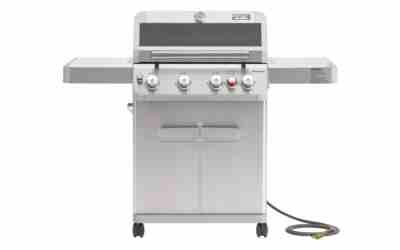
Charbroil Pro Series 4-Burner Propane Gas Grill with Amplifire Technology, Griddle Insert & Side Burner

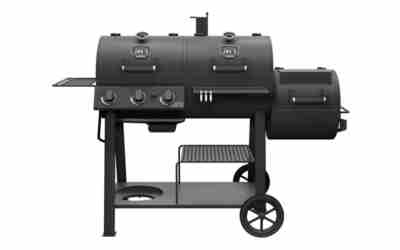
Royal Gourmet CC1830S Charcoal Grill with Offset Smoker, 823 Sq. In. Cooking Area for Outdoor BBQ and Camping

Aoxun 4-Burner Propane Grill with Side Burner | 49,000 BTU Stainless Steel Gas Grill with 625 Sq. In. Cooking Area
As an Amazon Associate we earn from qualifying purchases. Product prices and availability are accurate as of the date/time indicated.
Frequently Asked Questions
Can I cook burgers on an offset pit?
Yes, if you build a hot fire near the firebox end and cook over it. It is slower to manage than a grill, so many cooks keep a grill for fast foods and use the pit for long cooks.
Can I use a pit on a small patio?
A compact drum or pellet cooker fits a small patio far better than an offset or masonry pit. Check your lease or association rules first. Decision rule: if you cannot spare the floor space, buy a grill.
Which uses more fuel, a grill or a pit?
A pit usually uses more fuel per cook, because the fire runs for hours instead of minutes. A grill is cheaper to run for quick meals, while a pit can feed a crowd from one long cook.
Is a barbecue pit more expensive than a grill?
Not always. A basic charcoal grill can cost less than a drum cooker, while large offsets and masonry builds usually cost more once you count materials, fuel and accessories. Prices vary by brand and size, so compare current listings.
Which tastes better, grilled or pit-smoked food?
They taste different, not better or worse. Grills give a seared, charred crust, while pits give deep smoke flavor and fall-apart tenderness. Decision rule: pick the flavor you want most often.
{“@context”: “https://schema.org”, “@type”: “FAQPage”, “mainEntity”: [{“@type”: “Question”, “name”: “Can I cook burgers on an offset pit?”, “acceptedAnswer”: {“@type”: “Answer”, “text”: “Yes, if you build a hot fire near the firebox end and cook over it. It is slower to manage than a grill, so many cooks keep a grill for fast foods and use the pit for long cooks.”}}, {“@type”: “Question”, “name”: “Can I use a pit on a small patio?”, “acceptedAnswer”: {“@type”: “Answer”, “text”: “A compact drum or pellet cooker fits a small patio far better than an offset or masonry pit. Check your lease or association rules first. Decision rule: if you cannot spare the floor space, buy a grill.”}}, {“@type”: “Question”, “name”: “Which uses more fuel, a grill or a pit?”, “acceptedAnswer”: {“@type”: “Answer”, “text”: “A pit usually uses more fuel per cook, because the fire runs for hours instead of minutes. A grill is cheaper to run for quick meals, while a pit can feed a crowd from one long cook.”}}, {“@type”: “Question”, “name”: “Is a barbecue pit more expensive than a grill?”, “acceptedAnswer”: {“@type”: “Answer”, “text”: “Not always. A basic charcoal grill can cost less than a drum cooker, while large offsets and masonry builds usually cost more once you count materials, fuel and accessories. Prices vary by brand and size, so compare current listings.”}}, {“@type”: “Question”, “name”: “Which tastes better, grilled or pit-smoked food?”, “acceptedAnswer”: {“@type”: “Answer”, “text”: “They taste different, not better or worse. Grills give a seared, charred crust, while pits give deep smoke flavor and fall-apart tenderness. Decision rule: pick the flavor you want most often.”}}]}