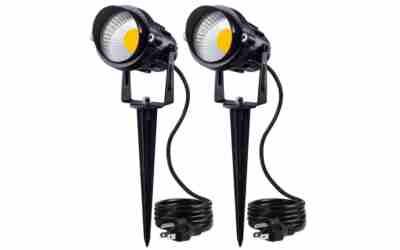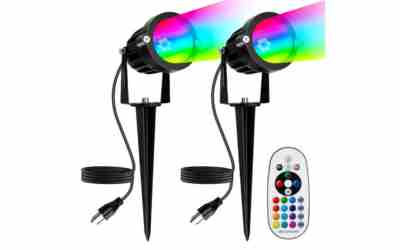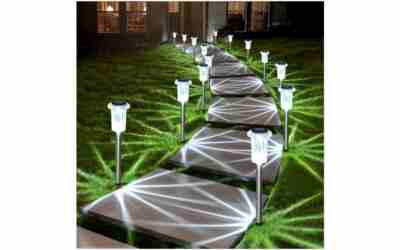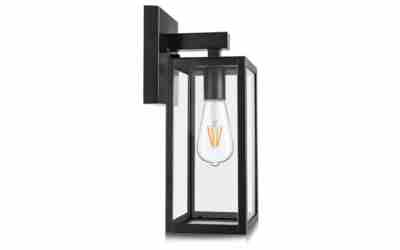

The right outdoor light height is 66-72 inches to center for porch lights, 8-10 feet for security lights and 12-24 inches for path lights.
Outdoor light height for porches, paths and security
Most numbers below are design rules of thumb, not code requirements, so the manual or label that came with your fixture overrides them. Local codes and HOA rules can also cap fixture height, so check them before you drill.
Measure wall lights to the center of the fixture, from the finished floor or threshold rather than from the yard. Measure post, path and uplights from grade, which is the ground level where the fixture stands.
| Fixture | Height | Notes |
|---|---|---|
| Front door wall lantern | 66-72 in to center | Measured from the porch floor |
| Hanging porch light | Bottom at least 7 ft above floor | Leaves headroom under the fixture |
| Garage lanterns beside the door | 66-72 in to center | Matches the front door |
| Post light | 3-5 ft above grade | Marks driveway and walk entries |
| Flood or security light | 8-10 ft above grade | Aim down at the area to cover |
| Path light | 12-24 in tall fixture | Measured from grade |
| Uplight | At grade, aimed up | Aim at trees or walls, not windows |
| String lights | 7-10 ft over patios | Measured to the lowest point of the sag |
No single height works for every fixture, so find the row that matches what you are installing and read the matching section below for sizing and placement.
How high to mount a front door or porch light
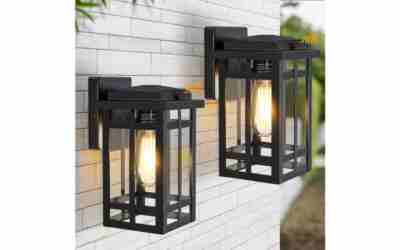
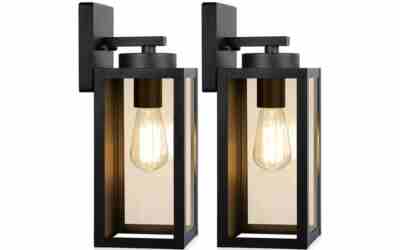
Set the center of the fixture at the chart height, about 6 inches out from the door frame. Choose the size first, because a lantern that is too small looks lost on the wall and one that is too large crowds the door. Use this sizing rule:
- One light: about one-third of the door height.
- A pair: about one-quarter of the door height each.
Worked example, 80-inch door: one-third of 80 is 26.7 inches, so a single lantern of 24-28 inches fits. One-quarter of 80 is 20 inches, so a pair works best at about 20 inches tall each. Take a 24-inch lantern centered at 69 inches: the bottom lands at 57 inches (69 minus 12) and the top at 81 inches (69 plus 12), which is 1 inch above the top of the door. That is fine beside a door. Centered at 66 inches, the same lantern runs from 54 to 78 inches and stays below the door’s top edge. Both centers fall inside the chart range.
Tall doors and tall porches
On a 96-inch door, the same fractions give a 32-inch single lantern or a 24-inch pair. Put the center at the top of the range or a little higher so the light does not look low against the wall. Under a tall porch ceiling, use a hanging fixture with a longer stem or chain so it does not float up near the ceiling.
Above or beside the door?
Beside the door is the usual spot because the light reaches faces and the lock. A single light above the door works when there is no wall space on either side. With a pair, mount both centers at the same height from the same floor line, and check with a level before drilling the second box.
How high should garage, security and flood lights be?
Guides disagree on garage lights because they describe two different layouts. Lanterns beside the garage door follow the front door rule, so use the same center height as the entry light. Barn lights or gooseneck lamps above the door sit over the opening with the shade aimed down at the driveway, and the fixture’s manual sets how far out and up they mount.
Security and flood lights go 8-10 feet above grade. At that height they are hard to reach and the beam has room to spread. Aim the head down toward the area you want lit, not out at the street, and keep it from shining into windows.
Motion sensors have their own limits. Mount height, detection range and tilt angle vary by model, so use the numbers in the manual. Aim the sensor across the walking path rather than straight at it, since most motion sensors pick up sideways movement better than movement coming straight toward them. After mounting, walk the area at night and adjust the tilt until the light turns on where you expect.
Path light height and spacing
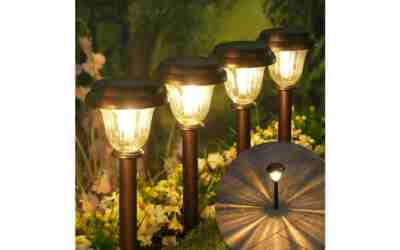
Path light fixtures commonly stand 12-24 inches tall, measured from grade. Shorter fixtures keep the light low and close to the walkway, while taller ones clear flower beds and groundcover that would block the beam. Either way, the light source should be low enough to shine on the walkway instead of into eyes.
Place each light about 6 inches from the path edge and space them 6-8 feet apart. Stagger lights on alternate sides of a path for more even coverage and fewer bright spots. Put one light at each turn, step and path entrance regardless of the spacing. Solar path lights follow the same layout as wired ones.
Post lights and uplights
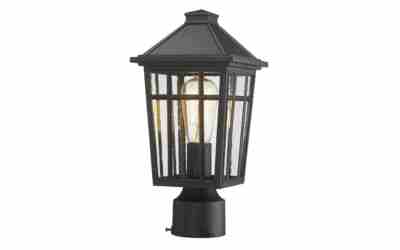
Post lights sit 3-5 feet above grade and work best at driveway and walk entries, where they mark the edge of the pavement. Uplights sit at grade and aim up at a tree trunk or a textured wall. Tuck them into plantings so the bulb stays hidden, and angle the beam away from windows so it does not shine into the house.
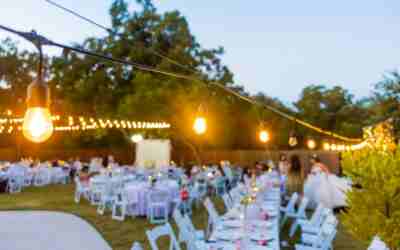
String lights over a patio
Hang string lights within the 7-10 foot range in the chart so the lowest point of each sag still clears people. Plan your anchor points first, because a sagging strand ends up lower than you intended. For hooks, wire and spacing, see our walkthrough on how to put up outdoor patio lights.
Avoid glare, then test the spot before you drill
Common mistake: mounting a bare, bright bulb at eye level. It lights the area poorly because your eyes adjust to the glare and everything else looks darker. Fix it with a shade or shielded fixture that points light down, and choose warm 2700K-3000K bulbs.
For neighbors and dark-sky friendliness, pick fixtures that aim light down and hide the bulb from the side. Skip lights that shine past your property line, and put security lights on motion sensors so they are not on all night.
Quick placement checklist
- Mark the height with painter’s tape on the wall, using the measuring point in the chart.
- Hold the fixture or a cardboard cutout of its size at the mark and step back to the street or sidewalk.
- Check that it lines up with the door, trim and any other lights.
- Compare the mark with the electrical box position.
- At dusk, hold a work light or temporary plug-in fixture at the mark and check glare from the neighbor’s view.
- For path lights, set the fixtures on the ground along the route and walk it at dusk before fixing any in place.
Move the tape before you drill, not after.
Our Top Picks
Ready to shop? These are the top-rated options from our hands-on roundup, Best Path Lights Low Voltage of 2026.

Gardencoin Solid Brass 12V Low Voltage Pathway Lights (6-Pack)

PARTPHONER 8-Pack Low Voltage Path Lights G4 Bulbs

SUNVIE 3W Low Voltage Pathway Lights (4-Pack)
As an Amazon Associate we earn from qualifying purchases. Product prices and availability are accurate as of the date/time indicated.
Related reading: addlon 100FT G40 Outdoor String Lights with Remote Review 2026 · Brightever Outdoor String Lights Review 2026
Frequently Asked Questions
How do I mount a light on brick or uneven siding?
Pick the mortar joint or siding line closest to your target height and mount there, since a small shift is hard to see. Keep matching lights on the same line on both sides of the door. Rule: when two spots are close, choose the cleaner mounting surface over the exact inch.
Can my HOA or a neighbor make me change my light height?
An HOA or town can set rules on fixture height, shielding and light spill, so read your covenants or ask the local building department before you buy. Shielded fixtures that aim down are the safest choice either way. Rule: if the beam reaches a neighbor’s window, lower or shield the light.
Is a 30-inch lantern too big for an 80-inch door?
It runs about 3 inches over the one-third size, so it reads heavy beside a standard single door but can suit a wide wall or a double door. Rule: stay within a few inches of one-third of the door height, and go larger only for wider openings.
Can I use path lights taller than 24 inches?
Yes, but a tall head puts the bulb closer to eye level, which causes glare along the walk. Choose a shielded top that directs light down, or stay with shorter fixtures. Rule: if you can see the bulb while walking the path, pick a shorter or more shielded fixture.
How do I measure a light on a balcony or second-story wall?
Measure from the floor of the level the light serves, such as the balcony or landing, using the same wall-light measuring point as the chart. Rule: the floor is the surface people stand on next to the light, not the ground below.
{“@context”: “https://schema.org”, “@type”: “FAQPage”, “mainEntity”: [{“@type”: “Question”, “name”: “How do I mount a light on brick or uneven siding?”, “acceptedAnswer”: {“@type”: “Answer”, “text”: “Pick the mortar joint or siding line closest to your target height and mount there, since a small shift is hard to see. Keep matching lights on the same line on both sides of the door. Rule: when two spots are close, choose the cleaner mounting surface over the exact inch.”}}, {“@type”: “Question”, “name”: “Can my HOA or a neighbor make me change my light height?”, “acceptedAnswer”: {“@type”: “Answer”, “text”: “An HOA or town can set rules on fixture height, shielding and light spill, so read your covenants or ask the local building department before you buy. Shielded fixtures that aim down are the safest choice either way. Rule: if the beam reaches a neighbor’s window, lower or shield the light.”}}, {“@type”: “Question”, “name”: “Is a 30-inch lantern too big for an 80-inch door?”, “acceptedAnswer”: {“@type”: “Answer”, “text”: “It runs about 3 inches over the one-third size, so it reads heavy beside a standard single door but can suit a wide wall or a double door. Rule: stay within a few inches of one-third of the door height, and go larger only for wider openings.”}}, {“@type”: “Question”, “name”: “Can I use path lights taller than 24 inches?”, “acceptedAnswer”: {“@type”: “Answer”, “text”: “Yes, but a tall head puts the bulb closer to eye level, which causes glare along the walk. Choose a shielded top that directs light down, or stay with shorter fixtures. Rule: if you can see the bulb while walking the path, pick a shorter or more shielded fixture.”}}, {“@type”: “Question”, “name”: “How do I measure a light on a balcony or second-story wall?”, “acceptedAnswer”: {“@type”: “Answer”, “text”: “Measure from the floor of the level the light serves, such as the balcony or landing, using the same wall-light measuring point as the chart. Rule: the floor is the surface people stand on next to the light, not the ground below.”}}]}