Don’t drink from a garden hose unless it is certified to NSF/ANSI 61 or 372, because ordinary vinyl hoses can leach lead, phthalates and other chemicals into the water, especially when the hose is hot or the water has been sitting inside it. Your tap water is usually fine. The hose is the problem.
Why most garden hoses aren’t safe to drink from
Most garden hoses are made of PVC (vinyl). PVC is stiff on its own, so makers add plasticizers such as phthalates to keep it flexible, and some add stabilizers or flame retardants. Brass fittings can also contain lead. None of this matters for watering a lawn, but it matters when the water goes into your mouth.
Your water utility treats and tests the water it delivers, but that testing ends before the water reaches a hose you bought at a store. Once the water passes through a standard hose, nobody has checked what it picked up on the way.
- Heat: a hose lying in the sun can get much hotter than the air, and warm water pulls more chemicals out of the hose wall. If your hose sits in strong sun, our guide to garden hoses for hot sun conditions covers which ones cope better.
- Standing water: water that sits in the hose for hours or days picks up the most, so the first few gallons out of a hose are the worst.
- Bacteria and bugs: a hose left coiled and wet can grow bacteria and algae, and insects sometimes crawl into open ends.
- Backflow: if the hose end sits in a puddle, bucket, pool or sprayer tank, water can siphon back toward your plumbing when pressure drops.
Can it make you sick? A single sip is unlikely to cause an obvious problem for a healthy adult. The bigger concern is repeated exposure, and lead is the main reason. The CDC says no safe blood lead level has been identified in children, so infants, young kids and pregnant people should skip hose water entirely.
What testing of garden hoses found, and what it doesn’t prove
The best-known evidence is a 2016 test by the Ecology Center’s Healthy Stuff project, which analyzed 32 retail garden hoses. Its main findings:
- PVC hoses often had elevated lead, bromine, antimony and phthalates. Non-PVC hoses did not contain those contaminants.
- Lead and BPA leached into water held in some hoses for 48 hours.
- Ten of the 32 hoses were labeled ‘drinking water safe.’ They had no significant lead, bromine, antimony or tin, but 3 of the 10 still contained phthalates.
Treat this as a useful warning, not a precise risk number. It was a small study from 2016 by an advocacy group, and hose formulas change by brand and year. It measured what leached under set conditions, not what you would absorb from a drink at the spigot.
It also shows why a label alone isn’t proof. A ‘drinking water safe’ claim printed by the maker is not the same as a third-party certification, which is why the next section matters.
What ‘drinking water safe,’ NSF 61 and ‘lead-free’ labels mean
Look for a certification mark from an independent lab (NSF, UL, WQA or similar) on the packaging or hose. Then confirm the exact model is listed in the certifier’s online database. Here is how common labels read:
| Label | What it tells you | What it doesn’t |
|---|---|---|
| NSF/ANSI 61 | The product was tested for chemicals that leach into drinking water | Applies only to the certified model, not the brand’s other hoses |
| NSF/ANSI 372 | The product meets the lead-free limit for surfaces that touch water | Covers lead content only, not every other chemical |
| ‘Drinking water safe’ (no mark) | The maker’s own claim | No independent proof |
| ‘Lead-free couplings’ | The brass fittings are low in lead | Says nothing about the hose body |
| ‘Not for drinking’ | A warning to keep the hose away from your mouth | Don’t use that hose for drinking water or pet bowls |
Decision rule: no certification mark that you can verify, no drinking. Our guide to drinking-water-safe garden hoses lists hoses built for this use. Check each model’s certification before you buy, since claims vary by model, and don’t assume a hose is safe because of its color or because it is sold for RVs or boats.
Does flushing make a garden hose safe to drink from?
Flushing only clears stale, warm water that has been sitting in the hose. It does not stop a vinyl hose from leaching, because chemicals keep entering the water as it flows. Flushing is worth doing on a certified drinking-water hose, and it lowers the worst of the exposure on a regular hose, but it does not make a regular hose safe for daily drinking.
- Move the hose into shade and, if possible, use the part that has been out of the sun.
- Keep the end up and clear of puddles, soil and chemicals. Never leave it in a pool or bucket.
- Open the spigot fully and run the water onto pavement or a drain area, not a garden bed or pet area.
- Run it until the water feels as cold as your tap, and at least long enough to replace all the water inside the hose (see the estimate below).
- Fill your container from the middle of the flow, not from a dribble.
- Drain the hose after use so water doesn’t sit in it. A hose reel in shade makes it easier to drain, coil and keep the ends off the ground.
Worked example (estimate): a 100-foot, 5/8-inch hose holds about 1.6 gallons. Method: cross-section area π × (0.3125 in)² ≈ 0.307 sq in, times 1,200 in of length ≈ 368 cu in, divided by 231 cu in per gallon. At an assumed 5 gallons per minute, that is about 19 seconds to replace the water inside. Your flow depends on water pressure and hose diameter, so judge by temperature as well as time.
When not to rely on flushing: an old, cracked or sun-faded hose, one that smells of plastic, or any hose left full in direct sun. Use another water source instead.
Backflow is a separate risk. Install a hose-bib vacuum breaker (backflow preventer) on the spigot, and follow the manufacturer’s instructions and your local plumbing code. Many local codes require one. It protects your plumbing, not the quality of the water you drink from the hose.
Kids and pets
Kids: don’t let children drink from a standard hose or put the hose end in their mouths. Young children are the most sensitive to lead. If kids will drink from a hose, use a certified drinking-water-safe hose.
Pets: dogs and cats are smaller than adults and tend to lap up the warm, standing water that comes out first. For an occasional top-off, flush the hose until the water runs cold. For daily bowls, fill them from an indoor tap or use a certified drinking-water-safe hose.
Safer ways to get drinkable water outdoors
The simplest fix is a certified drinking-water-safe hose. If you already own a standard hose, keep it for lawn and garden use and buy one dedicated hose for drinking and pet bowls. Label it so no one mixes them up, and store it drained with the ends capped.
- Camping and RV: use a hose with NSF/ANSI 61 certification and flush it before filling containers. An inline filter may improve taste, but it can’t be counted on to make unsafe hose material safe.
- Quick drink in the yard: fill a bottle from an indoor tap or an outdoor spigot, not from the hose end.
- Long hose runs: the more hose between the spigot and your cup, the more material the water touches, so use the shortest certified hose that reaches.
Our Top Picks
Ready to shop? These are the top-rated options from our hands-on roundup, Best Drinking Garden Hoses of 2026.

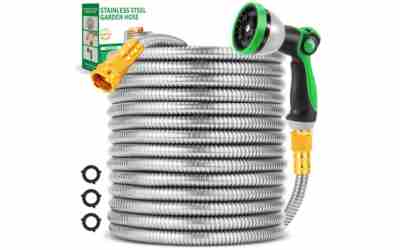
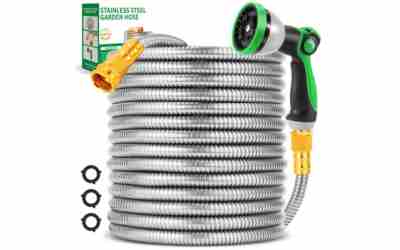
ToolasinGardenHose 50FT Stainless Steel Metal Garden Hose with 10-Function Nozzle, No-Kink and Leak-Proof Design

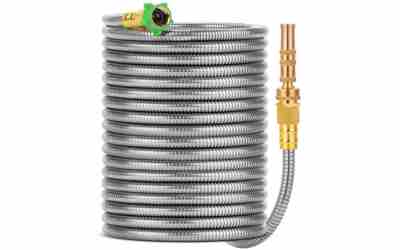
UNCO 75ft Stainless Steel Metal Garden Hose with 4-Function Brass Nozzle - Kink-Free Heavy Duty Design
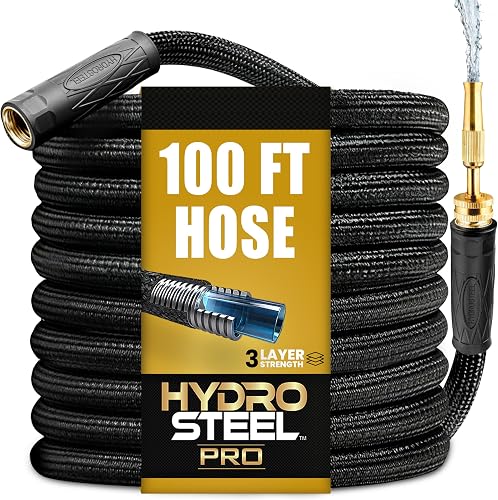
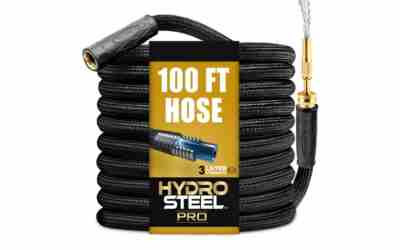
EMSON Hydrosteel PRO 100 Ft Heavy Duty 304 Stainless Steel Metal Garden Hose with Crush Resistant Fittings
As an Amazon Associate we earn from qualifying purchases. Product prices and availability are accurate as of the date/time indicated.
Frequently Asked Questions
Is it safe to drink from a garden hose once in a while?
One sip from a standard hose is unlikely to harm a healthy adult, but it isn’t a good habit. Run the water until it is cold first, and never let kids, infants or pregnant people drink from it. A certified drinking-water-safe hose avoids the question.
Is a hose labeled ‘lead-free’ safe to drink from?
Not necessarily. ‘Lead-free couplings’ only describes the brass fittings, not the flexible hose body. Look for an NSF/ANSI 61 or 372 certification mark and check that the exact model appears in the certifier’s database.
Can I fill my dog’s water bowl from a garden hose?
Occasionally, if you run the hose until the water is cold, since warm standing water is the worst. For regular use, fill the bowl from a tap or use a certified drinking-water-safe hose, especially for small dogs and cats.
Does an inline filter make a regular garden hose safe to drink from?
No. A filter at the nozzle can’t be counted on to remove everything a vinyl hose adds, and it doesn’t fix bacteria in a dirty hose. Use a certified drinking-water hose first, then add a filter only if you want better taste.
Does a backflow preventer make hose water safe to drink?
No. A hose-bib vacuum breaker keeps water from siphoning back into your plumbing. It does nothing about chemicals leaching from the hose, so you still need a certified hose for drinking.
{“@context”: “https://schema.org”, “@type”: “FAQPage”, “mainEntity”: [{“@type”: “Question”, “name”: “Is it safe to drink from a garden hose once in a while?”, “acceptedAnswer”: {“@type”: “Answer”, “text”: “One sip from a standard hose is unlikely to harm a healthy adult, but it isn’t a good habit. Run the water until it is cold first, and never let kids, infants or pregnant people drink from it. A certified drinking-water-safe hose avoids the question.”}}, {“@type”: “Question”, “name”: “Is a hose labeled ‘lead-free’ safe to drink from?”, “acceptedAnswer”: {“@type”: “Answer”, “text”: “Not necessarily. ‘Lead-free couplings’ only describes the brass fittings, not the flexible hose body. Look for an NSF/ANSI 61 or 372 certification mark and check that the exact model appears in the certifier’s database.”}}, {“@type”: “Question”, “name”: “Can I fill my dog’s water bowl from a garden hose?”, “acceptedAnswer”: {“@type”: “Answer”, “text”: “Occasionally, if you run the hose until the water is cold, since warm standing water is the worst. For regular use, fill the bowl from a tap or use a certified drinking-water-safe hose, especially for small dogs and cats.”}}, {“@type”: “Question”, “name”: “Does an inline filter make a regular garden hose safe to drink from?”, “acceptedAnswer”: {“@type”: “Answer”, “text”: “No. A filter at the nozzle can’t be counted on to remove everything a vinyl hose adds, and it doesn’t fix bacteria in a dirty hose. Use a certified drinking-water hose first, then add a filter only if you want better taste.”}}, {“@type”: “Question”, “name”: “Does a backflow preventer make hose water safe to drink?”, “acceptedAnswer”: {“@type”: “Answer”, “text”: “No. A hose-bib vacuum breaker keeps water from siphoning back into your plumbing. It does nothing about chemicals leaching from the hose, so you still need a certified hose for drinking.”}}]}