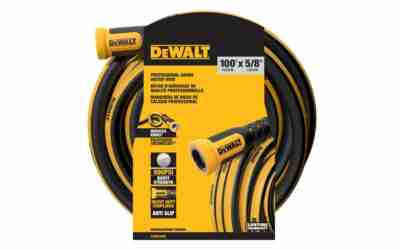
Stainless steel garden hoses are good if kinks, punctures and chewing are your problem, but the fittings can leak and the sleeve gets hot in direct sun.
How stainless steel garden hoses are built
Most “stainless” hoses use a flexible, corrugated stainless steel sleeve (often listed as 304 stainless) over an inner tube made of latex, rubber or a polymer. Brass or aluminum fittings are crimped onto the ends. The sleeve protects the tube, and the tube actually holds the water.
That split explains the pros and cons. The metal resists kinks, tangles, punctures and pet chewing. The inner tube and the crimped fittings are the parts that wear out. Common lengths run from 25 to 100 ft, usually in a 1/2 in diameter, though sizes vary by brand.
Because the sleeve hides the tube, you cannot see aging or damage inside. A hose can look perfect on the outside and still start leaking when the tube or the crimp finally gives out.
Pros and cons of stainless steel garden hoses
Pros
- Kink and tangle resistance. The corrugated sleeve holds its shape, so the hose pulls out and coils up more easily than most vinyl.
- Puncture and chew resistance. The metal shields the tube from gravel, edges, thorns and pets.
- Sleeve stays intact in sun. Metal does not crack or fade the way cheap vinyl does. The inner tube and washers still degrade over time with heat and sun exposure, so shade storage matters.
- Easier storage. Many coil more compactly than thick rubber and are lighter to carry.
Cons
- Leaks at the fittings. The crimped couplings are the usual failure point, not the metal.
- Hot surface. The sleeve warms in direct sun, and the water inside warms too.
- Dents and sharp bends. A dented section can restrict flow and does not always spring back.
- Surface damage. The sleeve and couplings can scuff decks, painted surfaces and siding.
- Cost and drainage. They generally cost more than vinyl, and you should drain them after each use.
- Thin bundled nozzles. Included spray heads are often lightweight plastic, so plan to swap in a sturdier one.
Stainless steel vs rubber, vinyl and expandable hoses
These are general tendencies. Weight, price and lifespan vary widely by brand and model, so use the table to match a hose to your problem, not as a spec sheet.
| Hose type | Kink behavior | Main weakness | Best for |
|---|---|---|---|
| Stainless steel | Strong resistance, but can still bend sharply near the ends | Leaks at fittings, dents, hot surface in sun | Kink-prone yards, pets, rough ground |
| Rubber | Good, especially with thicker walls | Weight and bulk | Daily heavy use and heat |
| Vinyl | Kinks easily | Stiffens and cracks with sun and cold | Occasional watering on a budget |
| Expandable | Rarely kinks | Fabric and inner tube can abrade, split or burst | Light, low-demand watering on small yards |
Flow and pressure
Flow depends mostly on the inner diameter and length, not the outer material. A 5/8 in hose moves more water than a 1/2 in hose of the same length, and a 100 ft run loses more pressure than a 50 ft run. Many metal hoses are 1/2 in, so check the inner diameter if you run sprinklers or fill buckets quickly.
Choose this if
- Stainless steel: kinks, pets or punctures are your problem and you want easier storage than rubber.
- Rubber: you want the most forgiving hose for heat and daily abuse and can live with the weight.
- Vinyl: you water occasionally and want the lowest price.
- Expandable: weight matters most and your watering demands are light.
Why stainless steel garden hoses leak and how to stop it
Leaks at the connections are the most common complaint with metal hoses. If drips continue after you change the washer, the cause is likely a poor crimp or a bent coupling.
- Check the washer. Each female coupling needs an intact rubber washer. Replace it if it is flat, cracked or missing.
- Tighten by hand. Snug is enough. Pliers can deform brass and crush the washer.
- Open the water slowly. A sudden surge stresses the crimp.
- Drain after use. Open the nozzle after shutting off the spigot so trapped pressure and water are released.
- Support the ends. Metal hoses can still kink right at the fittings, so look for a bend restrictor and avoid yanking the hose by the coupling.
Signs the hose is worn out
- A drip at the crimp that a new washer does not fix.
- Dented or flattened sections that restrict flow.
- A bulging or soft spot under the sleeve.
- Frayed or sharp wire ends. Wear gloves when handling a damaged hose, and replace it.
Protect your surfaces
The metal sleeve and brass fittings can scratch painted decks, wood and siding, so keep the couplings off finished surfaces when you drag the hose.
Are stainless steel garden hoses safe to drink from?
Not automatically. “Stainless” describes the outer sleeve, not the inner tube or fittings that touch the water. Unless the label or manufacturer documentation shows drinking-water certification such as NSF/ANSI 61, treat the hose as watering-only. Our drinking-water-safe hose picks cover certified options.
How stainless steel garden hoses handle heat, freezing and storage
Sun and hot water. A metal sleeve can get hot to the touch in direct sun, and water sitting inside warms up. Run the water until it turns cool before you fill a pet bowl, spray children or water delicate plants. The inner tube has its own temperature rating, which varies by model. Do not use a metal hose with hot water unless the manufacturer states that it is rated for it. For very sunny yards, see our hoses for hot sun.
Freezing. Disconnect and drain the hose before the first hard freeze. Water that freezes inside can split the inner tube, and the metal sleeve hides the damage until the hose leaks.
Storage. Coil it loosely in a shaded spot, such as a garage or shed, or hang it on a wide hook. Avoid tight loops at the fittings, and keep couplings capped or tilted down so water does not sit inside. Shade storage also slows aging of the inner tube.
Should you buy a stainless steel garden hose?
Decision rule: buy one if kinks, pets, punctures or bulky storage are your main problems. Skip it if you want the cheapest hose or need hot water.
Buy one if
- Your current hose kinks or tangles every time you pull it.
- Pets chew, or the hose gets dragged over gravel and edges.
- You want compact storage and are willing to drain it each time.
Skip one if
- You want the lowest price or rarely use a hose.
- You often drag it across decks or finished surfaces.
- You need hot water, or drinking-water use without certification.
Check before you buy
- Solid brass fittings with a bend restrictor at each end.
- The inner tube material and its stated temperature rating.
- Inner diameter, not just outer size (1/2 in or 5/8 in).
- A written manufacturer warranty. Lifespan claims without one are marketing.
- NSF/ANSI 61 certification if you plan to drink from it.
Ready to compare models? Our stainless steel garden hose roundup lists current options.
Our Top Picks
Ready to shop? These are the top-rated options from our hands-on roundup, Best Stainless Steel Garden Hoses of 2026.

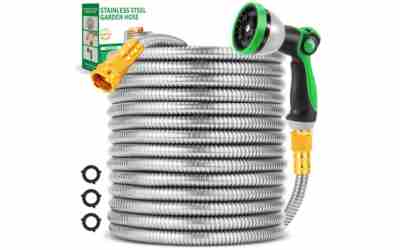
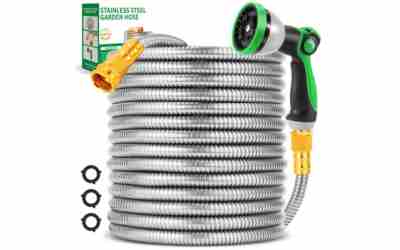
ToolasinGardenHose 50FT Stainless Steel Metal Garden Hose with 10-Function Nozzle, No-Kink and Leak-Proof Design

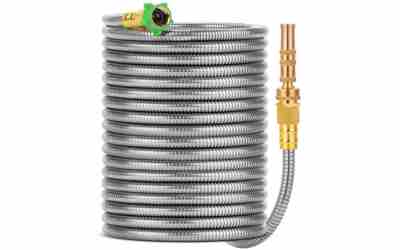
UNCO 75ft Stainless Steel Metal Garden Hose with 4-Function Brass Nozzle - Kink-Free Heavy Duty Design
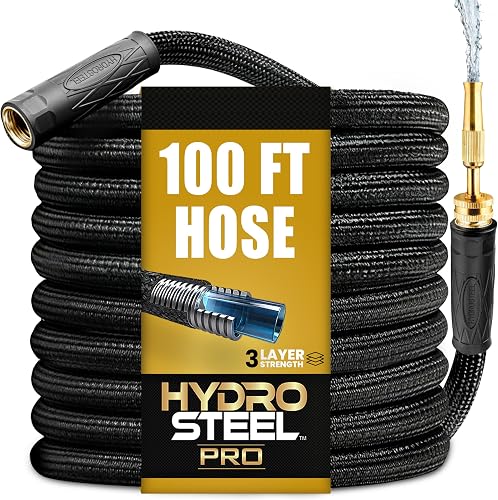
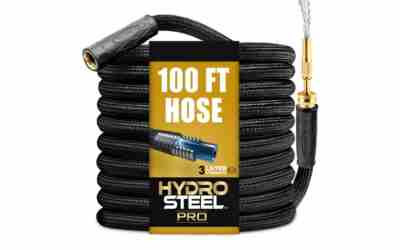
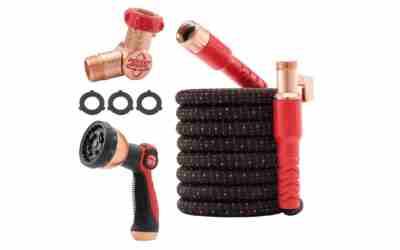
EMSON Hydrosteel PRO 100 Ft Heavy Duty 304 Stainless Steel Metal Garden Hose with Crush Resistant Fittings
As an Amazon Associate we earn from qualifying purchases. Product prices and availability are accurate as of the date/time indicated.
Frequently Asked Questions
Do metal garden hoses reduce water pressure?
Not by themselves. Pressure drop depends mainly on inner diameter and length. A 1/2 in hose at 100 ft loses more pressure than a 5/8 in hose at 50 ft. Dents and sharply bent sections near the ends can also cut flow.
Are stainless steel hoses better than rubber hoses?
It depends on your problem. Stainless resists kinks and punctures and is usually easier to coil, while rubber generally handles heat and rough daily use better but is heavier. Choose stainless for kink and chew problems, rubber for heat and durability.
Can I repair a leaking stainless steel hose?
Often only if the leak is at a coupling washer, which is cheap to replace. A drip at the crimped fitting or from the inner tube usually means the hose needs replacing, so check whether the manufacturer’s warranty covers it.
Will a stainless steel hose scratch my deck?
It can. The corrugated sleeve and the brass or aluminum couplings can scuff paint, stained wood and siding when dragged. Keep couplings off finished surfaces, lay the hose on the lawn when possible, or use a hose guide.
Can I use a stainless steel hose with hot water?
Only if the manufacturer lists a temperature rating that covers it. The stainless sleeve does not set the limit. The inner tube and washers do. If no rating is stated, keep it to cold outdoor watering.
{“@context”: “https://schema.org”, “@type”: “FAQPage”, “mainEntity”: [{“@type”: “Question”, “name”: “Do metal garden hoses reduce water pressure?”, “acceptedAnswer”: {“@type”: “Answer”, “text”: “Not by themselves. Pressure drop depends mainly on inner diameter and length. A 1/2 in hose at 100 ft loses more pressure than a 5/8 in hose at 50 ft. Dents and sharply bent sections near the ends can also cut flow.”}}, {“@type”: “Question”, “name”: “Are stainless steel hoses better than rubber hoses?”, “acceptedAnswer”: {“@type”: “Answer”, “text”: “It depends on your problem. Stainless resists kinks and punctures and is usually easier to coil, while rubber generally handles heat and rough daily use better but is heavier. Choose stainless for kink and chew problems, rubber for heat and durability.”}}, {“@type”: “Question”, “name”: “Can I repair a leaking stainless steel hose?”, “acceptedAnswer”: {“@type”: “Answer”, “text”: “Often only if the leak is at a coupling washer, which is cheap to replace. A drip at the crimped fitting or from the inner tube usually means the hose needs replacing, so check whether the manufacturer’s warranty covers it.”}}, {“@type”: “Question”, “name”: “Will a stainless steel hose scratch my deck?”, “acceptedAnswer”: {“@type”: “Answer”, “text”: “It can. The corrugated sleeve and the brass or aluminum couplings can scuff paint, stained wood and siding when dragged. Keep couplings off finished surfaces, lay the hose on the lawn when possible, or use a hose guide.”}}, {“@type”: “Question”, “name”: “Can I use a stainless steel hose with hot water?”, “acceptedAnswer”: {“@type”: “Answer”, “text”: “Only if the manufacturer lists a temperature rating that covers it. The stainless sleeve does not set the limit. The inner tube and washers do. If no rating is stated, keep it to cold outdoor watering.”}}]}