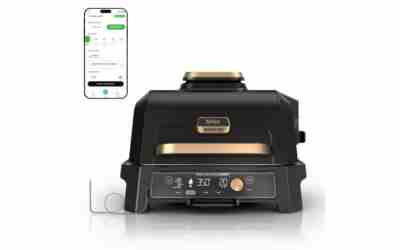
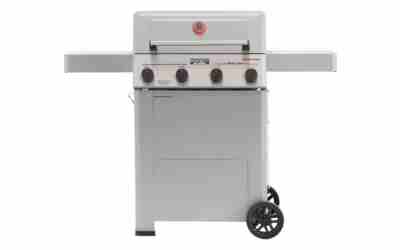
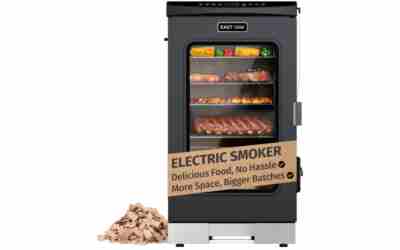
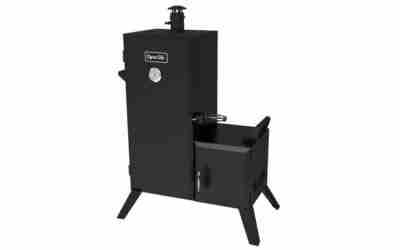
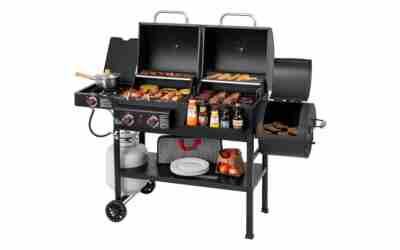
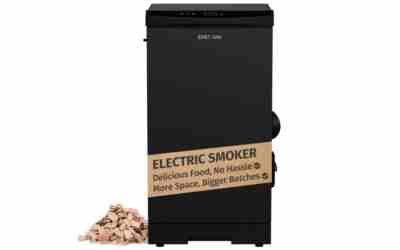
No, it is not safe to grill in a garage, even with the door wide open, because charcoal, gas and pellet grills all produce carbon monoxide that a garage can’t clear fast enough. Gas cans, paint and grease add fire risk. Cook outdoors at the distance your manual gives, or use an electric grill if the manual allows it.
Why it’s unsafe to grill in a garage, even with the door open
A garage is a small, poorly ventilated space. Any grill that burns charcoal, gas, pellets or wood fills it with carbon monoxide (CO). CO has no color or smell, so you get no warning before it affects you.
An open door helps only when wind blows straight through. On a calm, cold or rainy day, exhaust lingers in corners and near the ceiling. If the garage is attached, CO can reach living areas through gaps around the entry door, shared walls and ductwork.
Charcoal is the worst case. Smoldering coals keep producing CO long after the food is done.
What CO does and when alarms respond
- Symptoms (CDC): headache, dizziness, weakness, nausea and confusion. People who are asleep may never notice them.
- Alarm response (UL 2034 standard): a CO alarm must sound within 60 to 240 minutes at 70 ppm, within 10 to 50 minutes at 150 ppm, and within 4 to 15 minutes at 400 ppm.
- Workplace limit (OSHA): 50 ppm averaged over 8 hours.
An alarm is a backup, not a reason to grill indoors. Exact alarm timing varies by model; check the label.
Fire, grease and propane risks inside a garage
Garages hold gasoline, paint thinner, motor oil, aerosol cans, cardboard and often a car. Gasoline vapor is heavier than air and can drift along the floor to a burner flame or hot coals, then ignite. A gas grill can reach 500°F or more, and charcoal can reach 600°F or more, so nearby items can catch from heat alone.
Flare-ups make it worse. Grease fires throw flames above the grates, and in a garage the ceiling, shelves and stored items are close. Built-up grease is what feeds those flames, so keep it cleaned out; our guide to cleaning ash and grease from a pellet grill covers the routine.
Keep the propane tank outside
- Store the cylinder outdoors, upright, with the valve closed and away from ignition sources.
- Leaking propane sinks to the floor and pools, just like gasoline vapor.
- Some local fire codes ban propane cylinders inside any building, including attached garages. This varies by jurisdiction, so ask your local fire department.
- Brush soapy water on the hose and fittings. Bubbles mean a leak, so stop using the grill until it’s fixed.
Which grills can you ever use in a garage?
The rule is simple: if it burns anything, it goes outside. If it plugs in, read the manual first.
| Grill type | Use in a garage? | Reason |
|---|---|---|
| Charcoal | Never | Highest CO output; coals stay hot for hours |
| Propane gas | Never | CO plus open flame near flammables; tank must stay outside |
| Pellet or wood smoker | Never | Burns wood, so it makes CO and smoke; most manuals say outdoor use only (check yours) |
| Electric grill | Only if the manual allows | No combustion CO, but grease smoke and fire risk remain; use a GFCI outlet |
| Natural gas, rated for indoor use | Only if listed and vented | Needs proper installation and venting under local code; not a casual garage setup |
Pellet grills are the one people argue about because they feel “cleaner.” They still burn fuel and make CO. If you want one for the backyard, see our best wood pellet grills roundup.
How far from the garage and house should you grill outdoors?
Use 10 feet from the house, garage and deck railing as your default. Fire departments commonly give that distance, and it is a safe number when your manual is missing or unclear. Some manufacturers allow as little as 3 feet, so the manual for your exact grill comes first. Follow whichever rule is stricter, and check local code and HOA rules too.
- Skip the overhangs: keep grills out from under eaves, awnings, low branches and vinyl siding, which can melt.
- Close nearby openings: shut the garage door and windows near the grill so smoke and CO don’t drift in.
- Make a kid-and-pet zone: NFPA advises a 3-foot area around the grill that children and pets stay out of.
- Stay with it: never leave a lit grill unattended, and keep gas cans, oil and cardboard well away.
If your space makes 10 feet hard to reach, a compact model can help. Browse our best small grills for options that fit tighter yards.
What to do instead when it’s raining or cold
Weather is the usual reason people drag a grill into the garage. These options are safer.
- Grill in the driveway. Set up at least 10 feet from the house and garage, on a flat, non-flammable surface, with the garage door closed.
- Use a covered patio only if the manual allows it. The roof must be open on the sides, with plenty of overhead clearance and no wind pushing smoke back. Roofs close to the grill or enclosed porches are not safe for any fuel-burning grill.
- Skip pop-up canopies and umbrellas. Fabric can melt or ignite over a lit grill.
- Switch to electric. Use it outdoors at the distance in the manual, on a GFCI outlet, with an extension cord rated for outdoor use.
- Cook inside. A broiler or stovetop grill pan with the range hood running avoids the problem entirely.
Cold alone is not a reason to move indoors. Grills work in cold weather; add cooking time and shield the burner from wind. If you’re buying a gas grill for year-round use, our best propane grills list is a good starting point.
What to do if you already grilled in the garage
Act fast, even if you feel fine.
- Get everyone outside, including pets, if anyone has a headache, dizziness, nausea or confusion. Call 911 from fresh air.
- Don’t go back in to look for people or belongings. Let responders handle it.
- Ventilate if no one has symptoms: open the garage door and the house doors and windows, and keep the grill outside from now on.
- Let the fire department clear it if a CO alarm sounded, before you re-enter.
- Check your alarms. Place CO alarms on every level and outside sleeping areas, plus in the hallway near the garage entry, following the label. Test them monthly and replace them by the date printed on the unit.
Keep a hot grill outdoors until the coals or burners are fully cool. Storing a cooled grill in the garage is generally fine, but the propane tank still stays outside.
Our Top Picks
Ready to shop? These are the top-rated options from our hands-on roundup, Best Outdoor Grills Propane of 2026.

Charbroil Pro Series 4-Burner Propane Gas Grill with Amplifire Technology, Griddle Insert & Side Burner

LazySunsets 4-Burner Propane Grill 49000 BTU

BODEGA 30-Inch 5-Burner Propane Gas Grill Built-In Head, 58000 BTU, LP/NG Convertible, 304 Stainless Steel, Rotisserie Kit Included, Outdoor BBQ Island Grill
As an Amazon Associate we earn from qualifying purchases. Product prices and availability are accurate as of the date/time indicated.
Frequently Asked Questions
Can I use an electric grill in a garage?
Only if the manual says indoor use is allowed. Electric grills don’t make combustion CO, but they still produce grease smoke and can start fires. Use a GFCI outlet, keep flammables away, and open the door for smoke. When in doubt, use it outdoors or in the kitchen.
Can I store my gas grill in the garage?
Generally yes, once the grill is fully cool. Disconnect the propane cylinder and store it outdoors, upright, away from ignition sources. Some local fire codes prohibit cylinders in any building, so confirm with your fire department. Keep the grill away from gas cans and paint.
Is a pellet smoker okay in the garage with the door open?
No. A pellet smoker burns wood pellets, so it makes carbon monoxide and can throw embers. An open door doesn’t reliably clear the fumes. Most manuals specify outdoor use only, so follow yours and set it up at least 10 feet from the house.
Where should I put a CO alarm near a garage?
Install alarms on every level of the house and outside each sleeping area, plus in the hallway near the garage entry door. Follow the alarm’s label for placement and replacement date. Test it monthly. Don’t rely on it as permission to run fuel-burning equipment in the garage.
{“@context”: “https://schema.org”, “@type”: “FAQPage”, “mainEntity”: [{“@type”: “Question”, “name”: “Can I use an electric grill in a garage?”, “acceptedAnswer”: {“@type”: “Answer”, “text”: “Only if the manual says indoor use is allowed. Electric grills don’t make combustion CO, but they still produce grease smoke and can start fires. Use a GFCI outlet, keep flammables away, and open the door for smoke. When in doubt, use it outdoors or in the kitchen.”}}, {“@type”: “Question”, “name”: “Can I store my gas grill in the garage?”, “acceptedAnswer”: {“@type”: “Answer”, “text”: “Generally yes, once the grill is fully cool. Disconnect the propane cylinder and store it outdoors, upright, away from ignition sources. Some local fire codes prohibit cylinders in any building, so confirm with your fire department. Keep the grill away from gas cans and paint.”}}, {“@type”: “Question”, “name”: “Is a pellet smoker okay in the garage with the door open?”, “acceptedAnswer”: {“@type”: “Answer”, “text”: “No. A pellet smoker burns wood pellets, so it makes carbon monoxide and can throw embers. An open door doesn’t reliably clear the fumes. Most manuals specify outdoor use only, so follow yours and set it up at least 10 feet from the house.”}}, {“@type”: “Question”, “name”: “Where should I put a CO alarm near a garage?”, “acceptedAnswer”: {“@type”: “Answer”, “text”: “Install alarms on every level of the house and outside each sleeping area, plus in the hallway near the garage entry door. Follow the alarm’s label for placement and replacement date. Test it monthly. Don’t rely on it as permission to run fuel-burning equipment in the garage.”}}]}