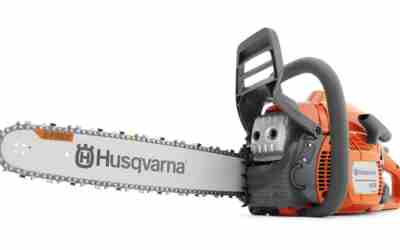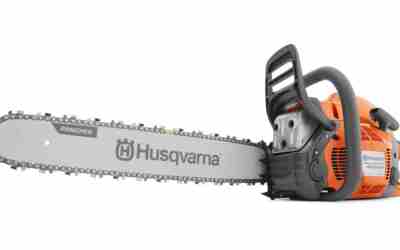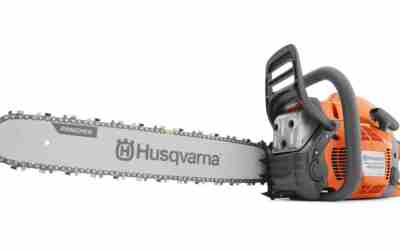

Chain saw chain direction is simple: the cutting edges on top of the bar must point toward the bar tip, away from the saw body.
How to Read the Chain Direction on the Bar
Picture the saw sitting upright with the bar pointing to your right. The chain travels clockwise: along the top of the bar it moves toward the tip, then wraps around the nose and returns underneath toward the saw body.
Simple diagram:
Saw body | ======== bar ========> tip
Top run: chain moves left to right, toward the tip.
Bottom run: chain moves right to left, toward the saw body.
The cutters follow that travel. On the top run, each cutter’s sharp, hooked corner leads the way toward the tip. On the bottom run, the same cutters face back toward the powerhead, so always read direction from the top run only. Reading the underside is the most common reason people think a correct chain is backward.
The 10-Second Check Before You Tighten Anything
Do this with the battery removed or the plug and spark plug cap disconnected, and gloves on. The chain is sharp even when stopped.
- Set the saw so the bar points to your right.
- Find a cutter on the top run. It has a curved, hooked top plate with a sharp corner.
- Check that the hooked cutter corner leads toward the tip. If the corner trails behind the cutter as it travels toward the tip, the chain is backward.
- Look for a small arrow on the cutter plates, if your chain has one. It should point toward the tip.
- Check the saw body or bar cover for a direction arrow. If one is printed, it should match the chain’s travel.
Installing the Chain Step by Step
- Remove the battery or disconnect power, let the saw cool, and put on cut-resistant gloves.
- Release the chain brake, loosen the bar nuts and remove the side cover.
- Back off the tensioner so the bar can slide fully toward the sprocket. Some saws also have a tension screw or a tool-free knob; follow your manual.
- Lay the chain in a loop with the top-run cutters facing the tip. Hold it in that shape before you place it.
- Drape the chain over the drive sprocket first, with the drive links sitting between the sprocket teeth.
- Feed the drive links into the bar groove all the way around the nose.
- Fit the bar studs through the bar slot, making sure the bar’s tension pin hole lines up with the tensioner.
- Replace the cover, hand-tighten the nuts, then adjust tension (next section) before fully tightening.
If the loop won’t wrap smoothly around the sprocket, don’t force it. Recheck that the drive links are in the groove and that the chain isn’t twisted.
How Tight Should the Chain Be
A correct chain is snug against the underside of the bar but still moves freely when you pull it around by hand (with the chain brake released and gloves on). It should not sag out of the groove, and it should not bind.
- Lift test: with the nuts only lightly snug, lift the chain at the center of the top run. The drive links should stay seated in the groove rather than pulling clear of it. The exact allowance depends on the saw, so follow the manual.
- Final step: hold the bar nose up while you fully tighten the bar nuts so the setting doesn’t shift.
- Cold versus warm: set a new chain cold, run a few cuts, let it cool, then re-check. New chains stretch, and heat makes the chain expand and look looser or tighter than it really is.
Also confirm the bar oiler is working before a real cut. A dry chain heats and stretches quickly.
Signs of a Backward Chain and How to Fix It
A backward chain drags its rounded backs across the wood instead of slicing it. Typical symptoms:
- The saw rubs and makes fine dust instead of chips.
- The bar bounces or grabs on the cut, which raises kickback risk.
- Smoke from the wood, or heat building at the clutch.
- A brand-new chain that feels dull right out of the box.
Stop and don’t push it through the cut. Disconnect power, remove the cover, slip the chain off the bar and sprocket, flip the loop around so the top-run cutters face the tip, and reinstall. You don’t need a new chain. Flipping works because the same loop simply reverses its orientation.
A worn or poorly filed chain can also cut badly while facing the right way, so if the direction checks out, see how to sharpen a chainsaw chain by hand before blaming the installation.
Pole Saws, Electric Saws and Bi-Directional Chains
The rule is the same on gas, corded, battery and pole saws: top-run cutters lead toward the tip. On a pole saw the head is often angled or fixed, so hold the head with the bar pointing to your right to read the top run, and use the manual’s diagram if the sprocket cover hides the direction.
Some saws have a tool-less tensioning knob or a side-mounted tension screw, but chain direction is unaffected.
Bi-directional chains are rare in homeowner saws, so assume your chain has a direction unless the packaging or manual says otherwise. Check bar length, pitch, gauge and drive link count against the manual or the bar’s stamped data before buying a replacement. If you are picking a lighter cordless saw for small jobs, our guide to battery chain saws compares the options by bar length and run time.
Our Top Picks
Ready to shop? These are the top-rated options from our related roundup, Best Cordless Electric Chain Saws of 2026.

EGO POWER+ CS1613 16-Inch Cordless Chainsaw with 56V 4.0Ah ARC Lithium Battery and Brushless Motor

Oregon CS1500 18-Inch Self-Sharpening Corded Electric Chainsaw, 15 Amp High-Power Motor

EGO POWER+ CS1611 16-Inch 56V Cordless Chainsaw with 2.5Ah Battery and Charger
As an Amazon Associate we earn from qualifying purchases. Product prices and availability are accurate as of the date/time indicated.
Frequently Asked Questions
Can I just flip a backward chain over?
You don’t need a new chain, but you don’t flip it in place. Remove it from the bar and sprocket, then reinstall it reversed so the top-run cutters face the bar tip.
Why does my new chain look backward even though I installed it correctly?
You are probably looking at the underside run, where the cutters naturally face the saw body.
Can running a chain backward damage the saw?
Yes. It can bounce, overheat the clutch and wear the bar, and it won’t cut properly. Stop immediately, disconnect power and reinstall the chain the right way around.
Does the chain direction change if I flip the bar over?
No. The sprocket’s rotation sets the chain direction, so it never changes with the bar. Flipping the bar can even out wear, but the top-run cutters must still face the tip.
{“@context”: “https://schema.org”, “@type”: “FAQPage”, “mainEntity”: [{“@type”: “Question”, “name”: “Can I just flip a backward chain over?”, “acceptedAnswer”: {“@type”: “Answer”, “text”: “You don’t need a new chain, but you don’t flip it in place. Remove it from the bar and sprocket, then reinstall it reversed so the top-run cutters face the bar tip.”}}, {“@type”: “Question”, “name”: “Why does my new chain look backward even though I installed it correctly?”, “acceptedAnswer”: {“@type”: “Answer”, “text”: “You are probably looking at the underside run, where the cutters naturally face the saw body.”}}, {“@type”: “Question”, “name”: “Can running a chain backward damage the saw?”, “acceptedAnswer”: {“@type”: “Answer”, “text”: “Yes. It can bounce, overheat the clutch and wear the bar, and it won’t cut properly. Stop immediately, disconnect power and reinstall the chain the right way around.”}}, {“@type”: “Question”, “name”: “Does the chain direction change if I flip the bar over?”, “acceptedAnswer”: {“@type”: “Answer”, “text”: “No. The sprocket’s rotation sets the chain direction, so it never changes with the bar. Flipping the bar can even out wear, but the top-run cutters must still face the tip.”}}]}